
80+ Impressive Online Gambling Statistics & Market Trends 2024


 Casinos
 BC.Game
  7Bit
7Bit  Ducky Luck
  Red Dog
 Despite the harmful ripple effects of COVID-19 in 2020, wars and instability around the globe in 2021-2022, the gambling industry is among the few markets that thrived and positively adapted.
2022 saw the gambling scene make $449.04 billion worldwide, with online gambling contributing $74.42 billion (16.58%) of the total revenue, the biggest contributor among the segments.
Due to its convenience, accessibility, and broad betting opportunities, online gambling looms to be on par with the land-based casino market, making it a worthwhile topic to explore.
This article will investigate online gambling statistics worldwide, revealing the figures per region and country, net losses, addiction numbers, and industry growth and trends.

Highlights of the Article
- The global online betting industry shall generate $87.92 billion by the end of 2023.
- The average Aussie gambler spends more than AU$1,880 on online bets annually.
- Germany’s online gambling market will earn about $2.3 billion by 2028.
- The US online betting scene produced around $9.5 billion in 2021.
- In 2022, Canada ranked 8th worldwide in online wagering spending, at $4 billion yearly.
- Approximately 50% of all Bitcoin transactions point to gambling payments.
- Women are 19% less likely to experience online gambling problems than men.
- Between 1% – 6.2% of the US total population suffer from harmful online gambling.
- More than 420,000 UK online gamblers lose about £2,000 yearly.
- The Russo-Ukrainian war’s global effects led to a decreased online gambling market CAGR of 9.1% by 2027.
Global Online Gambling Industry Statistics 2023

The online betting industry has many factors that push the market to where it is now. Convenience, accessibility, exciting gameplay, and varied ways to earn money are some of their driving forces.
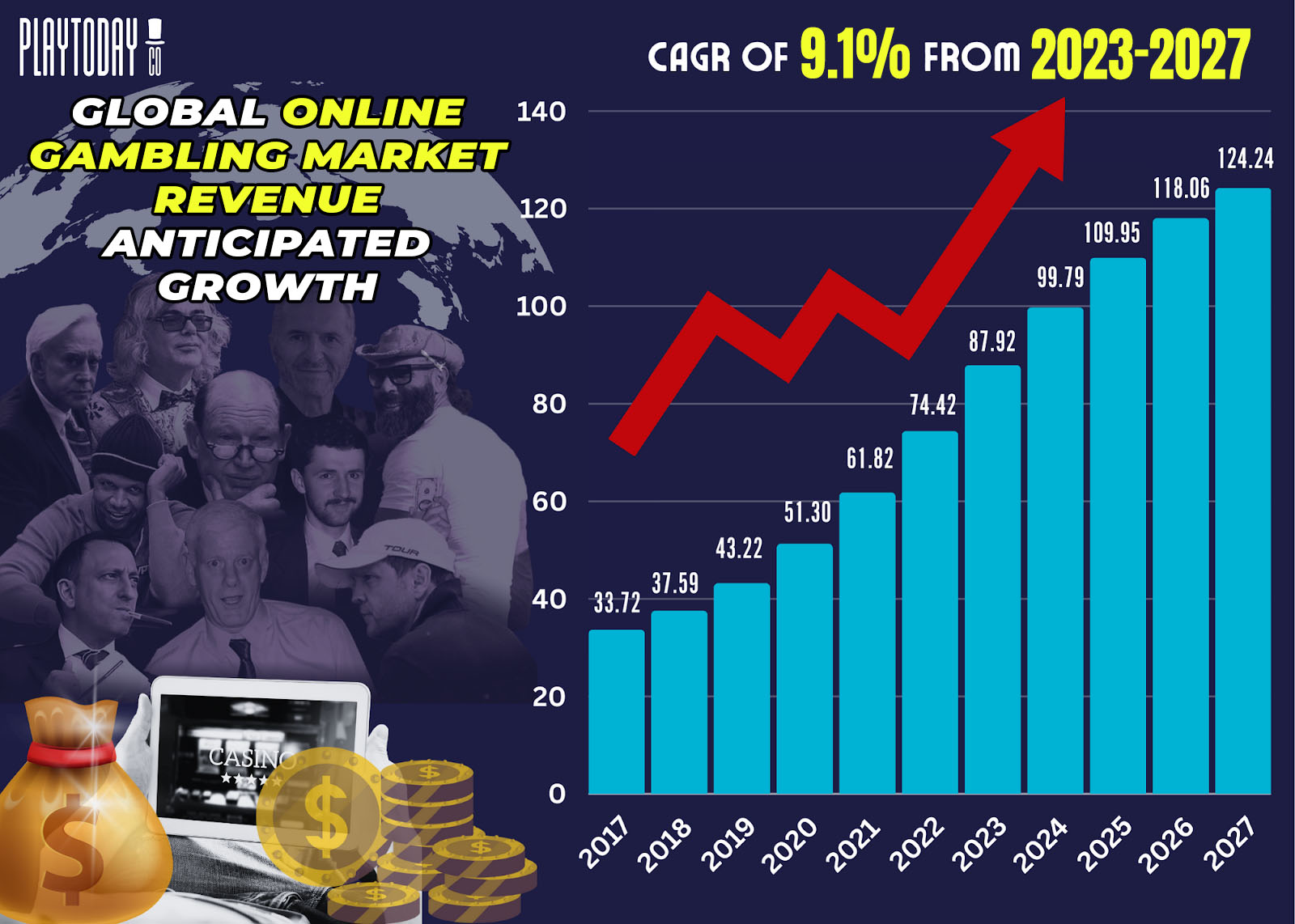
The worldwide iGambling market expected to generate close to $90 billion in 2023, 12% of the total gambling industry revenue. Also, analysts project the market to rise at the annual rate of 9.1% and reach $124 billion by 2027.
Worldwide Online Gambling Statistics and Facts
Online gambling is prevalent worldwide. With various advancements in betting, such as mobile payment apps like Google Pay and e-wallets, punters have realized the convenience of online gambling.
As online casinos incorporate trends such as cryptocurrencies, 5G network usage, and user-intuitive features, the user base and revenue have consistently grown since 2017.
This section explores the facts and figures behind the global online gambling industry, discussing the income, segmentations, and the leading countries that dominate the market.
1. Experts forecast the online betting industry to reach $124.24 billion by 2027.
The online betting scene was worth over $43.22 billion in 2019. With a 9.1% CAGR (2023 – 2027), experts predict the online gambling market size will reach $124.24 billion, almost thrice the 2019 revenue.
The betting industry’s top online casino players are Betfred Ltd., Bet365 Group Ltd., and 888 Holdings plc. stands to contribute to the massive growth of the industry’s market size.
Below is the projection of the global online gambling revenue distribution per segmentation from 2023-2027.
| YEAR | ONLINE CASINOS | ONLINE SPORTS BETTING | ONLINE LOTTERIES |
| 2023 | $34.8 billion | $43.55 billion | $16.7 billion |
| 2024 | $38.96 billion | $49.96 billion | $18.38 billion |
| 2025 | $42.23 billion | $55.52 billion | $19.84 billion |
| 2026 | $44.64 billion | $60.06 billion | $21.03 billion |
| 2027 | $46.34 billion | $63.62 billion | $21.95 billion |
2. In 2022, the worldwide online gambling user base grew by 15.38% from the previous year.
Globally, an estimated 26% of the world gamble, about 1.6 billion people. Concerning online bets, around 155.3 million people engage in various online wagers, around 9.6% of the total gambling population.
The 2022 figures for online gamblers increased by 15.38% from the previous year’s 134.6 million users, with online sports bets contributing the most with 108.9 million users in 2022.
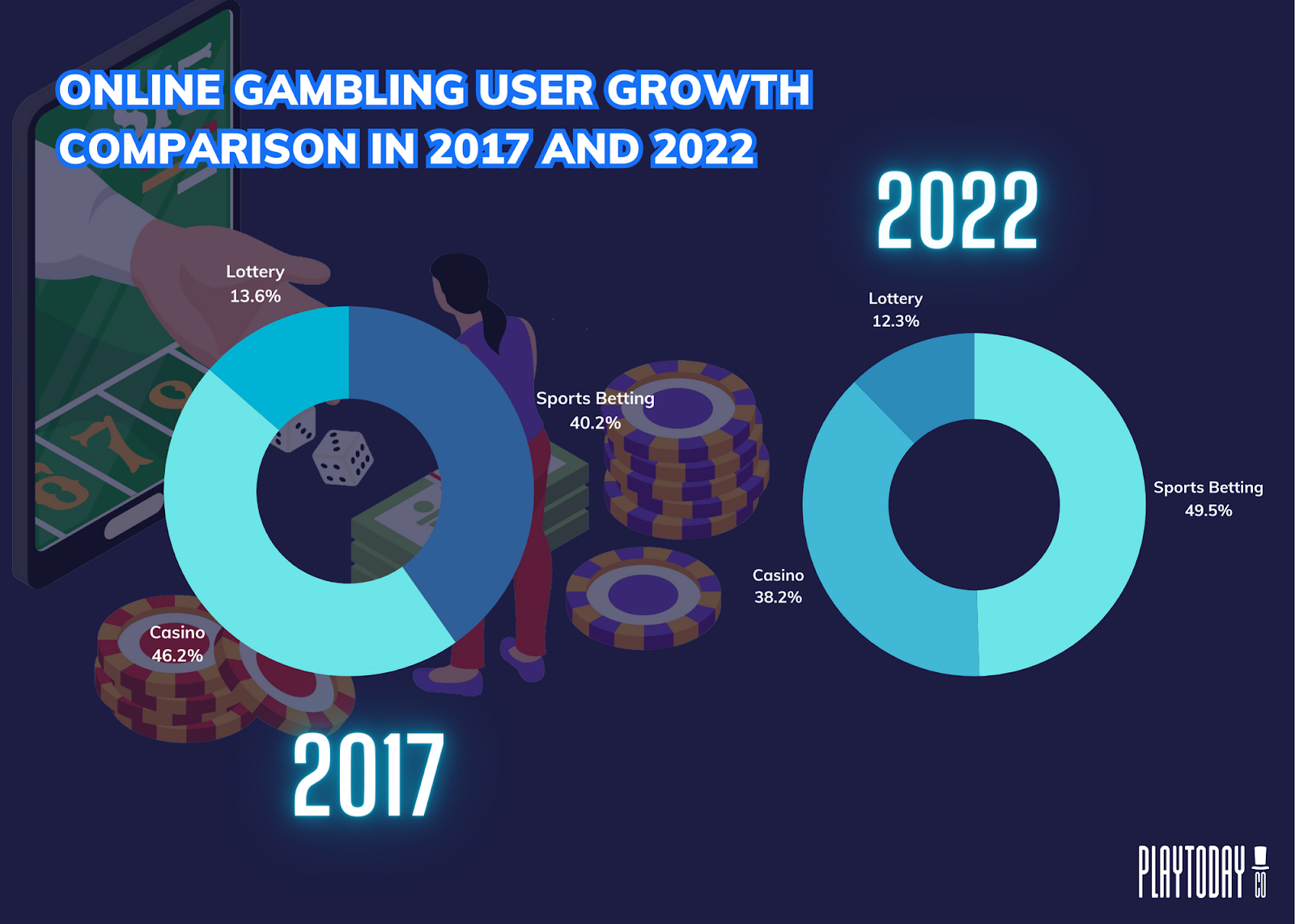
The online gambling population has grown consistently for years due to improved accessibility and convenience in online casinos and sportsbooks.
The legalization of online betting in many parts of the world also contributes to the growth of the user base. In the US, more and more states are issuing regulations to legalize online bets.
(*Sources: Casino, Statista)
3. As of Q3 2023, the European Region is the biggest online gambling nation worldwide, with a total revenue of $43.01 billion.
Europe’s online gambling industry comprises Central, Western, Eastern, Northern, and Southern European countries. The region ranks first globally concerning online betting revenue in Q3 2023.
Central and Western Europe combine for the biggest online gambling revenue among all continents, at $28.77 billion. The UK is the top contributor to the region, making $12.83 billion.
The American continent, comprised of the Central, North, and South, ranks second in online gambling revenue per region, with a combined revenue of $29.64 billion.
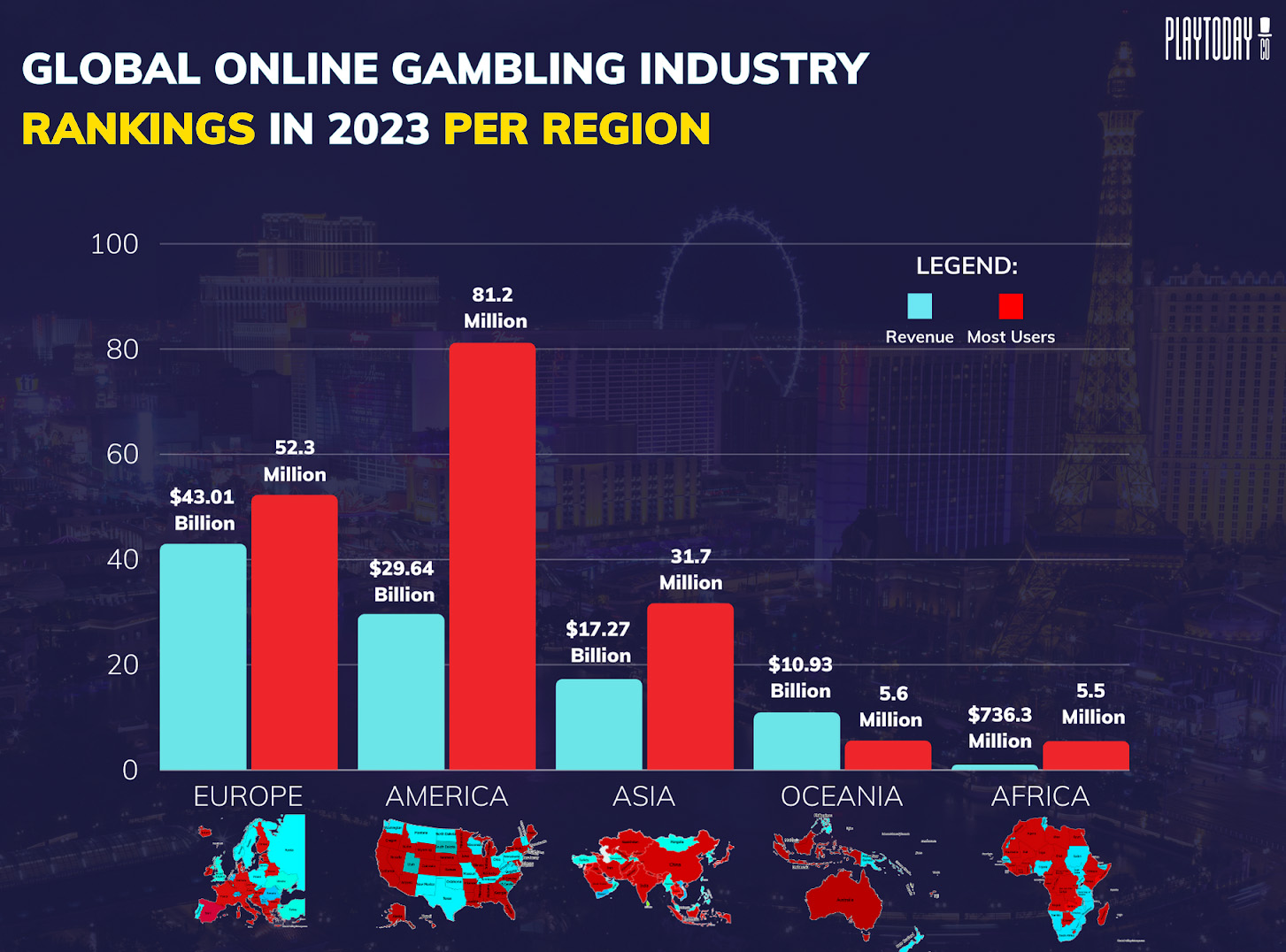
Below are the global rankings for Online Gambling Revenue in 2023 based on the region:
- Europe (Central and Western, Eastern, Northern, and Southern Europe) – $43.01 billion
- America (Central, North, and South America) – $29.64 billion
- Asia (Central, Eastern, and Southeast Asia) – $17.27 billion
- Oceania (Australia and New Zealand) – $10.93 billion
- Africa (Southern Africa) – $736.3 million
Regarding the online gambling population, the entire American region combines for the most users in 2023, with 81.2 million online bettors. The rankings for the user base are as follows:
- America (Central, North, and South America) – 81.2 million users
- Europe (Central and Western, Eastern, Northern, and Southern Europe) – 52.3 million users
- Asia (Central, Eastern, and Southeast Asia) – 31.7 million users
- Oceania (Australia and New Zealand) – 5.6 million users
- Africa (Southern Africa) – 5.5 million users
(*Source: Statista)
4. The UK ranks second in online gambling revenue and user penetration in 2022 worldwide.
The Brits are among the most active players, with 18 million online bettors in 2022. The UK ranked second in online betting yield and user penetration, with £9.46 billion ($11.71 billion) and 26.2 million users, respectively.
Two countries overtake the UK in the rankings: the USA in income and Canada in user penetration. The global placings in the online betting industry are as follows:
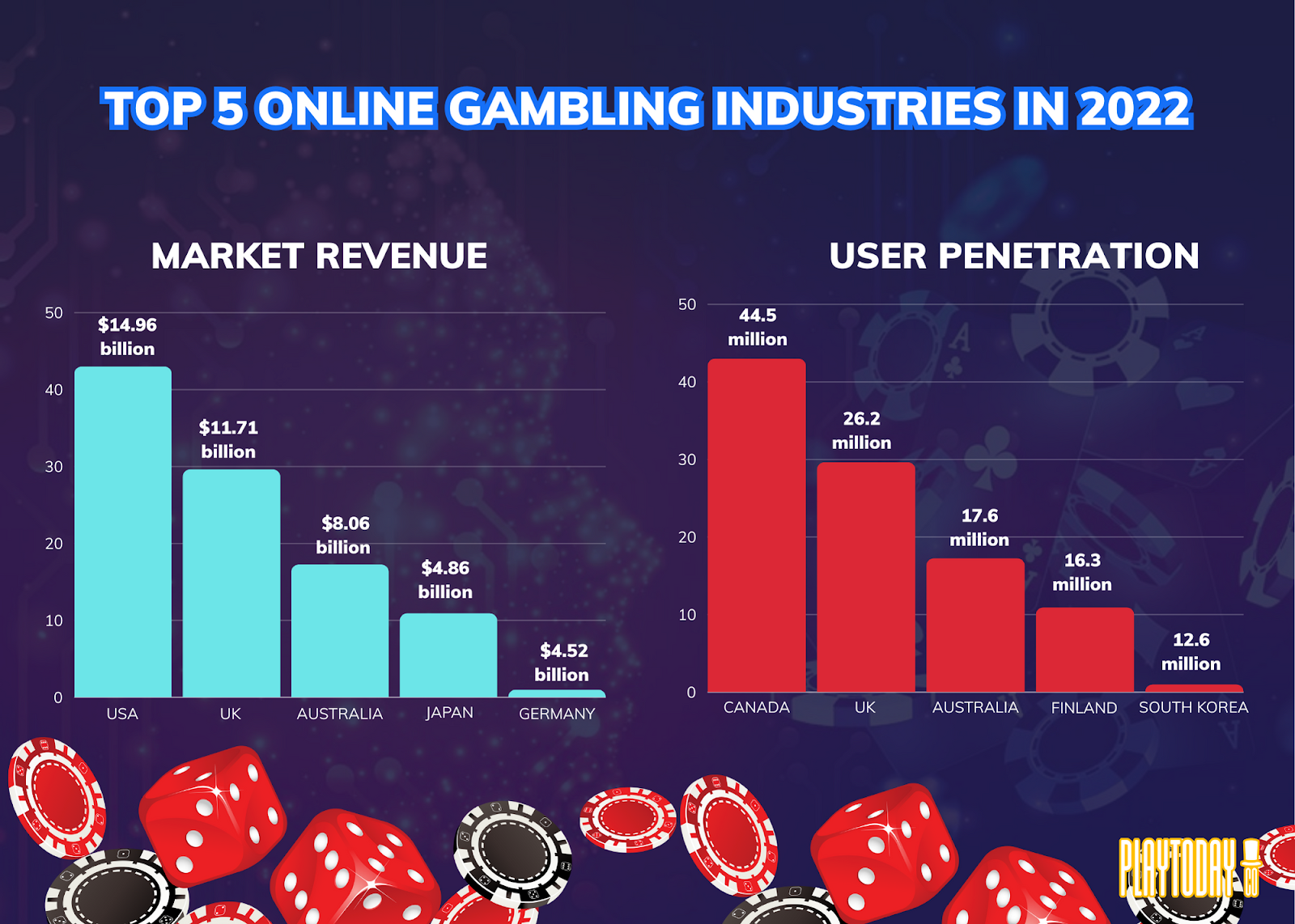
- USA – $14.96 billion
- UK – $11.71 billion
- Australia – $8.06 billion
- Japan – $4.86 billion
- Germany – $4.52 billion
Top 5 Global Online Gambling User Penetration in 2022
- Canada – 44.5 million users
- UK – 26.2 million users
- Australia – 17.6 million users
- Finland – 16.3 million users
- South Korea – 12.6 million users
The sections below shall analyze the current and projected state of online betting, exploring various factors within a worldwide industry.
(*Source: Statista)
North America’s Online Gambling Statistics
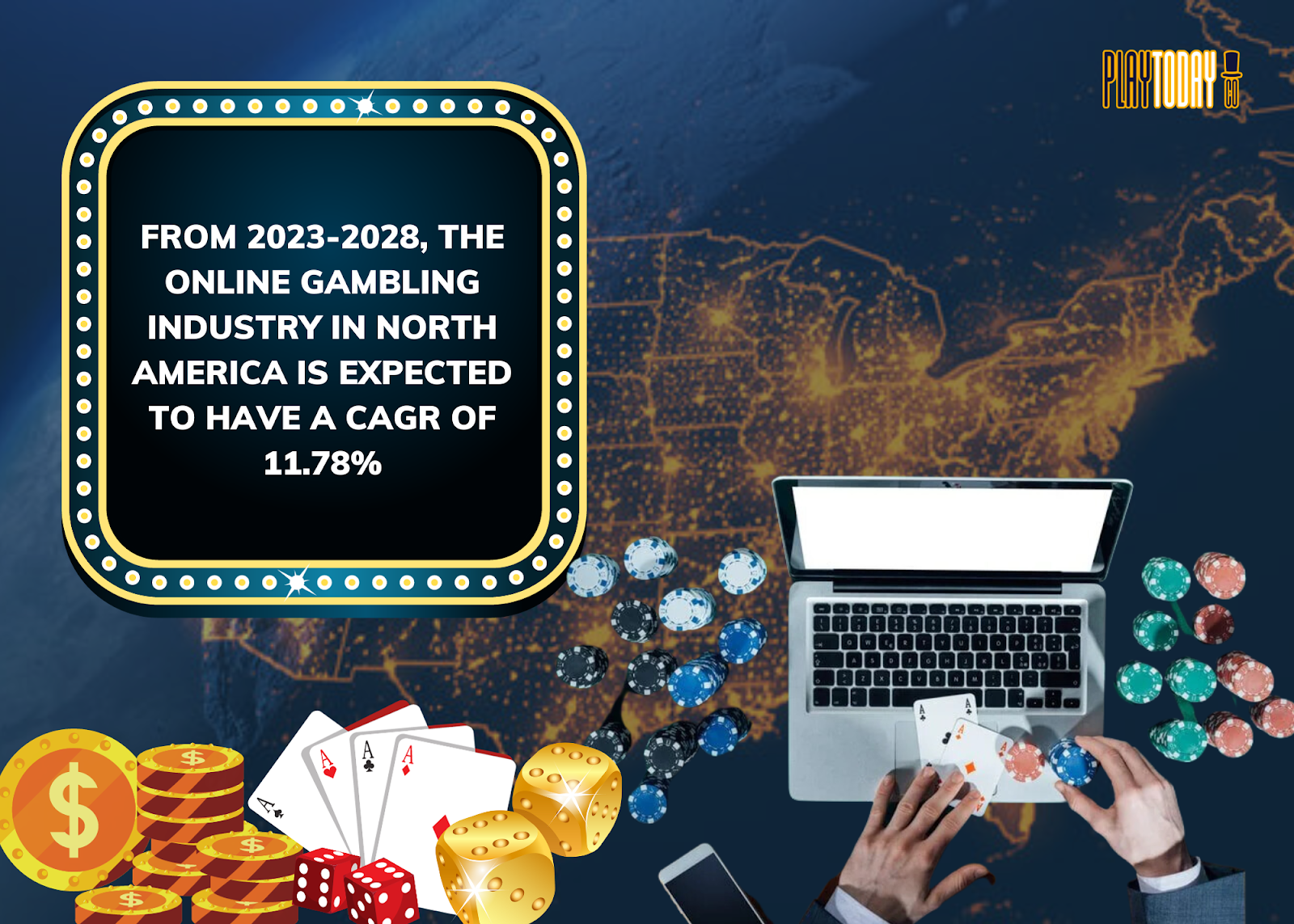
Over the next five years, the North American online gambling industry expects to register a CAGR of 11.78%. High access to the internet and mobile devices supports market growth.
Online casinos are gaining popularity in the region. Players can access registered offshore platforms and 200+ American online casinos to play remotely: Roulette, Blackjack, and Slots.
Explore North America’s online gambling market with the figures and facts below.
5. In 2021, the US online gambling industry produced an estimated $9.5 billion in revenue.
From 2020 to 2021, the US online betting scene generated over $800 million, from $8.7 billion to $9.5 billion, a 9% increase in revenue.
Around two-thirds of the revenue came from online sports bets and online lotteries, highlighting how big these two segments are in the US.
In the case of the US Lottery, many states use ticket sales to fund their education sector. For example, Michigan allocates 35% of every dollar spent on the lottery for the State’s school system.
(*Source: Statista)

Fun Fact
Since 1972, Michigan’s Lottery scene has generated a total school aid fund of $22 billion.
6. Research suggests that around 85% of US adults have tried gambling.
Although Australian adults dominate the online gambling industry user base count, US adults also have their fair share of betting.
About 85% of the respondents revealed that they gambled at least once in their lifetime and that 80% of them gambled in 2022.
(*Source: NPC Gambling)
7. The US recorded around $5.02 billion in income in online wagers in 2022.
The US’ first 11 months of 2022 saw the country break its previous gambling revenue record by 13.5% ($53.04 billion), including a 35.2% rise in its iGaming sector, equivalent to $5.02 billion.
(*Sources: Forbes, American Gaming Association)
Fun Fact
Apple Pay is among the most used mobile payment options for gamblers in the US.One factor for this domination is Apple’s popularity in the country, almost having a monopoly in the US Smartphone market.
8. Analysts foresee Canada’s gambling industry skyrocketing from $12 billion to $50 billion from 2021 – 2031.
Smartphones are a significant factor in increased online gambling in Canada. 84.4% of Canadians owned a smartphone, accounting for a 4.1% increase since 2018.
More locals use mobile devices, as shown in 9 out of 10 bets placed via apps. Better graphics and storage space have made online gambling more appealing to players.
(*Sources: Reader’s Digest, Globe Newswire)
Fun Fact
There were 12.78 million casino game downloads on smartphones and tablets in 2022, with online slots being the most widespread.
9. 2022 saw Canada rank 8th worldwide in countries in online gambling expenditures, at $4 billion yearly.
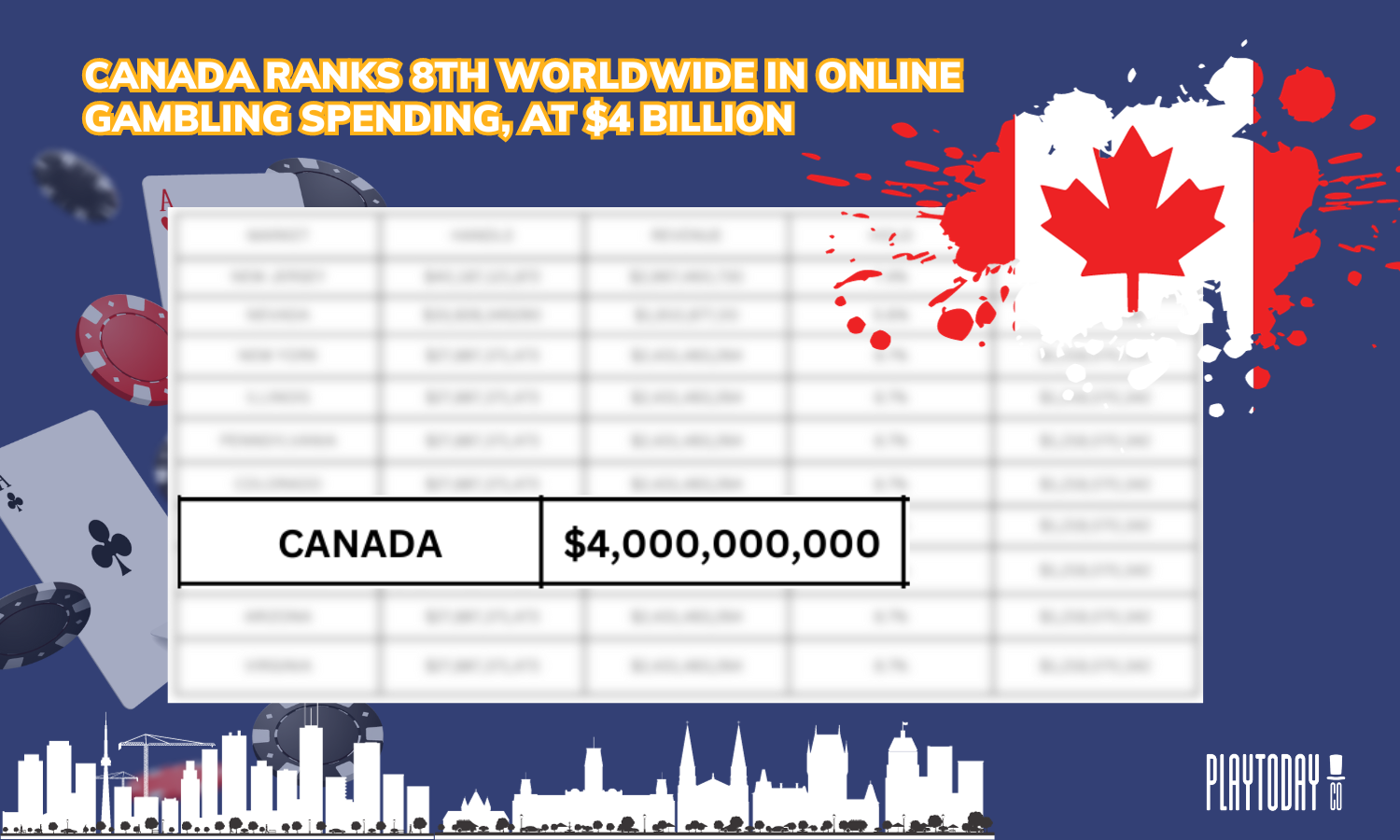
Canada is among the countries with the most significant online betting participants. The country reported that it had over 19.3 million online gamblers in 2022.
This figure is consistent with the fact that all Canadian provinces have at least one online casino, except for Saskatchewan.
(*Source: Analytics Insight)
10. In Mexico, 17% of the gambling population played online slots in 2022.
Of the 17% of online slot players in Mexico, 16% were male and 17% were female. The age group with the most participants in online slots is the 25-34 age demographic, at 22%.
(*Sources: TGM Research, Delasport)
11. Online gambling site operators in Mexico have to pay 30% of their gross gambling revenue to the country.
Mexico’s online gambling industry is slowly creeping up in revenue, seeing a steady growth in income over the last few years, generating around $500 million GGR with year-on-year growth of around 10% in 2021.
Experts attribute this growth to Mexico’s growing smartphone user base, which is at 80 million. Smartphones improve online gamblers’ experience, giving them access to features and services from top online casinos.
(*Source: Delasport)
Gambling Stats in South America
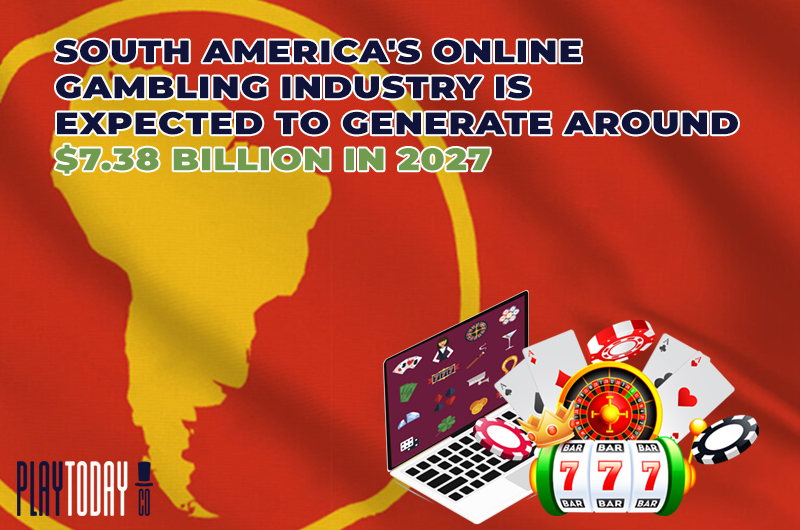
South America has a promising online gambling industry worth $2.68 billion in 2022. Regulated markets remain steadfast, while countries with favorable regulations have potential on the horizon.
With more people gambling online, the market will register a 14.41% growth rate between 2023-2028. Mobile phones create a favorable outcome for operators and players.
Find out other factors below.
12. Argentina’s government is pushing for a 3% online gambling tax increase for the country’s recovery from the pandemic.
Argentina holds the largest market share in South America’s online gambling industry, with a population of around 45 million.
Online gambling in the region will make $2.4 billion in annual revenue after the government raised the federal tax from 2% to 5%. Provinces and cities have different taxes.
For example:
- Buenos Aires: 10% on GGR
- Provinces in Buenos Aires: 25% on GGR
(*Source: Gambling Insider)
13. The Colombian online gambling market grossed $300 million in 2021 and had an 18% boost in 2022.
Colombia has become the first country in South America to regulate online gambling. The thriving market recorded a state revenue increase from 2021-2022
| 📉 2021 | $300 million |
| 📈 2022 | $475 million |
With a population of over 50 million, a mobile penetration of 56%, and a passion for football, the country presents a massive opportunity for online gambling.
(*Source: CDC Gaming Reports)
14. Brazil’s online gambling market grew by over 200% from 2022 to 2023.
The Brazilian online betting industry made around $1.58 billion in revenue in 2023, a 216% increase from 2022’s $500 million.
Much of the increase in revenue came from the emergence and legalization of online casinos in Brazil in 2023, accounting for 59% of the total income.
(*Source: Statista)
Europe Online Gambling Statistics
With Europe’s regulated online gambling industry, experts foresee the market growing from $47.1 million to $79.4 million from 2023-2028, with a CAGR of 11.01%.
The industry’s limitations are still apparent in some countries. In France, 13% of people think the gambling laws are tight, while fewer people agree in Great Britain and Italy.
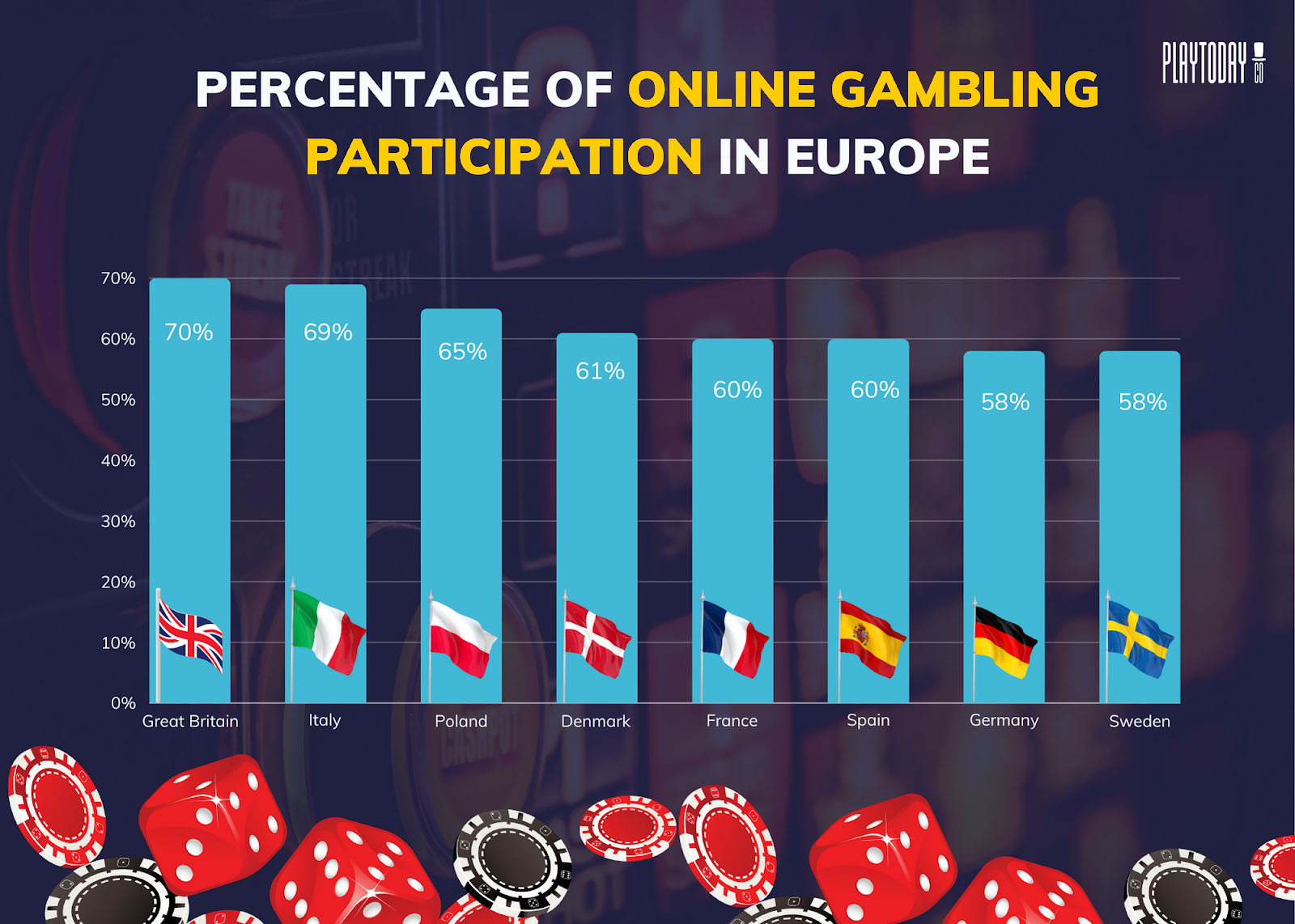
Discover more interesting online gambling statistics on major European countries below.
15. The Austrian online casino market looms to produce an estimated $367.2 million in revenue in 2027.
With a CAGR of 4.99% from 2023-2027, experts foresee a slow rise in Austria’s online casino industry. Slot games contribute much to the country’s online betting market revenue, generating $22.9 million in 2022, around 81% of the total.
Austria’s gambling law, the Glücksspielgesetz (GSpG), limits the establishment of Austrian online casino licenses to 15, with companies needing to pass strict criteria to get one.
(*Sources: Statista, Casino)
16. In 2021, Czechia’s online betting revenue exceeded its land-based gambling yield, making an estimated €886 million.
Based on the Czech Republic’s Ministry of Finance tax report in 2021, the country’s gambling market made historic numbers, as the online gambling market surpassed land-based operators.
While online betting made €351 million in 2017, Czechian bettors doubled the income in 2022 to €886 million. In contrast, the country’s land-based gambling made €1.26 billion in 2017, which decreased by almost half to €706 million.
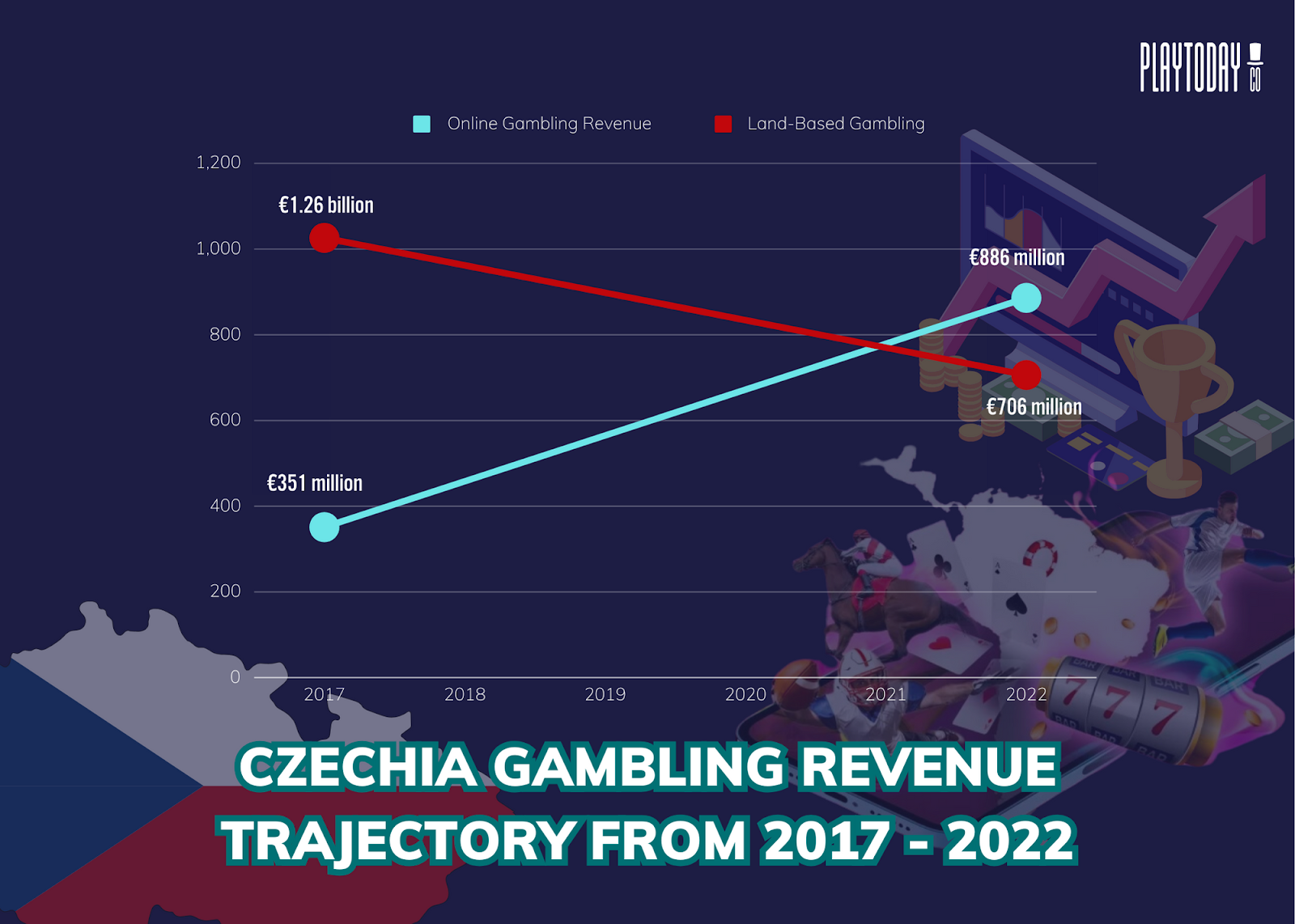
Czechia’s online gambling user base has grown consistently, from 448 million in 2017 to 735.6 million in 2022, distributed over the country’s 20 licensed online gaming operators.
(*Sources: CMS-Law Now, Statista)
17. 60% of France’s gambling population prefers to gamble online.
France ranks 5th in Europe concerning bettors that have tried and prefer online gambling over offline. More so, around 13% of the French population think its country’s betting laws are too strict.
(*Source: Mordor Intelligence)
18. France saw its online betting scene grow by €2.2 billion in 2021, a 29.4% increase from the previous fiscal year.
According to Autorité Nationale des Jeux (ANJ), one of France’s two main gambling regulators, the country’s online gambling market produced around €2.2 billion in 2021.
The numbers highlight the steady rise of France’s iGambling market. 2019 saw online gamblers generate around €1.4 billion, which rose to €1.7 billion in 2020.
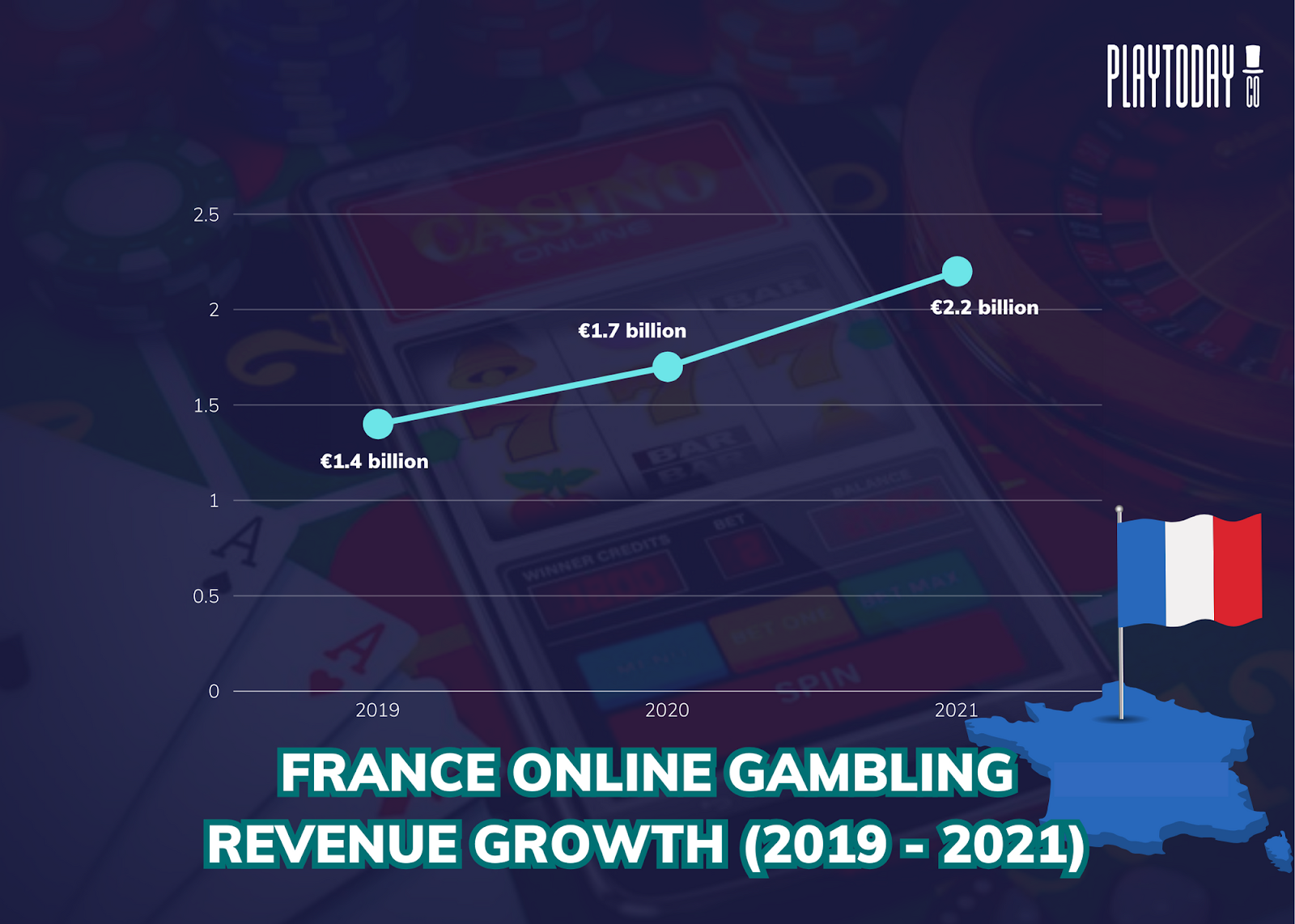
ANJ reported that 82% of online betting account holders focused on sports, with player turnover increasing to €303.
(*Source: Gambling News)
19. The UK’s gross online gambling yield from April to September 2020 amounted to £3.1 billion.
Even the UK’s online betting market was not exempt from the harmful effects of the COVID-19 pandemic.
The UK’s online betting, bingo, and casino gross gambling yield fell in 2020 from the previous year. Although sports bettors grew by 6.9% in 2019, the numbers decreased to 5.3% in 2020.
(*Sources: Mordor Intelligence, Statista)

Side Note
Skrill is one of the most prominent payment options in the United Kingdom.Formerly known as MoneyBookers, the UK launched Skrill to provide its gambling population with a more convenient payment option.
20. Analysts foresee Germany’s online betting industry to thrive by 2028 with a $2.3 billion projected market growth.
The government of Germany has authorized online in all of its 16 federal states, allowing online casino operations to garner millions of bettors nationwide.
As more players have access to gambling websites and apps, experts predict Germany’s online betting industry will expand to $2.3 billion.
(*Source: Market Research)
Side Note
Germans incurred 11.4% of online gambling expenditure in 2019, costing them about €2.8 billion. This figure makes Germany one of the biggest gambling markets in the EU.
21. In 2019, around €2.7 billion of Germany’s gambling market revenue came from online betting.
Online betting is prevalent in Germany. Around 19% of the country’s gambling revenue stemmed from the iGaming market, with its online sports betting revenue making about €0.92 billion.
Germany is among Europe’s most active online gambling population. The country was responsible for generating an estimated 11.4% of Europe’s total online wager spending in 2019.
(*Sources: Casino Tops Online, Statista)
22. The Hungary online sports betting market user base will grow to over 332,200 bettors in 2027.

On July 20, 2022, new amendments to Hungary’s 1991 Gambling Act set forth monumental changes to the country’s gambling industry, ending the state’s monopoly on online sports betting.
The move, which took effect on January 1, 2023, opened up Hungary’s market for operators in the European Economic Area (EEA) and saw the online sports betting scene generate $110.8 million in Q3 of 2023.
Experts foresee the country’s online sports betting scene to yield a revenue of US$149.80 million by 2027, at a CAGR of 7.83%.
(*Sources: Statista, Schoenherr)
Side Note
Hungary is among the biggest Swimming sports enthusiasts in Europe. The activity is consistently in Hungary’s top 10 most popular sports activities since 2017.
23. Spain noted an 18% gross gaming revenue increase in Q2 of 2022.
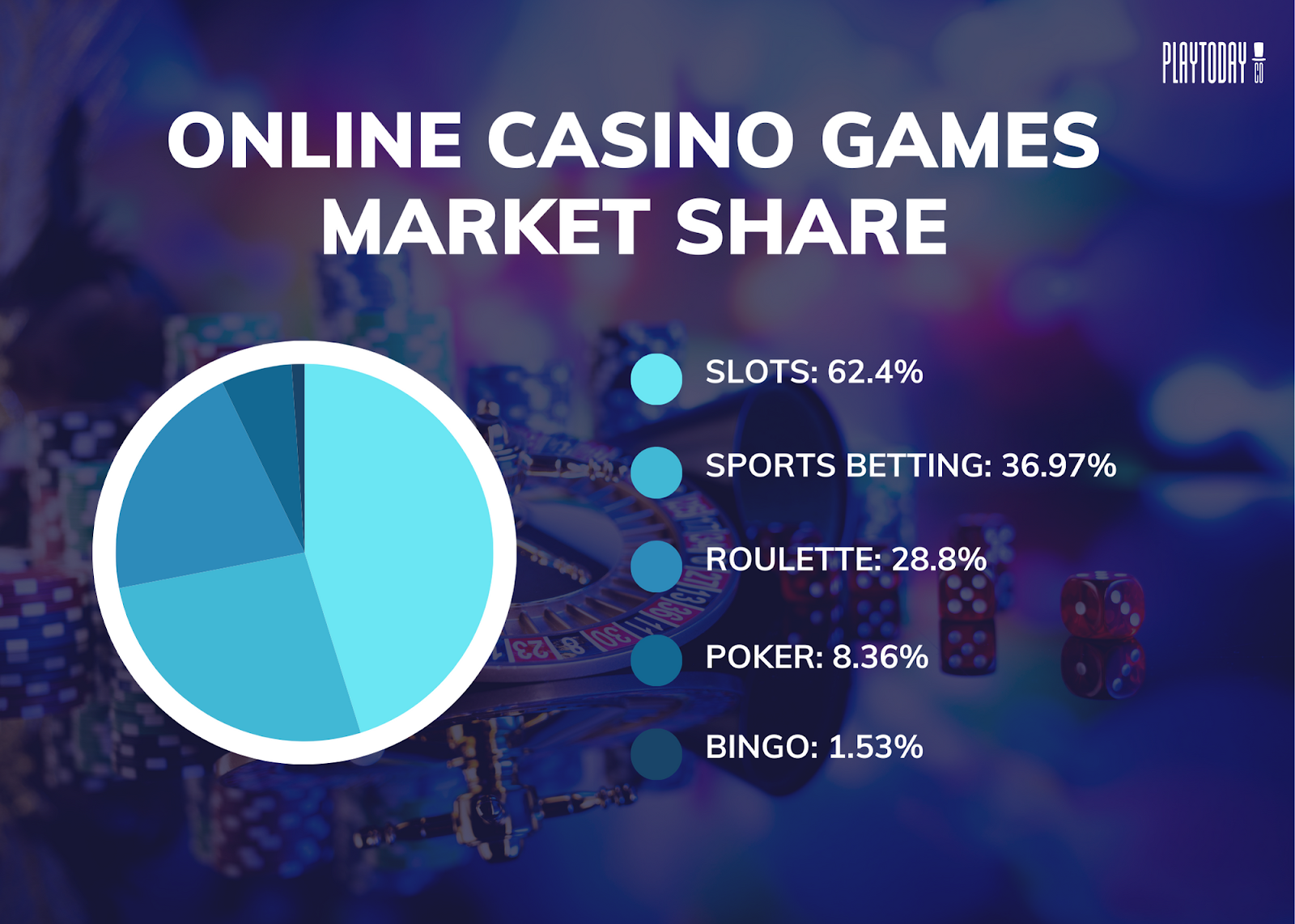
Spain’s gambling market keeps growing steadily and is a strong economic force. As one of the most avid gambling countries worldwide, the market would climb 13% CAGR from 2023 to 2028.
Online slot machines are the go-to option for most players, leading the industry’s market share. Let’s look at how much online casino games contribute to the market.
(*Sources: Global Information, Casino.org)
24. The start of 2023 saw the Netherlands’ online gambling industry reach a player account of 2.1 million bettors.
De Kansspelautoriteit (KSA), the Netherlands’ gambling regulator, reported that the country’s gross gaming result for 2022 was at €1.08 billion, 11.48% lower than the expected €1.22 billion.
The first showings of 2023 showed significant growth for the Dutch online betting scene, with a 37.7% year-on-year increase in monthly income from €90 million in January 2022 to €123 million in January 2023.
KSA added that the figures for the online gambling user base in January 2023 garnered 2.1 million users, a 158% increase from the previous year’s 799,000 players.
(*Source: Gambling Industry News)
25. In 2021, Poland’s online casino market earnings grew by 109.4%.
The Polish online casino industry was among the many markets to benefit from the COVID-19 lockdowns, making around PLN8.76 billion in 2020, which more than doubled to PLN18.34 billion in 2021.
The country categorized remote gambling as “Games of Chance,” one of Poland’s four legal betting forms under the Gambling Games Act of November 2009, mainly managed by the Totalizator Sportowy.
(*Sources: Statista, CoinPedia)
26. Football was Russia’s most bet on sport online in 2022, at $84.3 million.
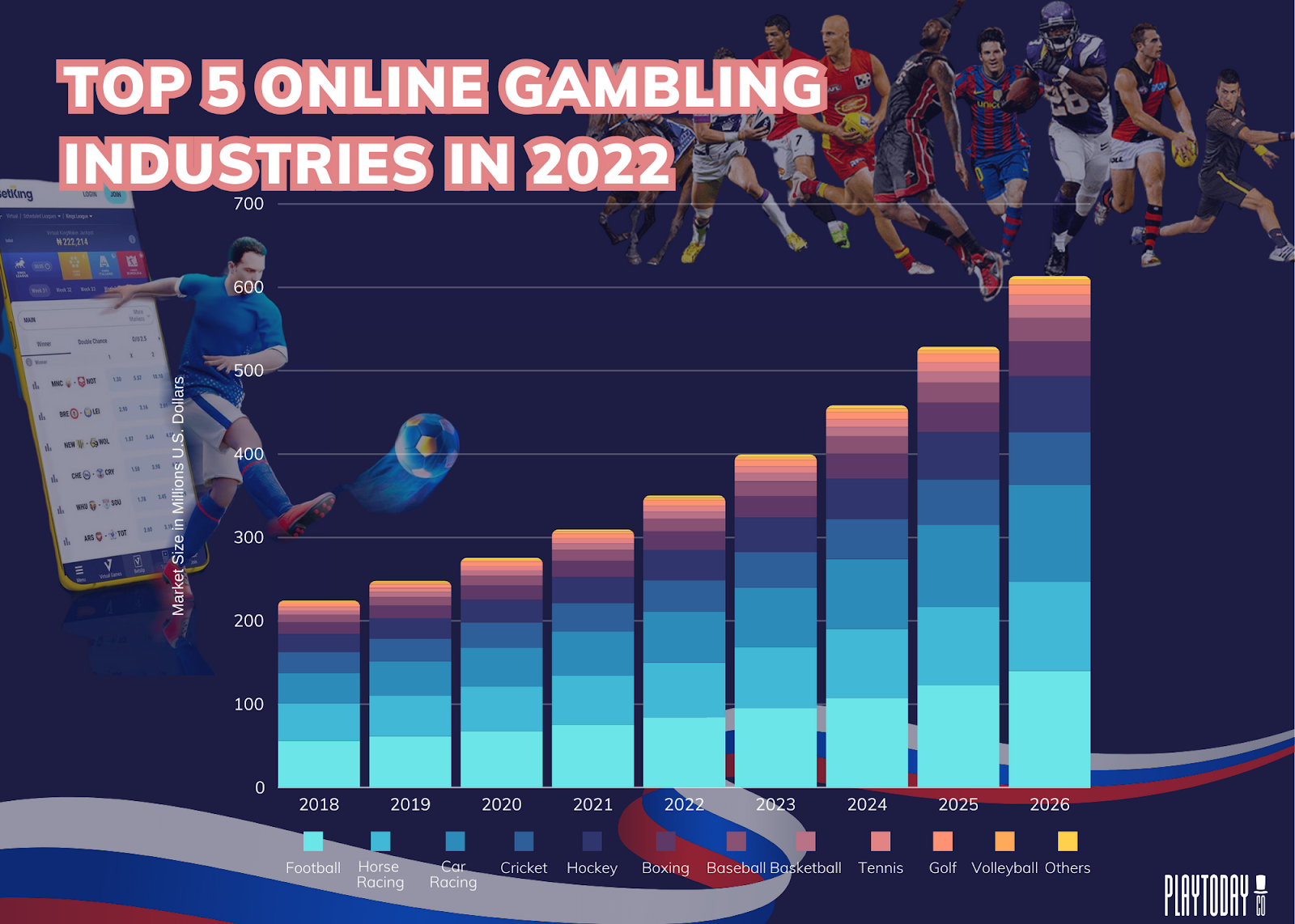
Experts foresee the Russian online sports betting market to increase by over 173% between 2018 and 2026, looming to generate around $613.5 million by the end of the forecast period.
Since 2018, Football has been the most bet on sport for Russia’s online sports betting community, with Horse Racing consistently coming in second.
2022 saw Football produce about $84.3 million, the highest revenue in Russia’s sports betting scene. By 2026, analysts see the sport to amount to $140 million.
| SPORTS | ONLINE SPORTS BETTING REVENUE IN RUSSIA (IN MILLION US$) | ||||||||
| 2018 | 2019 | 2020 | 2021 | 2022 | 2023 | 2024 | 2025 | 2026 | |
| Football | 56.2 | 61.4 | 67.7 | 75.3 | 84.3 | 95 | 107.6 | 122.4 | 140 |
| Horse Racing | 44.8 | 48.6 | 53.2 | 58.8 | 65.4 | 73.4 | 82.8 | 94 | 107.2 |
| Car Racing | 36.6 | 41.4 | 46.6 | 53.4 | 61.6 | 71.6 | 83.7 | 98.4 | 116.4 |
| Cricket | 25 | 27.3 | 30.1 | 33.4 | 37.4 | 42.2 | 47.9 | 54.7 | 62.8 |
| Hockey | 21.8 | 24.4 | 27.6 | 31.5 | 36.1 | 41.8 | 48.6 | 56.9 | 67 |
| Boxing | 13.6 | 15.2 | 17.1 | 19.5 | 22.4 | 25.8 | 30.1 | 35.2 | 41.4 |
| Baseball | 9.2 | 10.3 | 11.7 | 13.3 | 15.3 | 17.7 | 20.6 | 24.2 | 28.5 |
| Basketball | 5.3 | 5.9 | 6.6 | 7.5 | 8.5 | 9.7 | 11.2 | 13.1 | 15.2 |
| Tennis | 4.3 | 4.8 | 5.4 | 6.1 | 7 | 8 | 9.3 | 10.8 | 12.7 |
| Golf | 4.1 | 4.5 | 5.1 | 5.7 | 6.5 | 7.5 | 8.7 | 10.1 | 11.8 |
| Volleyball | 2 | 2.3 | 2.6 | 2.9 | 3.3 | 3.8 | 4.4 | 5.1 | 6 |
| Others | 1.6 | 1.8 | 2 | 2.2 | 2.5 | 2.9 | 3.4 | 3.9 | 4.5 |
(*Source: Statista)
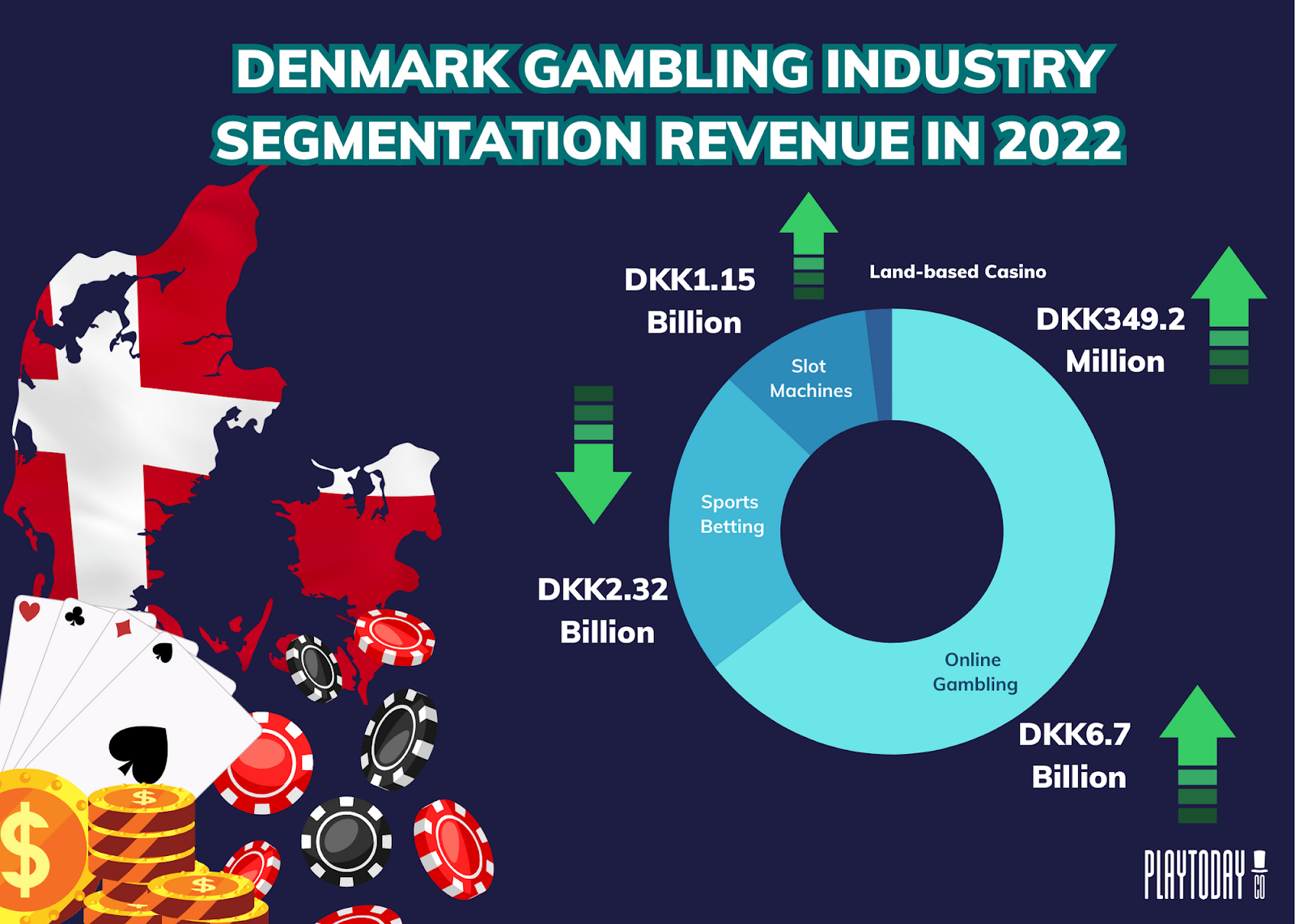
27. Denmark’s online casino contributed the most to the country’s gambling market in 2022.
The Danish gambling industry showed promising numbers in 2022. The market generated around DKK6.7 billion ($991.4 million), a 7.5% increase from 2021’s revenue.
Denmark’s online gambling scene was the biggest earner among the segmentations, bringing in DKK2.88 billion. Experts attributed the figures to the effects of the COVID-19 lockdowns.
Below is the revenue of Denmark’s gambling industry segmentations in 2022.
(*Source: iGaming Business)
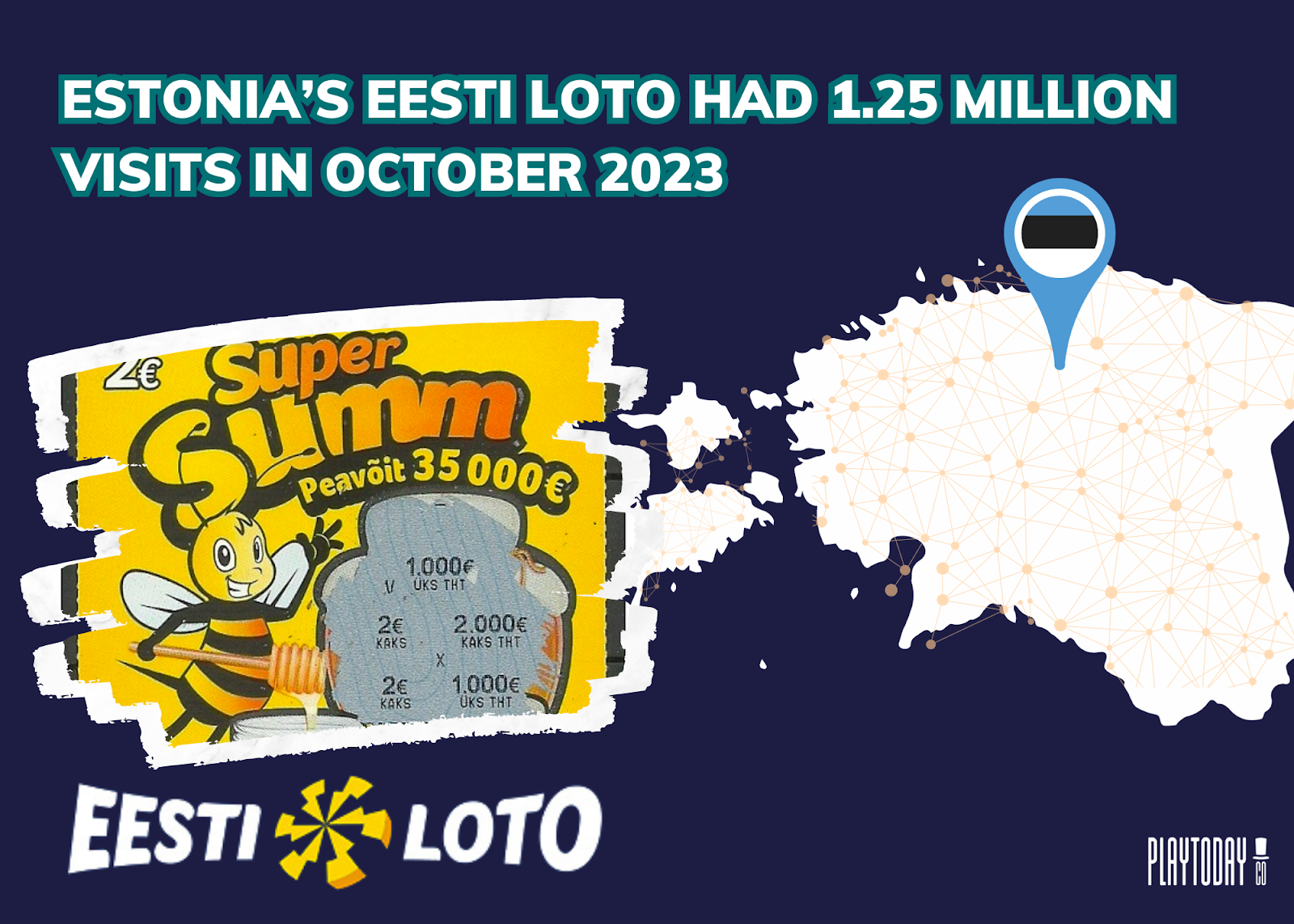
28. Eesti Loto was Estonia’s most visited online gambling site in October 2023, with 1.25 million visits.
Estonia’s iGambling scene is among Europe’s most prominent and sought-after markets due to fair regulations, low GGR taxation, lengthy licenses, and benefits for its operators and bettors.
Online lotteries bring the most income for Estonia’s iGaming market even with having the lowest user base count, with a $74.8 million yield and around 16,900 users in 2022 respectively.
Eesti Loto is the country’s top online lottery retailer, garnering around 1.25 million visits (55.61% MoM growth) in October 2023, 1.14 million of which are from mobile phone users.
(*Sources: Statista, Delasport, Semrush)
29. The Finnish online gambling market brought in an estimated €1.03 billion in revenue in 2022, a 24.1% increase from the previous year.
Finland has stringent regulations for its online gambling industry. The country’s online betting market is operated by its country-owned monopoly, “Veikkaus,” under the Finland Lotteries Act (1047/2001).
In 2022, Veikkaus held 50% of Finland’s online gambling market revenue, which the company reported had declined by about 3% from the previous year.
Q2 of 2023 saw the Finnish government impose a hybrid gambling regulation that combines a licensing system with Veikkaus’ monopoly with the following provisions:
- The future licensing system will regulate online casino games and online betting.
- Veikkaus Oy will retain its monopoly on slot machines, land-based casinos, brick-and-mortar betting, lottery tickets, and raffle games. Veikkaus will be divided into two separate legal entities:
- One operating in the field of monopoly services
- One in the licensed gambling market.
(*Sources: Statista, EGR, European Gaming, Borenius)
30. 2021 saw the Latvian online betting market make a 91.8% increase in yield.
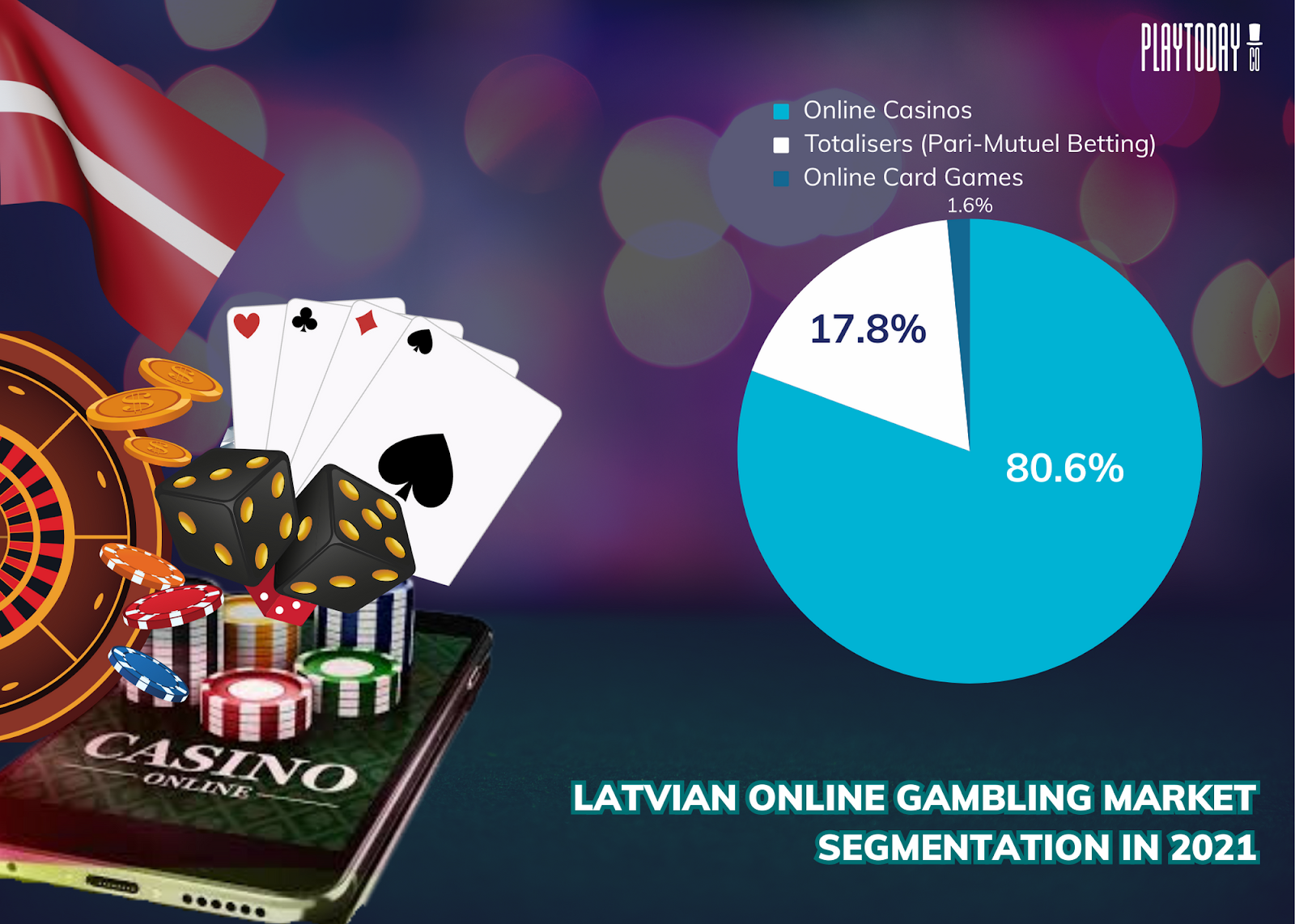
Latvia’s online gambling industry generated around €109 million in income in 2021, almost doubling the yield from the previous year. Below is the revenue for the segmentations of Latvia’s iGambling market:
- Online Casinos – €87.8 million (80.6%)
- Totalisers (Pari-Mutuel Betting) – €19.4 million (17.8%)
- Online Card Games – €1.7 million (1.6%)
Latvia’s Gambling and Lotteries Law of 2005 prohibits bettors from accessing unlicensed gaming sites. The law also outlaws Latvian banks from processing money from punters who engage in bets.
(*Sources: iGaming Business, MichelJones171)
31. Sweden’s online gambling segments created over 62% of the country’s entire gambling market income during Q2 of 2023.
The Swedish online gambling market, comprising the country’s online casinos and online sports betting, generated around SEK4.18 billion ($376.1 million), around 62.4% of the Swedish gambling revenue in Q2 in 2023.
This figure signified a minor 1.1% decrease from the previous Q2 of 2022. Swedish online gambling operators have generated a combined SEK8.36 billion ($752.2 million) in revenues.
(*Source: Gambling Industry News)
Online Gambling Facts and Stats in the Oceania Region
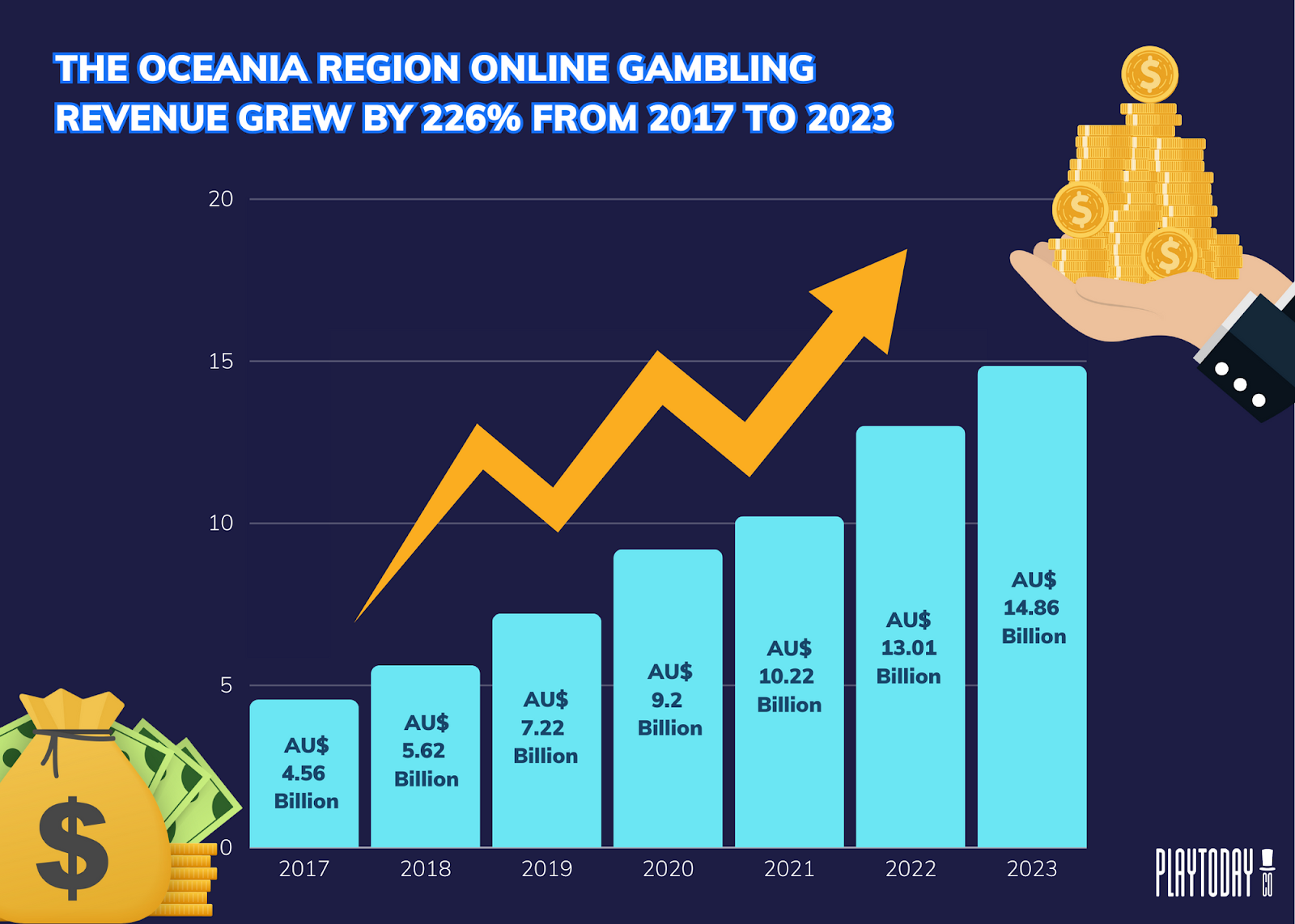
When the first online casinos started appearing in the Oceania Region in the early 2000s, the region started seeing growth in its online gambling market.
In 2017, Oceania’s online betting scene amounted to AU$4.56 billion. This figure would almost triple seven years later, at around AU$14.86bn in 2023.
The legalization of online gambling in Australia in 2017 has opened the country’s market to various players and opportunities worth exploring.
32. 2022 saw online gambling become Australia’s fastest-growing betting segmentation.
Studies suggested that more than 1 in 10 Australian gamblers (11%) have engaged in online gambling activities during the first six months of 2022, an 8% increase from 2020’s figures.
Australia’s online gambling industry generated around AU$6.86 billion (US$4.5 billion) in 2022, with experts attributing this yield to the COVID-19 lockdowns.
(*Sources: DSS, IMARC)
33. Australia expects a $7.2 billion online gambling market growth by 2028.
Economists project the Australian online gambling market to have a 7.09% growth rate from 2023-2028, with sports betting accounting for the most market share.
Some of Australia’s most bet-on sports online include:
- Horse racing
- Football
- Rugby
- Cricket
- Tennis
(*Source: Market Research)
34. An average Australian spends over AU$1,880 on online gambling yearly.
Online gambling is big in Australia, consistently growing with no sign of stopping any time soon. In fact, at 80%, Australia has the highest number of adult online gamblers globally, spending over AU$1,880 annually.
(*Source: Gambling.net)
35. 80% of New Zealanders have placed bets in online casinos.
New Zealand bans online gambling but has imposed exceptions for state-run online lottery, horse racing, and sports betting. The regulation made 1 in 10 New Zealanders wager on sports or racing.
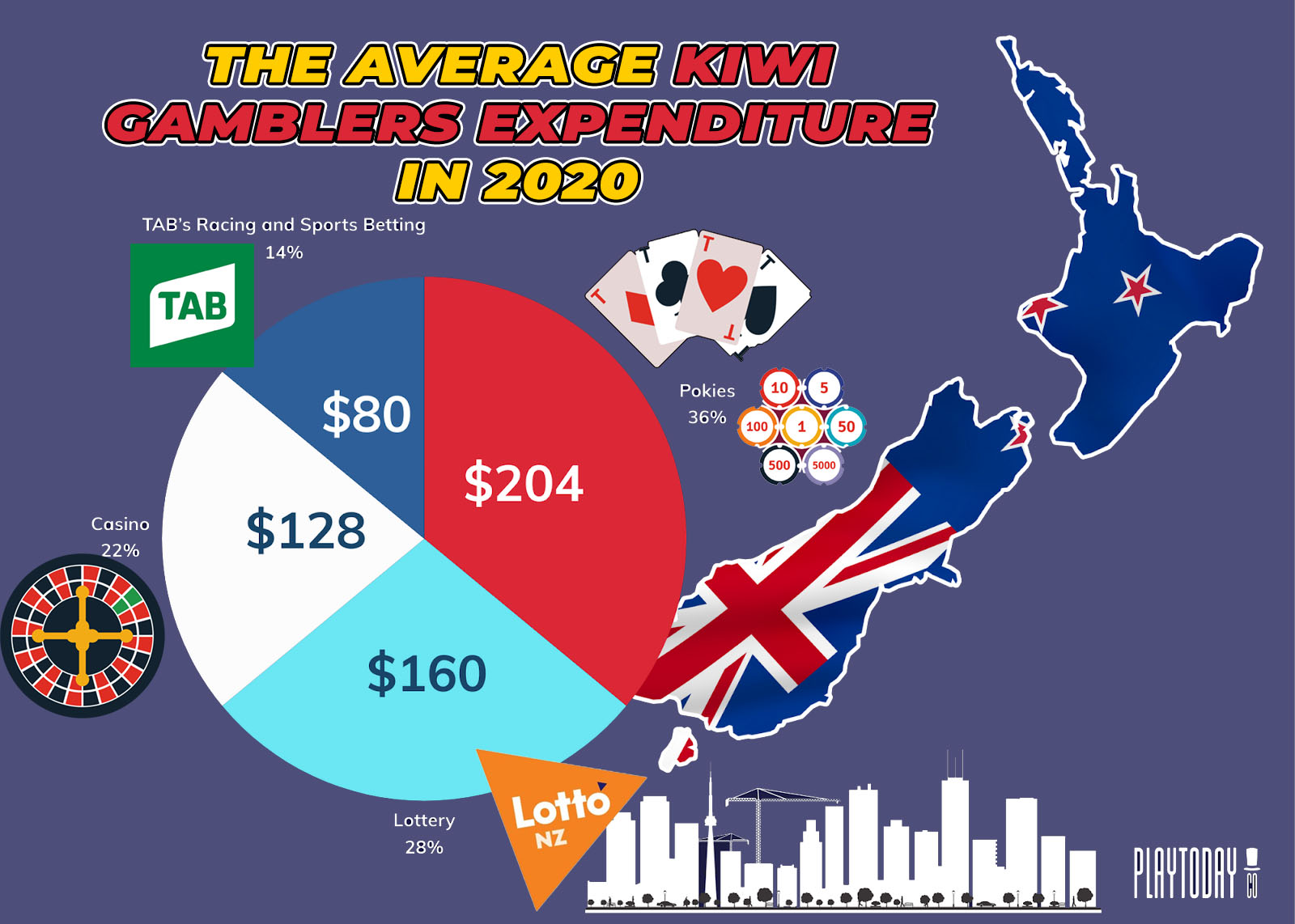
The average gambling spending per player is $572. Here’s where and how much they gamble:
- Pokies: $204
- Lottery: $160
- Casino: $128
- TAB’s Racing and Sports Betting: $80
(*Sources: Statista, PMCA Online, Radio New Zealand)
36. During COVID-19 lockdowns in 2020, around 65% of Kiwis engaged in online gambling using the MyLotto website.
Much of New Zealand’s online gambling revenue growth in 2020 was credited to the lockdowns that halted land-based casino operations, similar to most online gambling markets worldwide.
Around 65% of Kiwi online bettors accessed MyLotto during the Level 4 lockdowns, which grew to 71% when the restrictions decreased to Level 1 post-pandemic.
(*Source: Statista)
Online Wagering Statistics in Asia
Asian online gambling started in the early 2000s. Popularity surged due to technological innovations, increased disposable income, and regulations.
The entire Asian region generated around $8.84 billion in 2022, with a 7.95% CAGR from 2023-2027. The preferred games to wager on in the Asian market vary by country.
- China and Vietnam: Sports Betting
- Philippines: Online Casinos
- India: Online Lotteries and Poker
- Japan: Mobile Gaming
- South Korea: Mobile Gaming and eSports
Side Note
Asia held the most market share in global mobile gaming in 2023. With 600 million Chinese gamers, China remains the world’s largest esports market and user base in Asia and worldwide.
Let’s look at the online gambling industry in some Asian countries.
37. China’s online gambling market will reach over $15.7 billion by 2028.
With a whopping $9.9 billion in revenue in 2022 and $145 billion in online wagers, China’s market is a force to reckon with. The market would grow by 7.3% from 2023-2028.
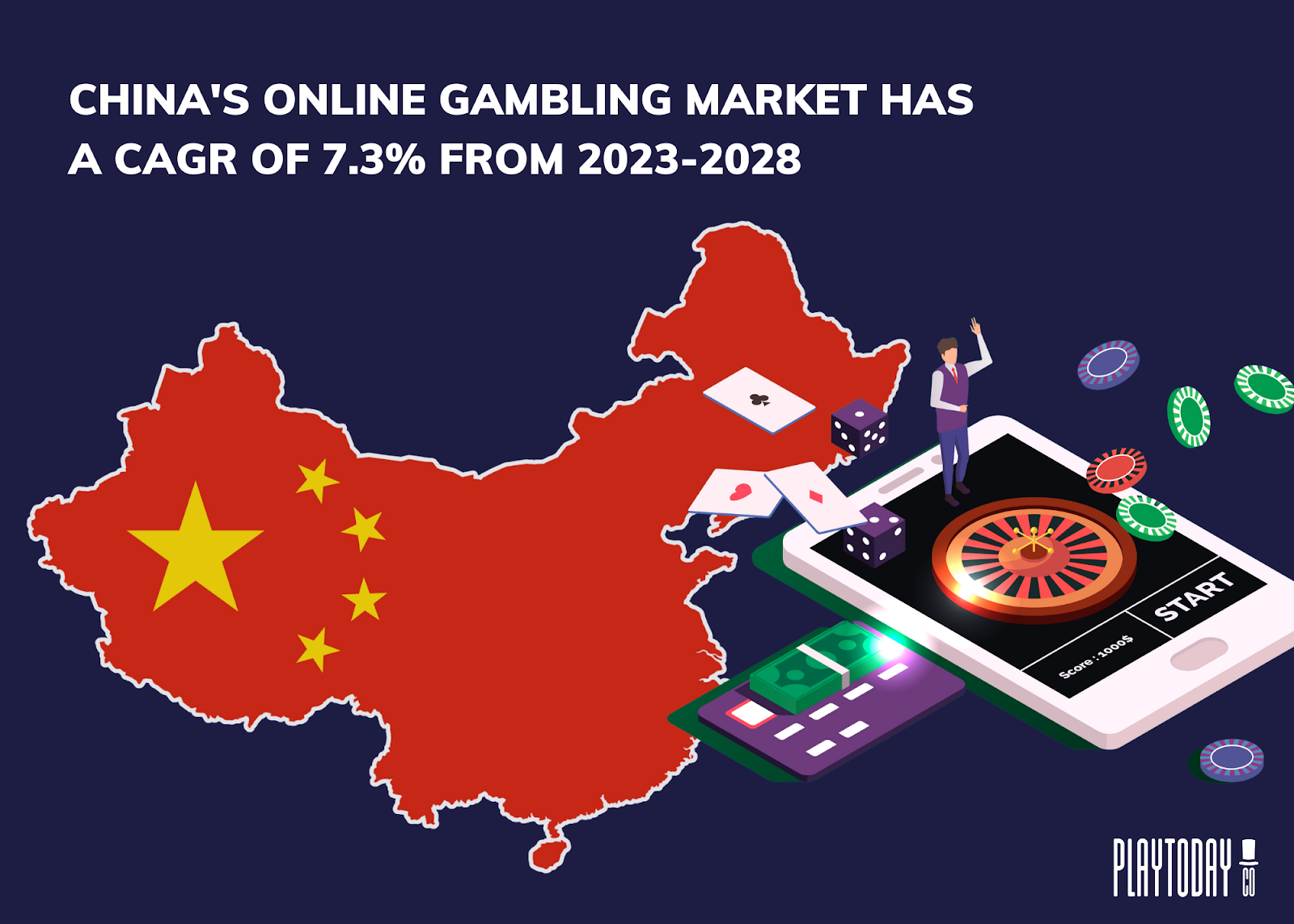
The growing interest in domestic and foreign gambling sites providing better rewards and high winning rates offers a favorable market outlook in China.
(*Sources: Market Research, Reuters, IMARC)
38. In 2022, Southeast Asia’s online sports betting market made around 46% of the total revenue of its online gambling industry.
Countries in the Southeast Asian region produced a combined $910 million in revenue from its online gambling scene, which its 4.1 million SEA bettors contributed.
Below is SEA’s online gambling industry, divided into three segments with their generated revenue in 2022:
- Online Lottery: $130 million
- Online Sports Betting: $420 million
- Online Casinos: $350 million
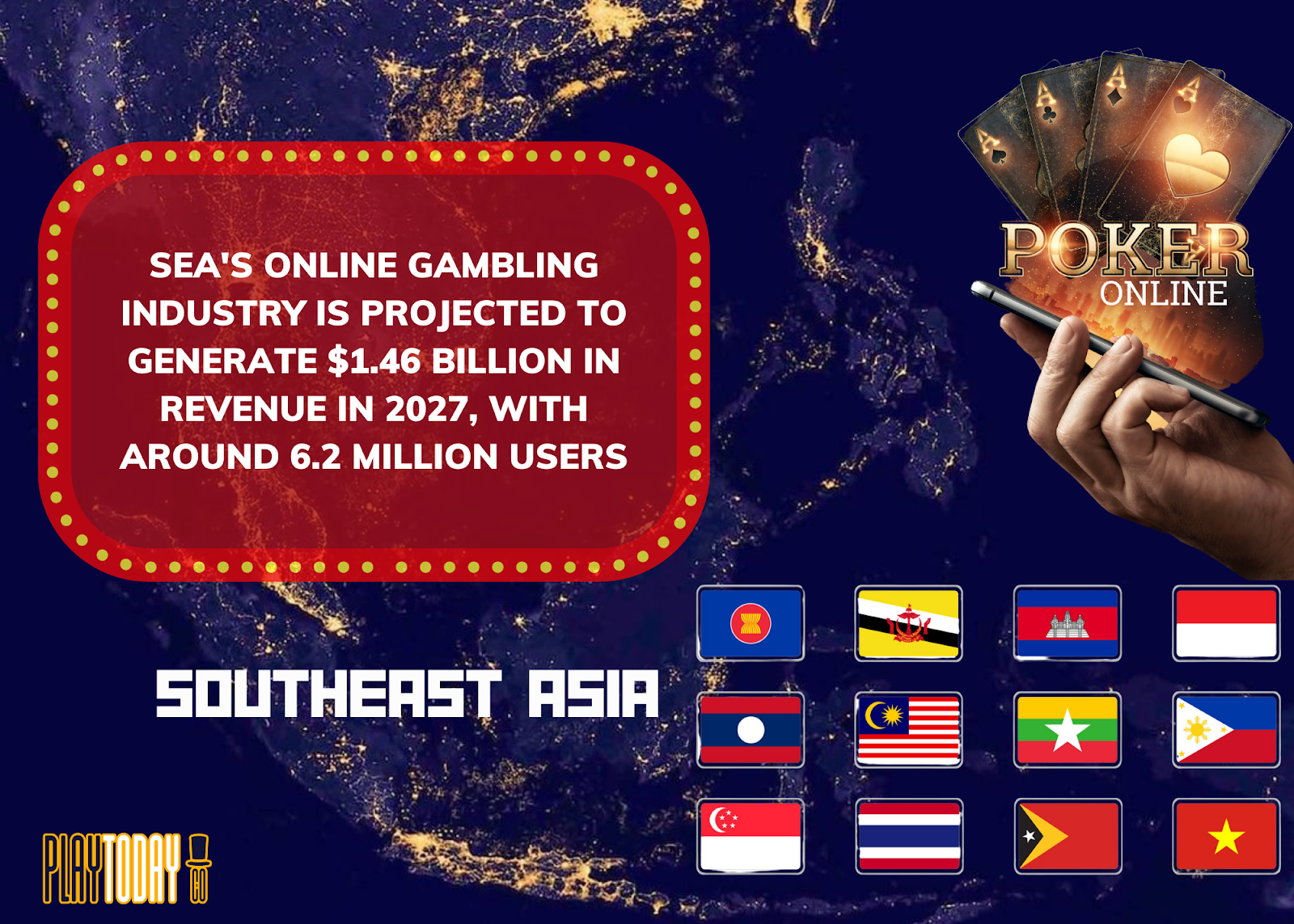
SEA is among Asia’s most active gambling areas, with experts predicting the betting population to grow to around 6.2 million, with a $1.46 billion online gambling revenue generated by 2027.
(*Source: Statista)
39. The COVID-19 pandemic boosted Japan’s online gambling market by 7.31% CAGR.
When the pandemic emerged in 2020, many Japanese gamblers shifted to online bets. The transition increased online gambling demand, upping the market’s size and profit.
2023 saw Japan’s online gambling market make JP¥729.5 billion, more than double that of 2019’s JP¥337.08 billion, showing how much the online betting industry has thrived in Japan.
Side Note
Japan’s massive online gambling revenue is an impressive figure to see, as online bets are illegal in the country. More so, Japan prohibits online casinos and outlaws Japanese citizens from gambling overseas.
(*Sources: Market Research, Statista)
40. Studies project Singapore’s online betting scene to generate around $8.6 billion by 2025.
The online gambling industry in Singapore amounted to $6.6 billion in 2020, with experts stating the market will have a 5.5% CAGR from 2020-2025.
The following games dominate the country’s online casino scene:
- Poker,
- Baccarat,
- Roulette,
- Blackjack,
- Slots, and
- Lotto.
Singapore is one of many Asian countries with strict gambling laws, with most available betting forms being state-regulated under its Singapore Pools.
(*Source: LinkedIn)
41. Most gamblers in the Philippines play in online casinos, with 2.5 million users in 2022.
Studies highlight that Filipino online casinos have consistently garnered the most players among the three online gambling segmentation since 2017, with a projected online casino population of 4.3 million in 2027.
Philippine casino goers love to play online due to many factors, such as:
- Welcome Bonuses and Various Promotions
- Increased Accessibility
- Great Variety of Games
- Convenient Payment Methods
- 24/7 Availability
(*Sources: Statista, Business News Asia)
Online Gambling Figures in Africa

The African online betting market has a compound annual rate of 12% from 2020 to 2025, reaching over $40 billion by 2025.
Many offshore gambling companies see this opportunity to tap into the African market potential and expand their regional operations.
Some of the biggest industry players worldwide that have established their presence in Africa include:
- Bet365
- William Hill
- Ladbrokes
Explore more of Africa’s online gambling performance below.
42. In 2022, Ghana’s online sports betting scene comprised more than 50% of its online gambling market.
With a revenue of $44.35 million, Ghana’s online gambling scene is among Africa’s competing markets.
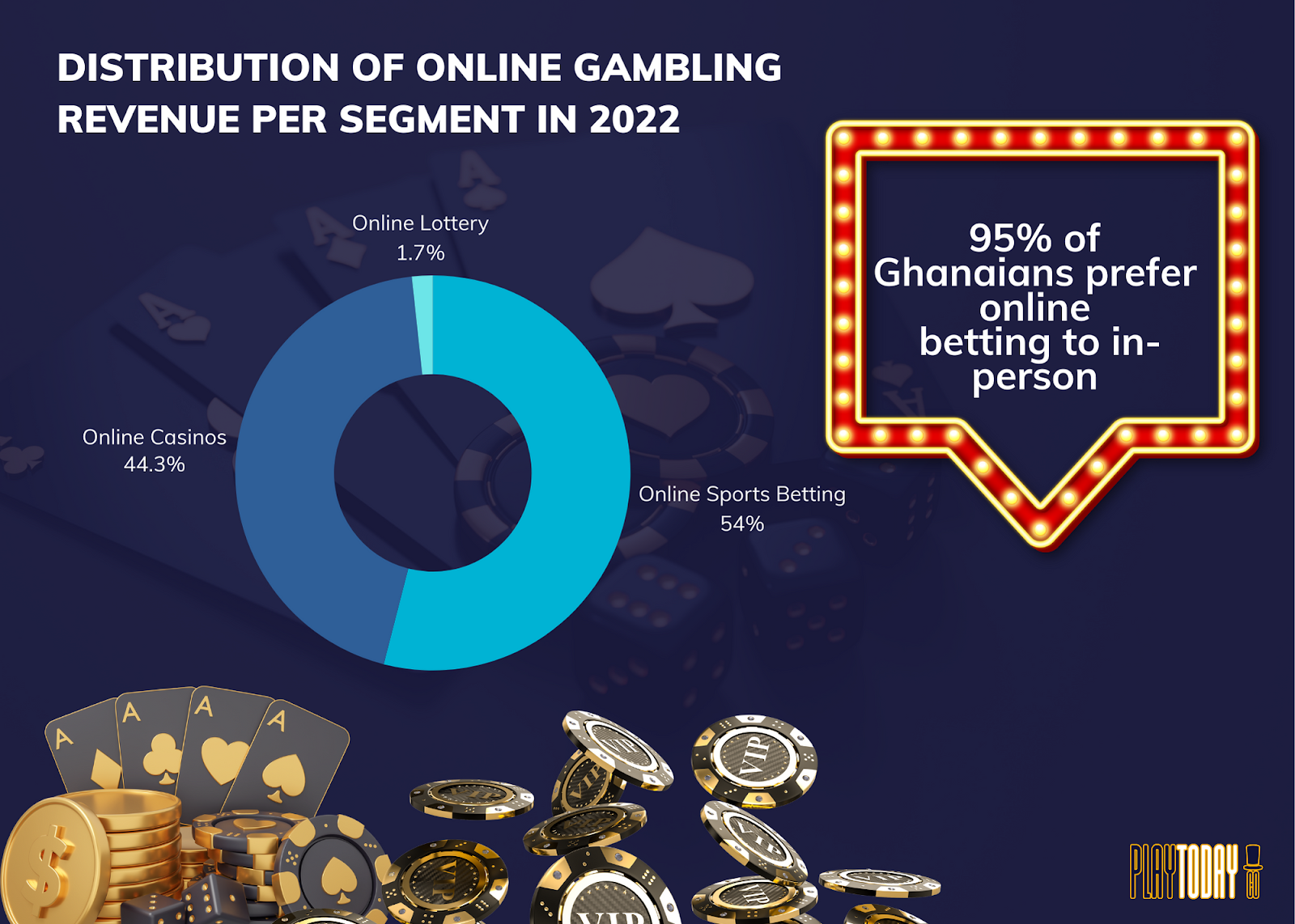
The country’s online sports betting made $23.97 million in 2022, around 54% of Ghana’s online gambling market yield that year.
Around 41.7% of Ghanaians participated in sports betting, with 95% of the mentioned sports bettors preferring to place wagers online.
(*Sources: Statista, GNA, TGM Research)
43. Kenya’s gross revenue tax decreased from 20% to 7.5%, boosting the country’s gambling industry.
Kenya is one of the biggest gambling markets in Africa, along with Nigeria and South Africa. The Kenyan online gambling industry has a yearly growth rate of 7%.
The revised taxation system and the wide acceptance of gambling positively affect the growth.
(*Sources: NTV Kenya, The Kenyan Wall Street)
44. South Africa drew R3.2 billion in taxes from online gambling in 2020.
The government benefits from a legal and regulated online gambling market, from crime decreases to tax revenue increases.
With South Africans spending R34 billion a year on gambling, the market would generate $736.30 million in 2023, growing by 8.20% from 2023-2027.
(*Sources: NGB South Africa, Statista)
Side Note
Cricket is big in South Africa, holding a 39% viewership share in the country. The sport is among the most watched and bet-on games for South Africans.
Exploring Online Gambling Market Segmentation
Technological advancements in gambling have led to various developments, creating innovative products and gambling experiences for gamers, such as instant withdrawal methods and “no-limit casinos.”
The industry branches into three main segments: online lottery, online casino, and online sports betting, all of which have significance to each country that prefers these specific betting products.

This section divulges these segments to discover essential statistics and facts that highlight the complex world of online gambling.
Knowing the Real Score of Online Sports Betting Statistics
Sports betting is a pastime and a reliable income for many worldwide. With a CAGR of 11.34 % from 2023-2028, the online sports betting market will generate around $109 billion by 2028.
Technology has created a dynamic sports betting landscape, providing gambling enthusiasts with immersive experiences, advanced sports betting odds and analytics to learn, and convenient platforms.
Let’s see how online sports betting is shaking up the market.
45. 13% of US gamblers bet on sports at least once a month.
The US sports betting market generated $920 million in 2019. With 41 states introducing sports betting regulations since 2018, the US annual revenue will reach $8 billion by 2025.
Sports betting is embedded in US culture. The country is home to many of the world’s top sports leagues and athletes. The US is also known for its Fantasy Sports Betting culture, showing Americans’ obsession with sports.
(*Source: American Gaming Association)

Quick Tip
The repeal of the 1992 PASPA Act in 2018 allowed US states to create their versions of gambling laws. Ensure you know where to place a legal bet in the US.
46. Football accounted for the largest sports betting market share in 2022.
Football registered a market share of over 24% in 2022, followed by basketball and baseball (10%) and horse racing (8%).
| Rank | Sports Type | Percentage |
| 1 | Football | 24% |
| 2 | Basketball and Baseball | 10% |
| 3 | Horse Racing | 8% |
The ever-increasing annual sports events, such as the NFL, NBA, IPL, and EFL, contribute to the continuous domination of online sports betting in the gambling scene.
(*Sources: Grand View Research, EIN News)

Helpful Articles
Check out the top 10 most profitable sports worldwide, contributing to the industry’s growth amidst challenging times.
47. 61.6% of online gambling revenue in 2020 came from sports betting.
Mobile sports betting has become one of the primary platforms for wagering on favorite sports teams, players, and leagues.
With a global sports betting market share of 70%, mobile sports betting accounted for 48.9% of the gambling market worldwide.
(*Source: Tech Business News)
Fun Fact
The developments in the sports betting world have shown how much the segmentation has changed since its inception.Innovations such as mobile sports betting, crypto casinos, and sports betting analytics have provided sports punters with exciting ways to wager on their favorite teams and players.
Facts and Figures Behind Online Casinos in 2023
Globally, online gambling hubs have grown by 4.3% from the previous year, up to 4,792 online casinos and betting operations in 2023. Around 2,000 (41.7%) of those hubs are online casinos.
In 2021, the online casino market made around a monthly average of $830 million. The industry generated an average of 6.1% yearly increase in the casino landscape.
Gamblers love the convenience and accessibility that online casinos provide, with around 84 million users preferring to play on online gambling sites in 2022.
Quick Tip
In online casino sites, the average time that gamblers can withdraw their winnings is around 24-48 hours, while others take 3-7 days, depending on the withdrawal method.Experts recommend that bettors use cryptocurrencies, which allow them to withdraw their winnings instantly within 1-24 hours.
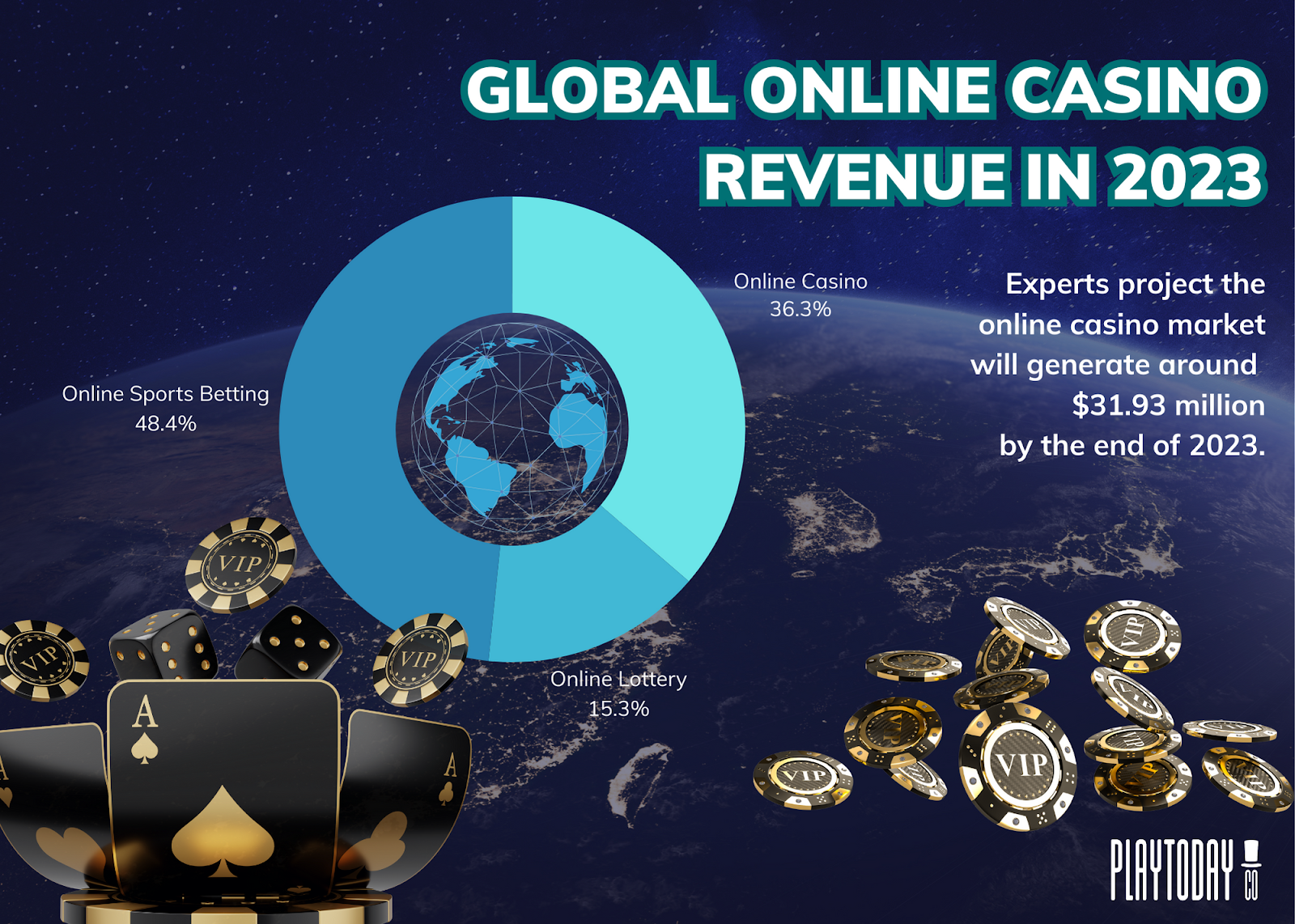
48. The global online casino market will reach an estimated $31.93 billion in 2023.
The 2023 online casino industry revenue increased by 20.13% from the previous year. With an overall CAGR of 8.67% from 2023-2027, the market will generate around $44.53 billion by 2027.
The income represents about 36.32% of the total online gambling revenue expected by the end of 2023. The top three online casinos that dominated the market are:
- Flutter Stars Group – $5.28 billion
- GVC Holdings -$4 billion
- Bet365 – $3.5 billion
(*Sources: Statista, Wales 247)
49. Experts foresee the online casino to garner an estimated 12.4 million user base in 2027.
The online casino industry had around 84 million in 2022, which increased by 12% to 94.1 million by the end of 2023.
The figures highlight how bettors flock to online casinos’ features and services, such as easier transaction methods, blockchain gambling, and immersive casino themes.
(*Sources: Statista, Digital Connect Mag)
Side Note
Among the many factors for the growth of the online casino community are the features and services that the site provides to its patrons, such as instant play access.
Bitstarz is an example of a beloved site that has dominated the online casino market with its features and offerings, which many other casino sites have adopted.
Global Online Lottery Statistics in 2023
Lotteries and raffles have always been a niche to the gambling population, whether for casual bettors or lottery enthusiasts who have made playing the lottery a daily habit.
Worldwide, online lotteries record the lowest numbers in revenue, users, and user penetration but contribute the highest numbers regarding average revenue per user.
50. Analysts foresee the global online lottery industry having an 8.8% CAGR from 2022 to 2030.
In 2022, the online lottery market worldwide amounted to around $15.2 billion, with experts projecting the market to reach a revised yield of $29.9 billion by 2030.
The online draw-based lottery segment looms to generate an estimated $15.3 billion by 2023 at 8.3% CAGR.
(*Source: Globe News Wire)
51. The worldwide online lottery had a 0.4% user penetration rate in 2022 and 2023.
The online lottery industry has consistently recorded the lowest user penetration rate among the online gambling segments since 2017, at a minimal 0% – 0.1% increase yearly.
Experts forecast the online lottery market user penetration to reach around 0.5%, with an expected 41.3 million users in 2027.
South Korea has recorded the highest online lottery user penetration in 2023, at 5.5%.
(*Source: Statista)
Online Gambling Addiction, Demographic, and Losses Stats
In 2023, the online gambling demographic showed an increase in users aged 18 and 34, driven by tech savviness and accessibility to online sites. More women have also engaged in online gambling in recent years.
The rise in online wagers also resulted in more problem gamblers and net losses among this group, highlighting the global need for stricter betting laws to manage harmful gambling and financial risks.
Exploring the Facts and Figures Behind Online Gamblers’ Demographics
“Knowing your customers is key to success” is a business principle that holds even for online gambling. Learning bettors’ profiles determine how online casinos develop their innovative features.
While online bettors vary from country to country, here’s a quick look at the average player’s profile:
- Gender: Male (60%) and Female (40%)
- Age: 18-35
- Preferred Devices:
- Mobile (50%)
- Laptop (40%)
- PC (26%)
- Tablet (18%)
- SmartTV (3%)
- Where Players Gamble:
- At home (96%)
- At work (11%)
- While traveling (10%)
- At a pub (8%)
- At a sports venue (5%)
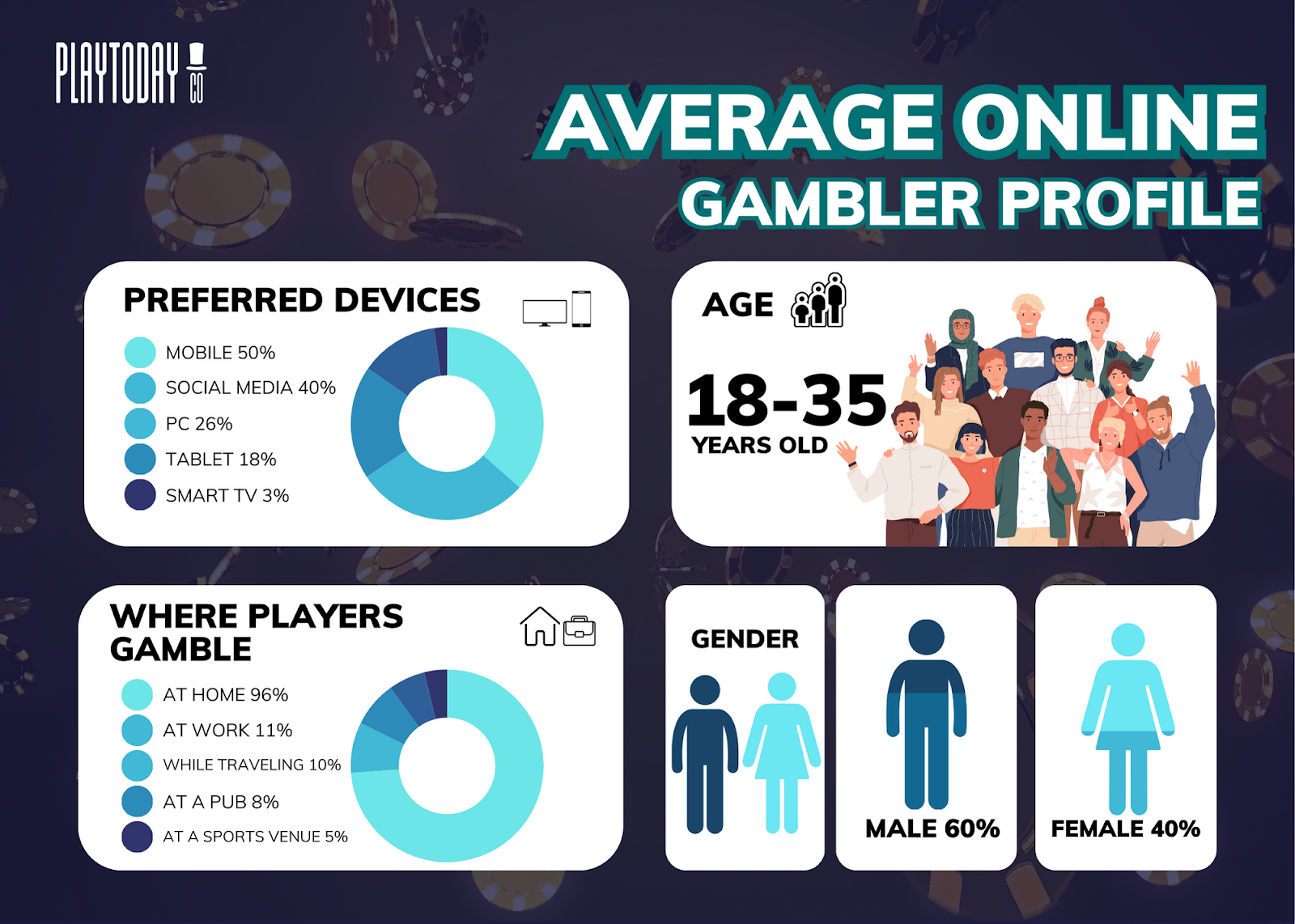
Get to know the target audience of the online gambling market.
52. Men comprise more players than women of the 80 million online gamblers worldwide.
The gambling participation rate rises dramatically for male players. 77% of males aged 25-34 gambled in the past, with nearly 60% gambling once a week.
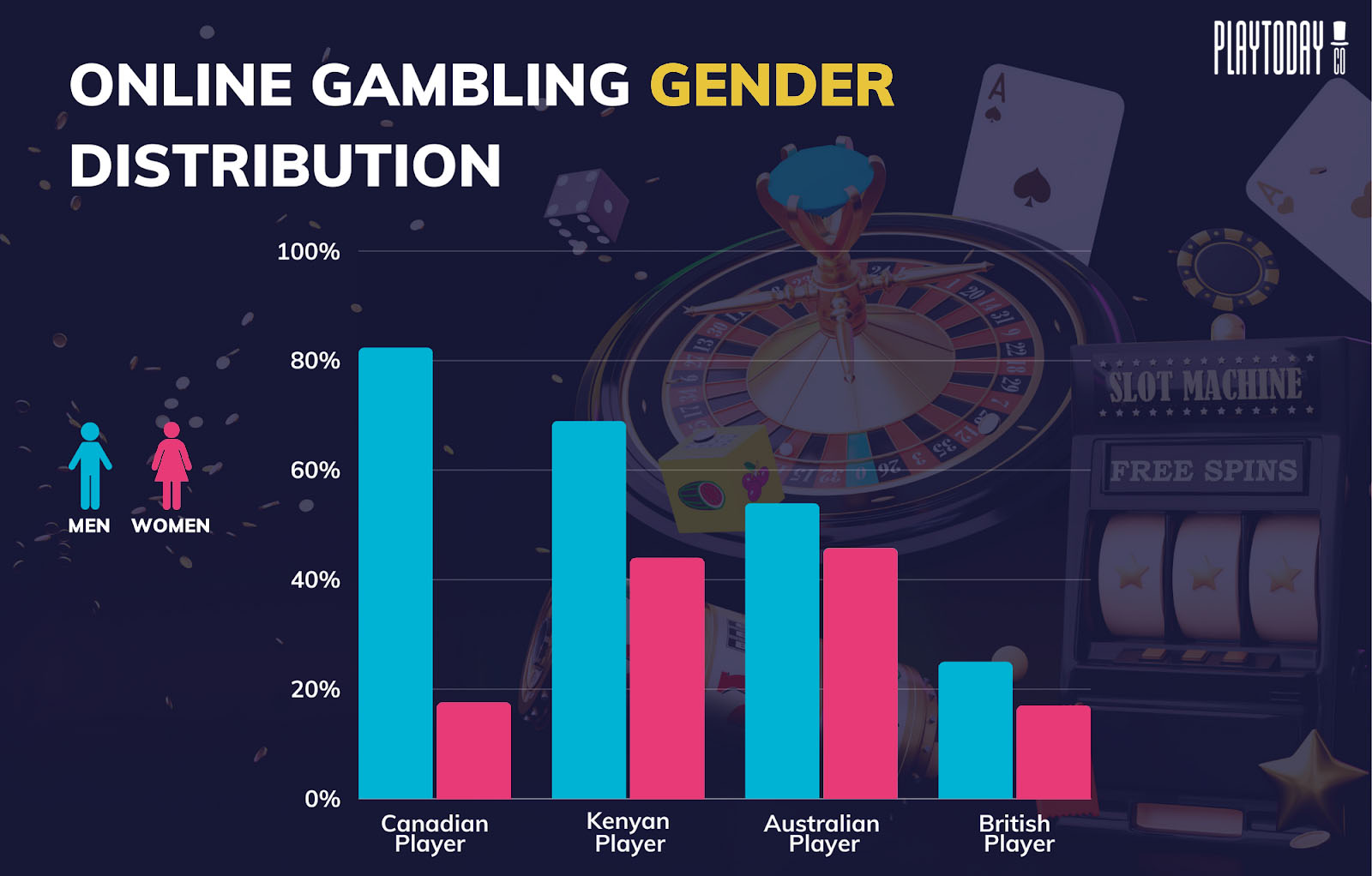
Take a look at these online gambling gender distribution:
- Canadian players: 82.4% men and 17.6% women
- Kenyan players: 69% men and 44% women
- Australian players: 54% men and 45.8% women
- British players: 25% men and 17% of women
(*Source: Focus On)
Side Note
Studies suggest that men gamble for the strategies and risks, while women do it for fun and socialization. That aspect is one reason why men have a higher average betting debt than women, as shown below: Men’s average gambling debt: $55,000 – $90,000Women’s average gambling debt: $15,000Learn more about male vs. female gambling comparisons in this article, and discover the disparities between the betting habits of each gender.
53. 70% – 80% of online bingo players worldwide are women.
A critical factor that analysts consider outside of nation-by-nation progress is the rise of female gamblers. Women now play a more active role in profit margins and user penetration than ever.
Of the 100 million online bingo players worldwide, women aged 30-50 comprise 70%-80% of that online bingo population, showing the growing rate of female gamblers.
(*Source: Casino.org)
Fun Fact
Studies indicate that the Number 6 is the most frequently called Bingo number.
54. In the UK, people between the ages of 35–44 enjoy online gambling the most.
The age group of Brits who gamble online the most is between 35–44, at 29.3%, and the next is those aged 45-54, at 25.4%, as most people at that age have stable incomes and can afford to gamble regularly.
(*Source: Statista)
55. Online gambling is common among people aged 34.
As gambling becomes increasingly online, the average age of gamblers decreases as online gambling platforms become more accessible to tech-savvy young adults.
Millennials and Gen Zs form a big part of the online gambling market in some countries.
| Country | Age Range | Percentage |
| UK | 16 – 24 / 25 – 34 | 16.9% / 23.5% |
| Canada | 18 – 39 / 20 – 29 | 70% / 47% |
| China | 35 and below / 36 – 50 / 51 – 65 | 50% / 37% / 9% |
(*Source: InTarget)
👉 Reminder
As online gambling becomes more accessible to younger people, it’s crucial to know that most countries require gamblers to be 18.
56. Patrons of online gambling in the US tend to be high and low-earners.
The income levels of online gamblers vary. In the US, high and low-income groups gamble the most online, while it is less prevalent among middle-income earners.
The US online gambling percentage based on annual income is as follows:
| Income Range | Percentage |
| $100,000 above | 26% |
| $75,000 – $99,999 | 25% |
| $50,000 – $74,999 | 20% |
| $25,000 – $49,999 | 19% |
| $25,000 below | 23% |
(*Source: Business News This Week, bonus.com)
57. A 2021 research found that around 28% of UK female gamblers preferred betting online.
According to the study, 28% of female bettors expressed that they “fantasized about winning,” which was why they favored online gambling.
More so, female online gamblers comprised about 24% of the UK’s online betting scene.
(*Source: Gambling Insider)
Uncovering Online Betting Addiction Statistics
The past 15 years saw significant changes to the gambling environment, including the increasing online gambling addiction concerns.
About 2.5 million Americans have severe addiction problems. Key motivators behind this global health concern include:
- High accessibility to online gambling
- Immersive interface of platforms
- Ease of spending money
Problem gambling can happen to anyone, but the findings below will surprise you.
58. Men are 81% more likely at-risk or problem online gamblers than women.
Gambling is one of the most frequently reported addictions among players. As online participation is higher among men than women, gambling problem is common for the former.
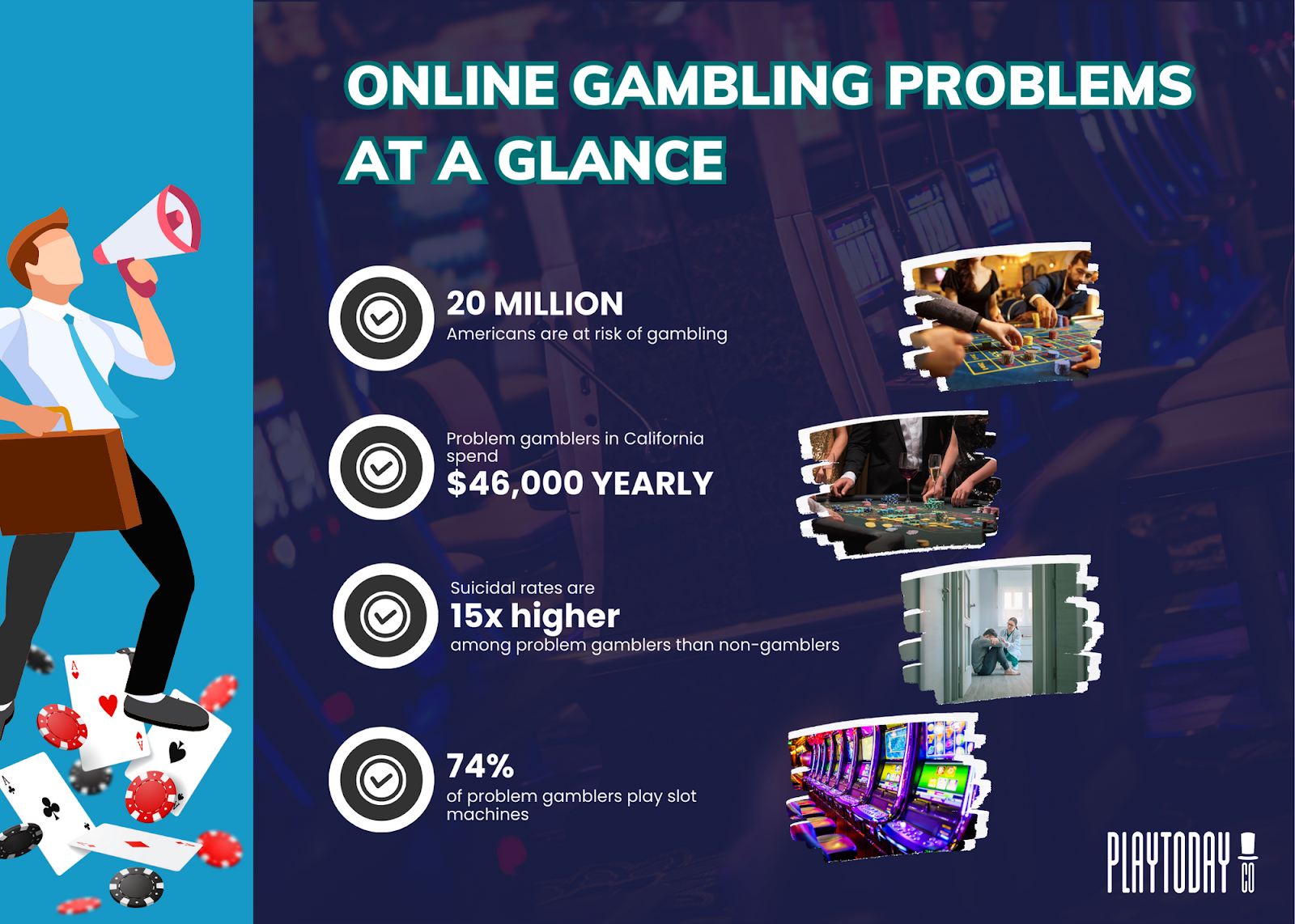
Here are the online gambling problems at a glance:
- 20 million Americans are at risk of gambling.
- Problem gamblers in California spend $46,000 yearly.
- Suicidal rates are 15 times higher among problem gamblers than non-gamblers.
- 74% of problem gamblers play slot machines.
(*Source: NCBI)
59. 15% of players consider online gambling more addictive than land-based gambling.
Around 19% – 28% of online gamblers find it more convenient to spend money on online gambling platforms than in physical gambling facilities.
The convenience of digital payment methods increases gambling and losses, especially for problem gamblers, as they feel they are not spending ‘real’ money.
(*Source: NCBI)
Side Note
An important yet overlooked aspect that gamblers need to consider when partaking in online casino games is their overall psychology. Having the proper mindset before playing games like Crash Gambling can significantly help a bettor have a fun and responsible betting experience.
60. About 64% of bettors increased their online gambling activities during the COVID-19 lockdowns.
A 2020 research highlighted that the restrictions during the pandemic put around ⅔ of UK gamblers at risk of spending either more money or time betting online, including online lotteries.
UK online gamblers have increased their betting sessions by over an hour. The total number of sessions lasting over an hour increased by 23% compared to last year.
(*Source: Gambling Commission)
61. Over 20 million people in the US have a gambling addiction.
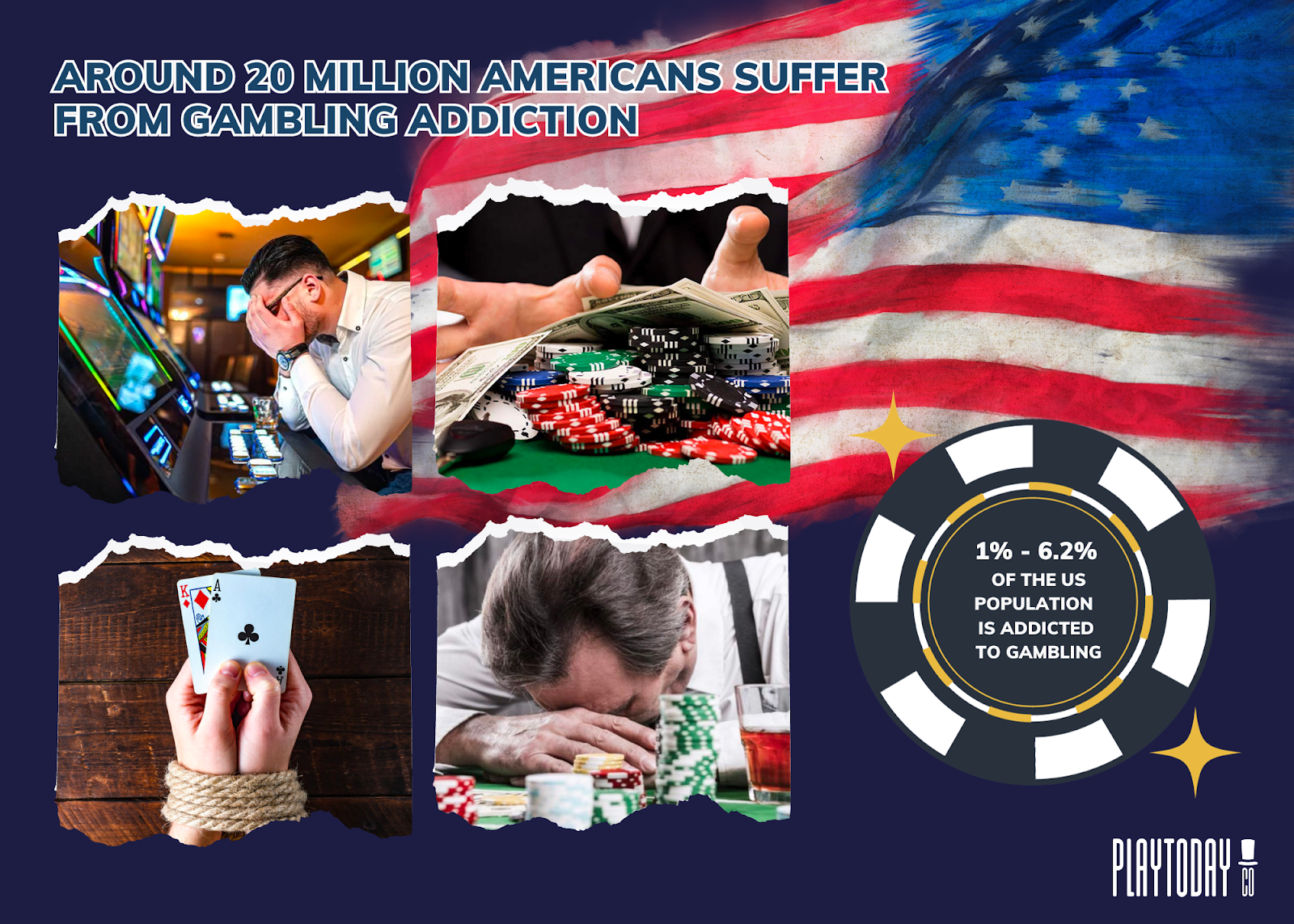
Between 1% and 6.2% of the US population has a gambling addiction. This number covers all types of betting, including social games, which experts claim can still cause problem gambling.
Another study claims that out of the 5 million Americans suffering from compulsive gambling, only 8% were likely to seek help for their habits.
Casual betting increases the potential of a person engaging in extreme gambling and eventually displaying problematic behaviors.
(*Source: Quit Gamble, Worldometers, Rutgers)
62. Two-thirds of adult gamblers reported early exposure to gambling.
Gambling habits have a direct relationship with early exposure to the activity. Preventive measures must be factored into adolescents to reduce the prevalence of problem gambling.
Adolescent problem gambling can create complexities, such as:
- Criminal behavior
- Poor academic performance
- Financial difficulty
- Depression
- Suicide
- Low self-esteem
- Lack of social interaction
- Substance abuse
(*Source: American Psychological Association)
63. People aged 18–24 are at the highest risk of experiencing harm from gambling.
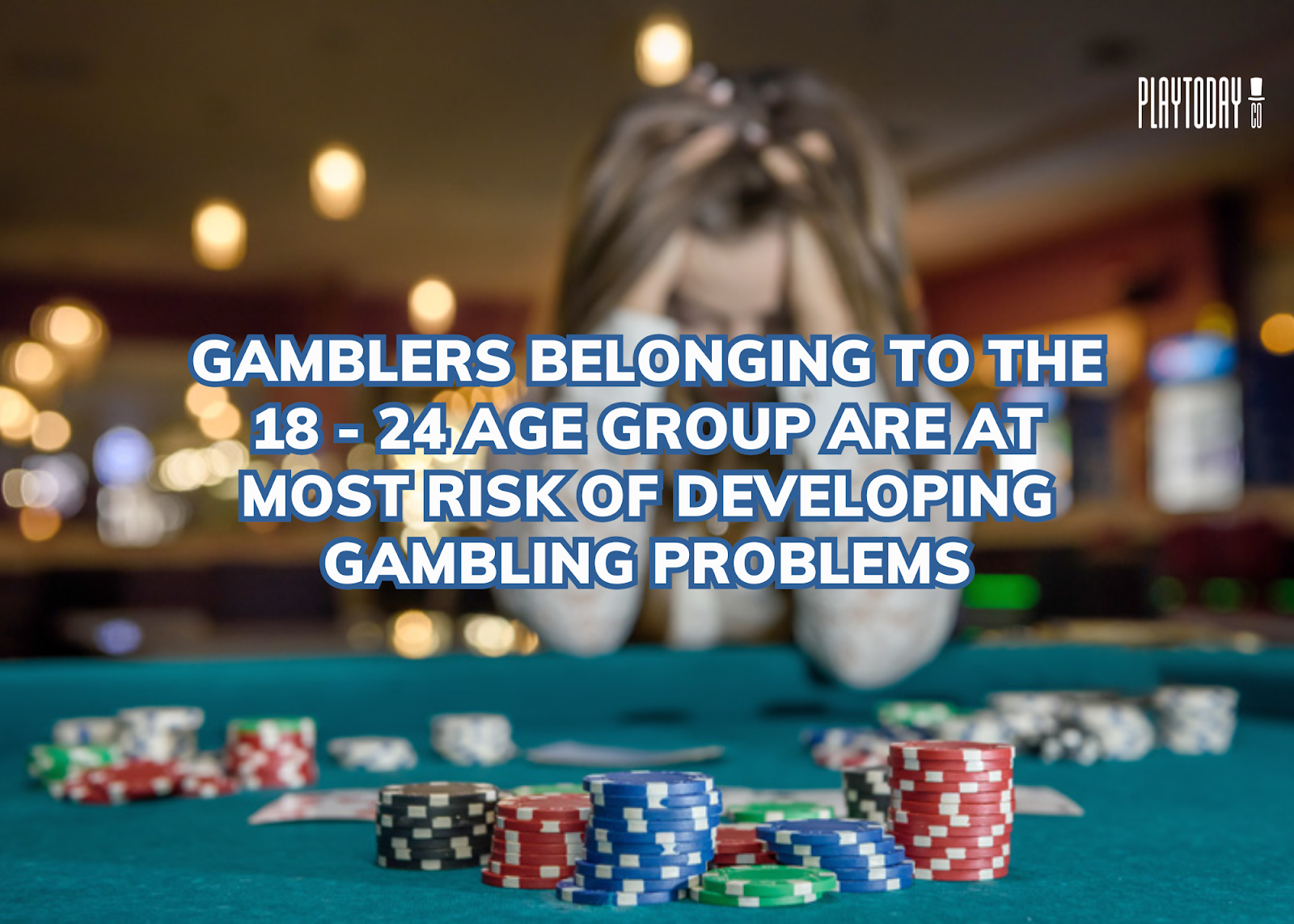
Drunk gambling can be harmful to anyone, but it applies more to those who fall under the 18–24 age group.
Betting while intoxicated affects decision-making, making gamblers take more risks and leading to longer sessions in which players lose more money and damage personal relationships.
(*Source: Responsible Gambling)
64. Women are 31% more likely to develop problematic behavior due to online casino gambling.
The online gambling stats highlight how women tend to develop harmful behavior at a higher rate than men, 31% and 26%, respectively.
One such problematic behavior is called chasing losses, which is hazardous and leads to repeated gambling to compensate for the previous losses.
(*Source: Dovepress)
Helpful Articles
By exploring this blog post on enhancing your winning odds in a casino, you can avoid developing harmful gambling habits.Read about vital topics, such as strategies, tips, and the right mindset when placing bets.
Capturing Wagering Net Losses Statistics
People lose money in gambling, but heavy gamblers lose the most. Australia has the highest gambling losses worldwide, with around $1,200 per person yearly.
The chances of winning are pretty decent on any given day. Gamblers won 30% of the days they wagered. However, continued gambling might not be the best bet.
Let’s keep tabs on how much money gamblers put at stake.
65. 24% of bettors experience financial problems and don’t see much revenue from online gambling.
Online gambling is enjoyable to many, but it also jeopardizes relationships, mental health, and finances.
The study suggests that at least 24% of the respondents experienced financial problems directly from online gambling, while 36% stated feeling heavy anxiety and stress due to online betting.
(*Source: Money, Mental Health Policy Institute)
66. Over 420,000 British gamblers lost at least £2,000 annually.
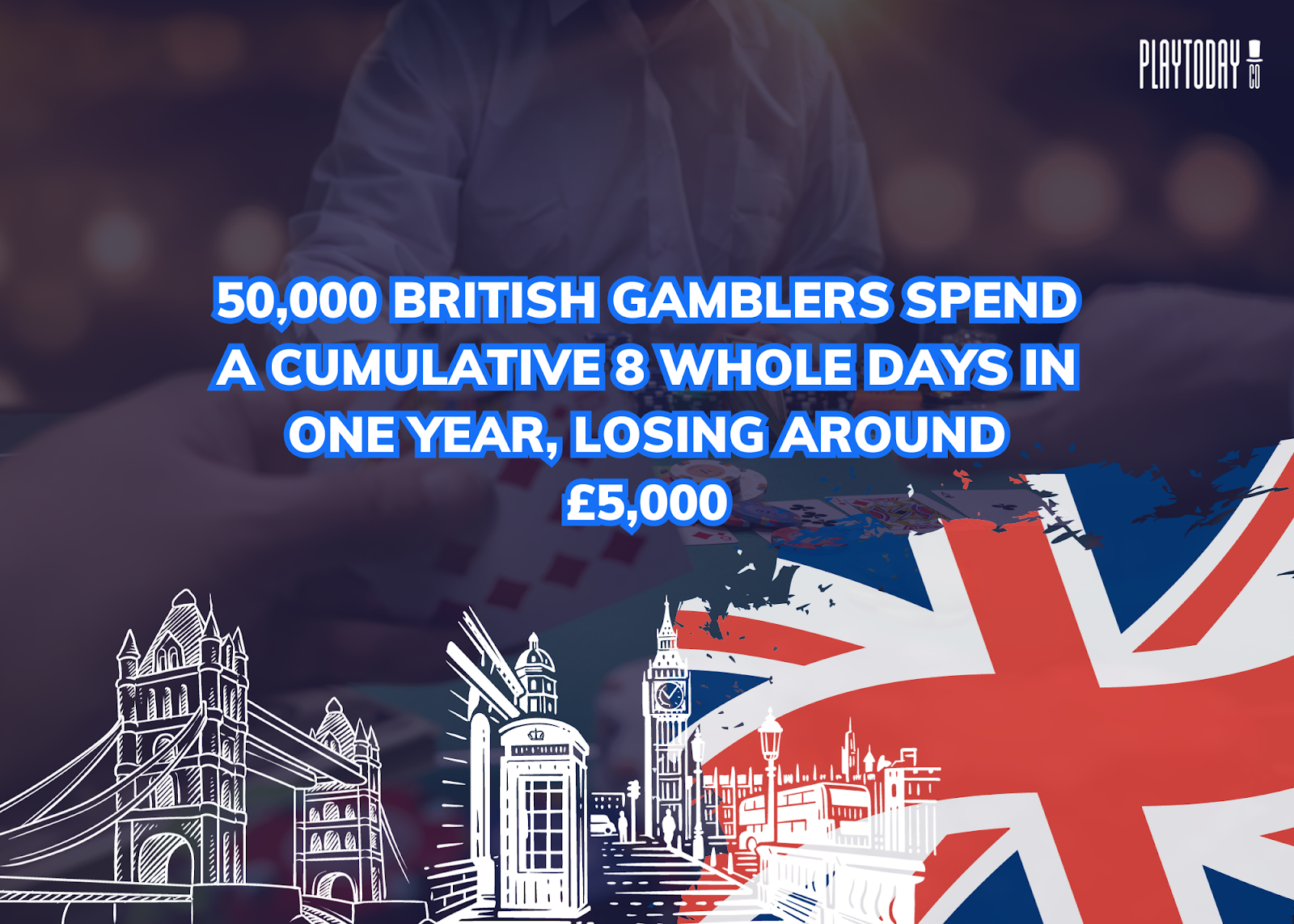
The gambling industry singled out online casinos for a reason. About 50,000 individuals play the game for eight full days a year and lose an average of £5,000.
Interestingly, 20% of the poverty-stricken regions accounted for the most online gambling losses, contributing 25% to the industry’s revenue.
(*Source: The Guardian)
67. 95% of heavy gamblers lost money to online gambling.
Most of the top 10% of biggest bettors lost money, with some losing tens of thousands of dollars. In the small set of winners, few won more than $150.
(*Source: Business Insider)
68. Australia’s net losses in online sports betting rose to AU$7.1 billion in 2021.
In 2021, Australia ranked 3rd in online gambling losses globally. The country recorded an 80% swell in the online sports betting market losses from 2019, around A$3.2 billion.
The latest data saw 1 in 10 Aussies participating in online gambling in 2022, spending around AU$7 billion that year on online gambling.
(*Sources: Reuters, Steve Robson)
Fun Fact
Various countries have different terms for Slot Machines.Gamblers in Australia and New Zealand call slots “Pokies,” derived from “Poker Machines.” The Brits call Slot Machines “Fruit Machines” or “One-Armed Bandits,” while the US calls them simply “Slots.”
Latest Developments in the Online Gambling World
The online gambling industry has drastically progressed. Online betting platforms have taken advantage of the growing technological advancements, such as new devices and services.
This section discusses the recent developments and changes to the online gambling scene, from 5G technology adoption, blockchain casinos, and VR devices to post-pandemic recoveries.
Online Gambling Growth and Trends Figures in 2023

Gone are the days when gambling enthusiasts had to go to the nearest casino. Betting is now at the fingertips with few taps on devices anytime and anywhere.
The developments in online betting have shown how factors such as smartphones and cryptocurrency have evolved the industry to new heights.
As a multi-billion market, it’s crucial to understand the dynamics of online gambling worldwide. Read the growth and trends behind the growing online betting market in the next section.
69. Despite the popularity of online betting in the US, 44 areas have yet to legalize the industry.

Alt Tag: US Map Where Online Gambling Is Legal
While it’s true that online gambling is prevalent globally, it doesn’t mean that all of it is legal. Bettors worldwide go to extreme lengths to bypass restrictions and sometimes access black markets.
In the US, only 7 out of 51 states and districts have passed a bill to legalize online gambling, including:
- Connecticut
- Delaware
- Michigan
- New Jersey
- Rhode Island (Launching in 2024)
- Pennsylvania
- West Virginia
(*Source: Inquirer)
Quick Tip
Online Casino licenses are expensive to acquire and maintain. A license to operate an online betting website costs around $20,000 to $120,000. Operators must also pay a yearly fee of $25,000 to retain the license.
70. The Russo-Ukrainian war’s global effects spread to online bets, leading to a decreased CAGR of 9.1% by 2027.
The escalation of the Russo-Ukranian war in 2022 had short-term but significant impacts on the global economy, including online gambling, which primarily worsened due to the pandemic.
Statistics show a 0.2% decrease in CAGR by 2027 compared to what was initially forecasted in 2023, which was 9.3%, amounting to $88.64 billion.
(*Source: Business Research Company)
71. The boom of the 5G network in 2021 has led to a better gaming experience for online gamblers.
Online casino operators’ adoption of 5G technology in 2019 created an influx of advancements in the online gambling industry. The technology has enhanced the overall betting ordeal for gamers.
5G has enhanced several features offered by online casinos. These features include the following:
- Improved Fairness and Security
- Faster Access and Connectivity
- Fewer Instances of Disconnections and Delays
- Enhanced Traffic Growth
- Possibility of Virtual Reality (VR) Gambling
- Further Growth for Mobile Betting
- Better Gambling Opportunities and Flexibility
(*Sources: Globe Newswire, Game Industry, Valve Time)
Side Note
Social Casino Gaming is among the many forms of gambling boosted by 5G, gaining a forecasted value of $9.25 billion in 2027.
Although Social Casinos do not require players to place monetary value to play and win, the industry is still booming, with 2.9 billion users.
72. Less than ⅓ of global players use digital wallets when gambling online.
The online gambling industry’s growth brought many payment options for players. 3 of 10 (28%) global online sports bettors prefer digital wallets.
Here are some of the most popular payment methods used by players:
- Credit and Debit cards
- E-wallets
- Bank transfers
- Cryptocurrency
(*Sources: Paysafe, Analytics Insight)
73. A 2020 study suggested that 70% of the betting revenue worldwide came solely from mobile gambling.
Smartphones have changed the gambling scene. Many online casinos have recently optimized their games for mobile phones. More so, mobile payments have become popular with bettors.
Around 70% of the online betting revenue came from mobile gambling in 2020, with experts foreseeing a 12.1% CAGR from 2023-2032, amounting to $173.87 billion by 2032.
(*Sources: The European Business Review, Market Research Future)
Helpful Articles
For gamblers, learning how to manage their bankrolls is as important as studying the statistics and the strategies. Players must know how to limit their gambling expenditures to ensure a safe, fun, and responsible online gambling experience.
Counting on the Statistics Behind Crypto Gambling
Crypto casinos are one of the latest online gambling trends shaping the industry’s future as we know it. Interest in crypto gambling rises because of these cryptocurrency features:
- Faster payments
- Improved security
- Better transparency
Let’s track the growth of crypto gambling, with thousands of active players in some of the best blockchain casinos worldwide.
74. In 2022, the crypto gambling market was worth $250 million.
The global crypto-gambling market’s estimated value is a quarter of a billion. The market will likely grow in value as hybrid casinos increase.
(*Source: Crypto Wisser)
75. Crypto bets increased 2.2 times between Q1 2021 and Q1 2022.
Increased mobile payment adoption gives more people easy access to cryptocurrency. As a result, the total crypto bets more than doubled in the same period between 2021 and 2022.
| 📉 Q1 2021 | 2,925,599,422 |
| 📈 Q2 2022 | 6,342,214,971 (116.7% growth) |
(*Source: Softswiss)
76. 35.96% of all bets in the first quarter of 2022 used cryptocurrencies.
Crypto gambling is rising since only 26.30% of all bets used cryptocurrencies in the first quarter of 2021. Meanwhile, bets with fiat currencies declined in the first quarter of 2022.
| 📈 Q1 2021 | 73.7% |
| 📉 Q2 2022 | 64.04% |
(*Source: Softswiss)
77. 50% of all Bitcoin transactions are gambling-related.
Although far from mass adoption, more e-commerce websites support cryptocurrencies as a payment method.
While Bitcoin transactions mainly occur in crypto casinos, other purchases that use this include:
- Real estate
- Cars
- Jewelry
- NFTs
- Insurance
(*Source: Before You Bet)
78. Bitcoin accounted for 72.80% of all cryptocurrency bets in Q1 of 2022.
Crypto bets using Bitcoin were the most popular among crypto gamblers.
Here are the popular cryptocurrencies used by players:
- Bitcoin: 72.80%
- Ethereum: 13.45%
- Litecoin: 6.45%
- Dogecoin: 2.56%
- Tether: 2.79%
(*Source: Softswiss)
Helpful Articles
Don’t miss out on online gambling trends. Check out the list of best blockchain casinos in 2023 and the accepted cryptocurrencies
79. Around 70 blockchain casinos were operating in 2022 globally.

In 2022, around 70 crypto-friendly casinos operated legally worldwide, all combined for $2.8 billion. 30% of the crypto casinos process exclusive cryptocurrency payments, while 70% accept crypto and fiat currencies.
Players find it inconvenient as 80% of crypto casinos undergo KYC checks, which is beneficial for them, as most casinos only require an email registration and only for large withdrawals.
(*Sources: NBC News, Bitrates)
80. Crypto gamblers wager around $3 million worth of cryptocurrencies daily.
Crypto casino gambling is more popular than ever. Crypto gamblers have increased, with 30,000 using the digital currency to bet at least once a week.
(*Source: Casino Guardian)
Side Note
More gamblers prefer betting with cryptocurrencies due to the anonymity and fast deposits and withdrawals that crypto offers.
Virtual Reality Casino Statistics and Facts

Among the rising developments in online gambling are VR casinos, giving gamers a complete casino experience in the comfort of their homes using a VR device and the proper online casino site.
In 2022, the Virtual Reality casino industry generated around $16.2 billion, with a projected $84.3 billion in revenue by 2030.
Explore more facts and figures about the Virtual Reality Casino scene and learn how quickly the segmentation has been growing.
81. The US virtual reality casino market accounted for 31.48% of the virtual reality casino market in 2022.
In the post-pandemic “new normal” gambling landscape, VR casinos are among the trending betting products that curious bettors have tried since VR technology emerged in the video game scene.
The US VR casino scene held the largest market share, generating around $5.1 billion in 2022, about 31.5% of the total revenue for the industry.
(*Source: GII Research)
82. PokerStars: Vegas Infinite recorded an average of 10.6 hours of total playtime in 2023.

Vegas Infinite is the VR version of Poker released by PokerStars. The game provides VR gamblers an immersive gaming experience, fun social moments, and a chance to compete worldwide with Poker players.
PokerStars: Vegas Infinite has an estimated player base of around 630,000 and an active player count of 27,000 in 2023. The game scored a popularity score of 3, with 10.6 hours of average playtime.
(*Sources: PlayTracker, Card Player)
Side Note
Experts forecast the online poker market to make around $283.42 Billion in 2032 due to the increasing use of smartphones, internet usage worldwide, and VR technology.
83. Social Club Virtual Reality is among the most popular VR casino games bettors play.
In the VR casino reality world, there are several available casino games that the VR casino technology can simulate for their players.
Among the top games players visit is Social Club VR, which allows them to engage in virtual conversations and play various casino games such as Slots, Poker, and Blackjack.

Below are the top VR casino games in 2023:
- Social Club VR
- Bullet Roulette VR
- PokerStars VR
- Blackjack Bailey VR
- Jackpot VR
(*Source: Zyber VR)
The Bottom Line
In the era of technological advancements, it’s no surprise that online gambling is a multi-billion dollar industry. With emerging global trends, the industry continues to expand.
The advent of online platforms, mobile devices, applications, cryptocurrencies, and laws significantly transformed the gambling scene.
If these trends continue, exciting times are ahead for online gambling enthusiasts worldwide.
FAQs
What is the most popular online gambling activity?
Sports betting has become the most popular online gambling activity, with a market share of 40.3%, followed by poker ($3.7 billion), casinos ($2 million), and lotteries ($1 million).
Who are the target audience of online gambling?
On average, 60% of online gamblers are male, and 40% are female.
What gambling game is the most addictive?
Electronic gambling machines and online casinos are more addictive than lottery tickets.
How much money do people lose from gambling?
The US lost $100 billion in gambling yearly, with male and female gamblers owing an average of $55,000-$90,000.
How does crypto gambling work?
Users deposit their chosen cryptocurrency into their casino wallet, play games using these funds, and withdraw winnings back to their crypto wallet.
List of sources
- Statista
- The Business Research Company
- Casino
- Statista
- Statista
- IMARC
- Statista
- Globe News Wire
- Statista
- NPC Gambling
- Forbes
- American Gaming Association
- Reader’s Digest
- Globe News Wire
- Analytics Insight
- TGM Research
- Delasport
- Delasport
- Delasport
- Statista
- Research and Markets
- Gambling Insider
- CDC Gaming
- Statista
- Mordor Intelligence
- Statista
- Casino
- CMS-Law Now
- Statista
- Mordor Intelligence
- Gambling News
- Mordor Intelligence
- Statista
- Market Research
- Casino Tops Online
- Statista
- Statista
- Schoenherr
- GII Research
- Casino
- Gambling Industry News
- Statista
- CoinPedia
- Statista
- iGaming Business
- Statista
- Delasport
- Semrush
- Statista
- EGR
- European Gaming
- Borenius
- iGaming Business
- MichelJones171
- Gambling Industry News
- Statista
- ACMA
- DSS
- IMARC
- Market Research
- Gambling
- Statista
- PMCA Online
- Radio New Zealand
- Statista
- FC Network
- Market Research
- Reuters
- IMARC
- Statista
- Market Research
- Statista
- Statista
- Business News Asia
- Globe News Wire
- Statista
- GNA
- TGM Research
- NTV Kenya
- The Kenyan Wall Street
- NGB South Africa
- Statista
- Mordor Intelligence
- American Gaming Association
- Grand View Research
- EIN News
- Tech Business News
- Statista
- Wales 247
- Statista
- Digital Connect Mag
- Globe News Wire
- Statista
- Focus On
- Casino
- Statista
- InTarget
- Business News This Week
- Bonus.com
- Gambling Insider
- NCBI
- NCBI
- Gambling Commission
- Quit Gamble
- Worldometers
- Rutgers
- American Psychological Association
- Responsible Gaming
- Dovepress
- JPost
- Money and Mental Health Policy Institute
- The Guardian
- Business Insider
- Reuters
- Steve Robson
- Inquirer
- Business Research Company
- Globe News Wire
- Game Industry
- Valve Time
- Paysafe
- Analytics Insight
- The European Business Review
- Market Research Future
- Crypto Wisser
- SOFTSWISS
- Before You Bet
- NBC News
- Bitrates
- Casino Guardian
- GII Research
- PlayTracker
- Card Player
- Zyber VR
 Meet the Author
Once wrote serious life-saving stuff for the government, now unleashes his inner geek on the blog world. When not taking a deep dive into comics and video game lore or performing music, he dreams of chilling in a cold, cozy spot with a beer in his hand – probably somewhere the government won't find him. Sports and gaming enthusiast by day, cartoon and gastronomy detective by night.