
Gambling Laws in France Explained 2024


 Casinos
 BC.Game
  7Bit
7Bit  Ducky Luck
  Red Dog
 Gambling is widespread in France, with 174 cities having betting facilities and 200 licensed casinos. Several forms of betting are available in the country, from lotteries to sports bets.
The industry reported a €5.29 billion GGR in the first half of 2023, with its state-run lottery and horse race betting accounting for 78% of the GGR, while online gambling had a year-on-year growth of 10.1%.
With a competitive industry, this article shall explain France’s gambling laws in 2023, including its history, the governing bodies, the penalties, and restrictions.

Legal Disclaimer
This article is for informational purposes only and should not be considered legal advice. The writer’s views do not reflect those of the firm or any individual attorney. For issues or concerns, contact your legal counsel.

Highlights of the Article
- France permitted wagering on lottery, sports, horse races, and poker.
- The Autorite Nationale des Jeux (ANJ) regulates the gambling industry in France.
- As of 2023, over 500 unauthorized gambling sites were taken down by the ANJ.
- Pari Mutuel Urbain (PMU) manages France’s horse racing betting market.
- Française des Jeux (FDJ) controls the lottery and betting games markets of France.
- In 2010, legal online gambling allowed private operators to enter the market.
- 2021 saw an all-time high of 5.4 million active player accounts.
- At $2.4 billion handle, sports betting drove the market in the first half of 2023.
- French players must be at least 18 to access and gamble on games.
- 1.2 million French people suffer from problem gambling.
Exploring the Legality of Gambling in France in 2023
Gambling in France dates back to the 1500s. The Land of Wine and Cheese is one of the most gambling-friendly countries worldwide, authorizing Horse Races in 1890, Sports Betting in 1985, and the Lottery in 1933.
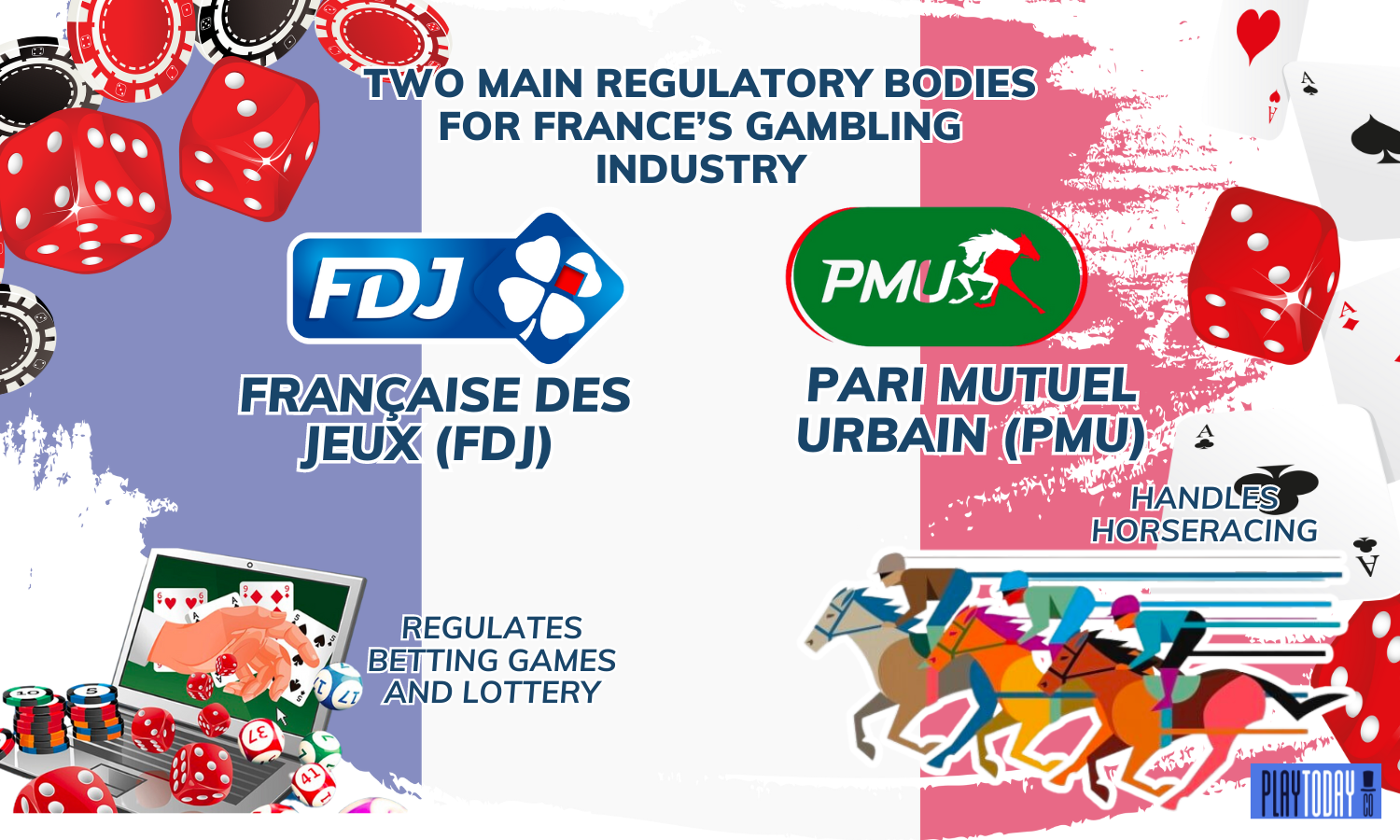
There are two central bodies responsible for governing France’s gambling industry, which are:
- Française des Jeux (FDJ) — for betting games and lottery
- Pari Mutuel Urbain (PMU) — for horseracing
However, Article L.320-1 of the Homeland Security Code prohibits gambling on games of chance, except poker. This limitation has increased illegal gambling activities in France.
Definition
With 532 unlicensed sites blocked by Autorite Nationale des Jeux in 2023, let’s look closer at the backbone of legal gambling in France.
The Framework of Legal Gambling in France: Autorite Nationale des Jeux
Following the gambling reform on May 22, 2019, Autorite Nationale des Jeux (ANJ) replaced the Online Gambling Regulation Authority under Ordinance No. 2019-1015 on October 2, 2019.
The ANJ is a separate administrative body that regulates all forms of gambling in France, including casinos, horse racing, lotteries, and operators with exclusive rights (FDJ and PMU).

Quick Tip
Improve your winning chances in casinos by looking for games with a high Return to Player percentage and low house edge, such as poker with 90% RTP and 10% house edge.
The French government defined ANJ’s operation, organization, and exercises of power under Decree No. 2020-199. Article L. 320-3 of the Internal Security Code mandated its missions:
- ✅ Prevent gambling addiction and protect minors
- ✅ Ensure safe and fair gambling operations
- ✅ Fight illegal gambling activities
France’s gambling framework is made distinct by its separate regulators for its available gambling forms. Let’s delve into the regulatory body that watches France’s horse race betting community.
Pari Mutuel Urbain’s Role in France’s Gambling Industry
Licensed horse racing companies founded Pari Mutuel Urbain (PMU) in 1930 for a centralized horse betting service in France, granted by Decree 97-456 on May 5, 1997.
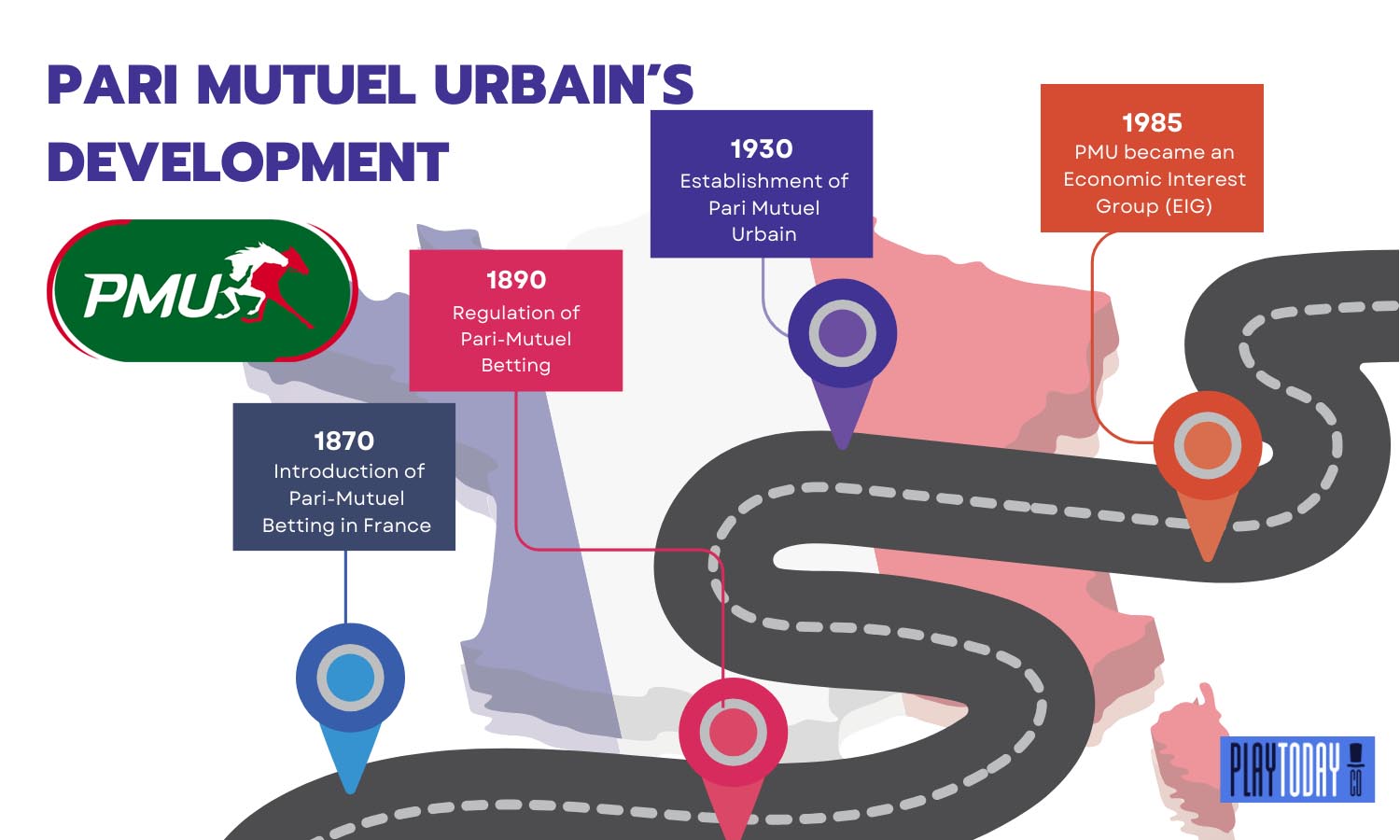
The infographics below explain Pari Mutuel Urbain’s development:
- 1870: Introduction of Pari-Mutuel Betting in France
- 1890: Regulation of Pari-Mutuel Betting
- 1930: Establishment of Pari Mutuel Urbain
- 1985: PMU became an Economic Interest Group (EIG)
The PMU designs and markets the games on offer. Its net profit goes to 66 French horse racing associations (EIG members), which keep the horse racing sector in France up and running.
With over 8,000 off-track outlets, the PMU is Europe’s leading horse-betting operator and the third largest worldwide.

Fun Fact
The Longchamp Racecourse is one of the most famous race tracks, with a 50,000 seating capacity. The racetrack was a crucial part in shaping France’s horse racing history.
The “Hippodrome de Longchamp” is home to over half of the Group One races in France. The track’s highlight event is the “Prix de l’Arc de Triomphe,” attended by the top horses worldwide.
Read more to know another critical figure in the French gambling industry that supervises the lottery and sports betting markets.
The Influence of Française des Jeux in the Gambling Industry of France
Since the 16th century, the lottery has entertained French citizens. It also aided war veterans by establishing the French National Lottery (Article 136, Finance Law 1933).
France authorized Française des Jeux (FDJ) to organize Lottery games in 1976 and Sports Betting in 1985. It wasn’t until 2019 that FDJ became a private entity through the PACTE Act.
Here are the roles of FDJ, as defined in Article 21, Decree 78-1067:
- Monitor the application of gaming laws and regulations
- Draft game rules (terms and conditions, payments, winners, prizes)
The Land of Wine and Cheese holds forecast games such as Match of the Day, Loto Foot, and 1N2. All of which are odds-betting games.
Quick Tip
Point spread odds betting is the most used by 58.8% of sports bettors. Total point bets came in second, with 51.7% of sports bettors using it.
Legal sports betting accounted for 35% of Europe’s online gambling revenue in 2022, while the lottery generated €662 million in Q1 2023. Discover below what made the revenue boost.
Law No 2010-476 of May 12, 2010: France’s Online Gambling
France’s online gambling became legal in 1994, but its regulated online market is relatively new, only emerging on May 12, 2010, with the enactment of Law No 2010-476 by the French National Assembly.
The French Gambling Act emerged as a game-changer, ending FDJ and PMU’s monopoly over online gambling and welcoming licensed private online operators to offer the following:
- 💸 Online Sports Betting (Live, Pool, and Fixed Odds Betting)
- 💸 Online Horse Race Betting (Pool Betting)
- 💸 Online Poker Games (Texas Hold’em and Omaha)
Fun Fact
Texas Hold ’em is the most popular community card poker, with “72” considered the “WHIP” or “Worst Hand in Poker.”Discover more exciting poker hand nicknames, and let the odds be in your favor!
Online betting operators must be in the European Economic Area (EEA) state to obtain a French online gambling license, which costs around $20,000 to $120,000. As of 2023, the market has 15 licensed operators, including FDJ and PMU.
France legalized its online gambling in time for the World Cup 2010. The first month of legal operations created 1.2 million accounts and doubled the stakes to €83 million from 2009.
The gambling environment in France has been in full bloom since 2010. With online gambling sustaining the industry’s revenues, let’s discover the French gambling market’s current state.
The State of France’s Gambling Industry
With over 65 million people and a regulated gambling system, it’s no surprise that France has enough players for the market to prosper. However, the French gambling market varies yearly in yields.
In 2019, 174 million French engaged in gambling activities, with 632,000 betting on sports, 146,000 on horse racing, and 269,500 on poker.
2021 saw the industry attract 48% of France’s adult gamblers, hitting an all-time high of 5.4 million active accounts. From 2014-2019, online sports bettors grew to 60%, while poker has 2 million regular players.
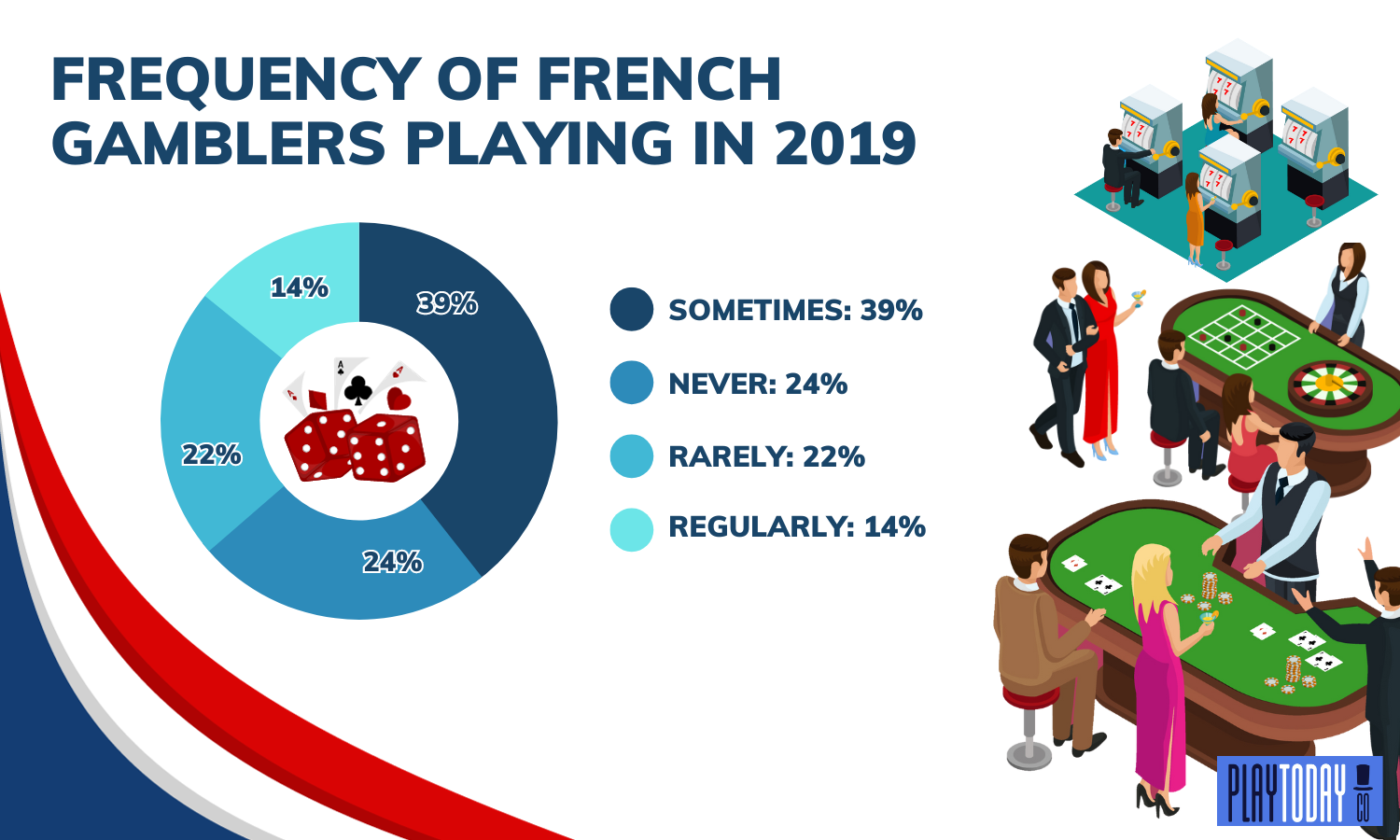
- Sometimes: 39%
- Never: 24%
- Rarely: 22%
- Regularly: 14%
The French gambling sector thrives, with a 4% YoY growth in H1 2023. While Bill 1248 is underway for online casino regulation, let’s look at what’s on the market.
Gambling Forms Available in France
France historically limited betting to the lottery, horse racing, and sports betting. With 100 million online poker players worldwide, the government has regulated poker and online gambling.
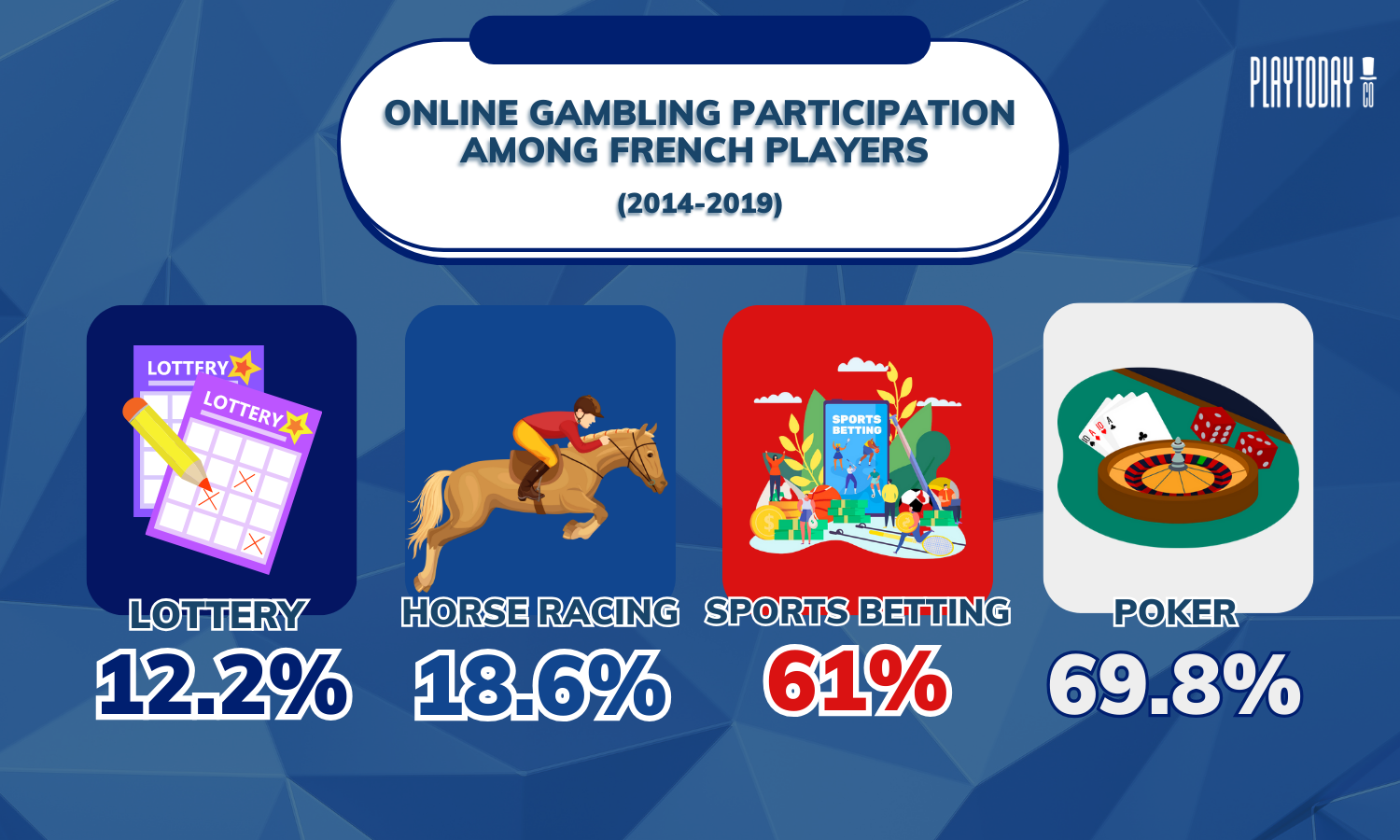
- Lottery: 12.2%
- Horse Racing: 18.6%
- Sports betting: 61%
- Poker: 69.8%
In the first half of 2023, the industry’s success was mainly driven by the lottery generating $€8.2 billion in sales and sports betting’s €4.2 billion.

Did You Know?
Formal betting events began in the 18th century, featuring horse racing, famous for its adrenaline and competitive nature.
With France’s gambling tax amounting to 55.2%, two online poker operators have already withdrawn. The country imposes high gambling taxes to protect players against problem gambling.
The age requirement is another protective measure that France’s gambling regulation includes. Know the legal betting age to participate in different gambling forms in France.
Betting Age Restriction in France
Most European countries require gamblers to be 18, and France is no exception. In 1987, the government lowered the legal gambling age from 21 to 18 to allow more French gamblers.
With 71% of French people knowing the minimum legal age to gamble, the lottery is popular among all age groups, while certain games cater more to specific demographics.
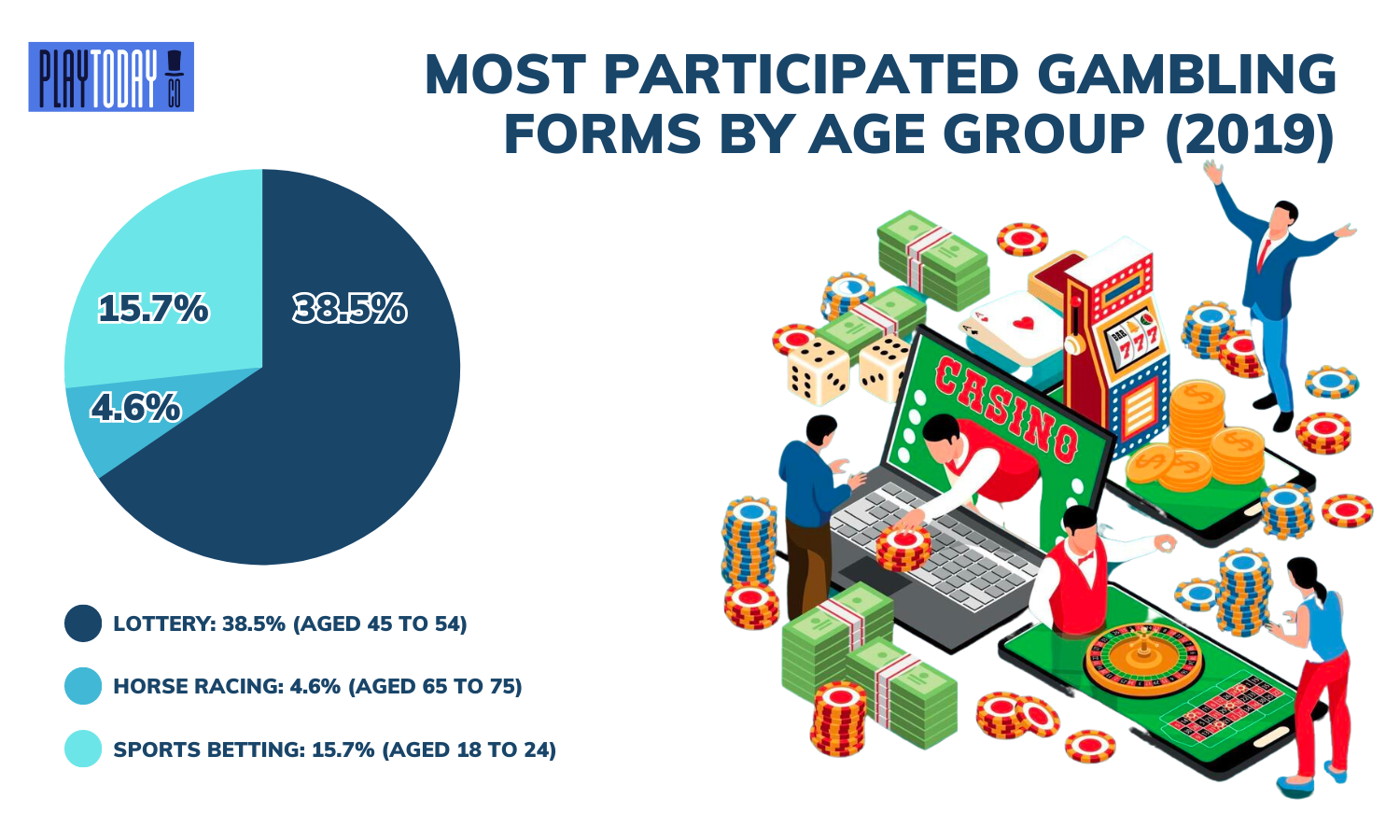
- Lottery: 38.5% (aged 45 to 54)
- Horse Racing: 4.6% (aged 65 to 75)
- Sports betting: 15.7% (aged 18 to 24)
With 1.2 million French suffering from problem gambling, the government has implemented measures to combat this.
Licensed operators must display a warning sign on their sites to discourage underage gambling, while players must undergo age and identity verification when registering online.

Side Note
Some casinos in the US do not require ID verification processes from registration to payouts. No-verification casinos have been available for 3 to 5 years.
Operators and players from online gambling sites and retail casinos must comply with France’s betting age requirement.
Let’s uncover the consequences of fraudulent gambling activities in France
Gambling Penalties in France
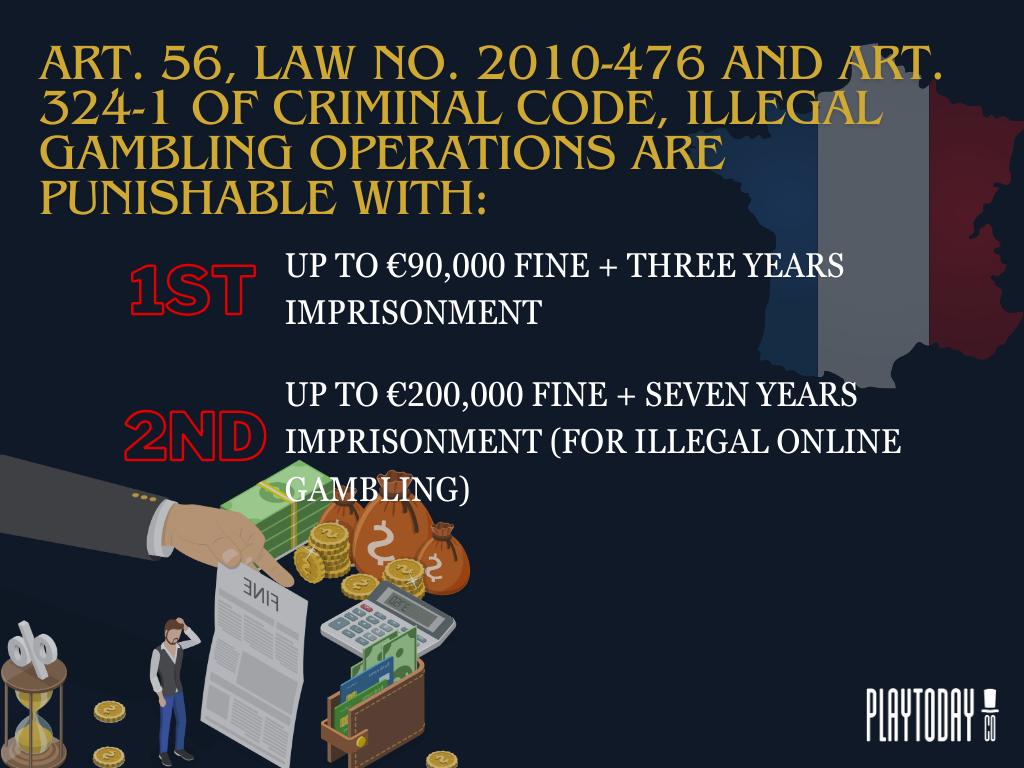
Illegal gambling operators in France are punishable under Art. 56, Law No. 2010-476 and Art. 324-1 of the Criminal Code for laundering money.
Here are the criminal charges of unauthorized operators:
- Up to €90,000 fine + three years imprisonment
- Up to €200,000 fine + seven years imprisonment (for illegal online gambling).
Meanwhile, licensed online gambling operators failing to comply with the French Gambling Act are subject to the following:
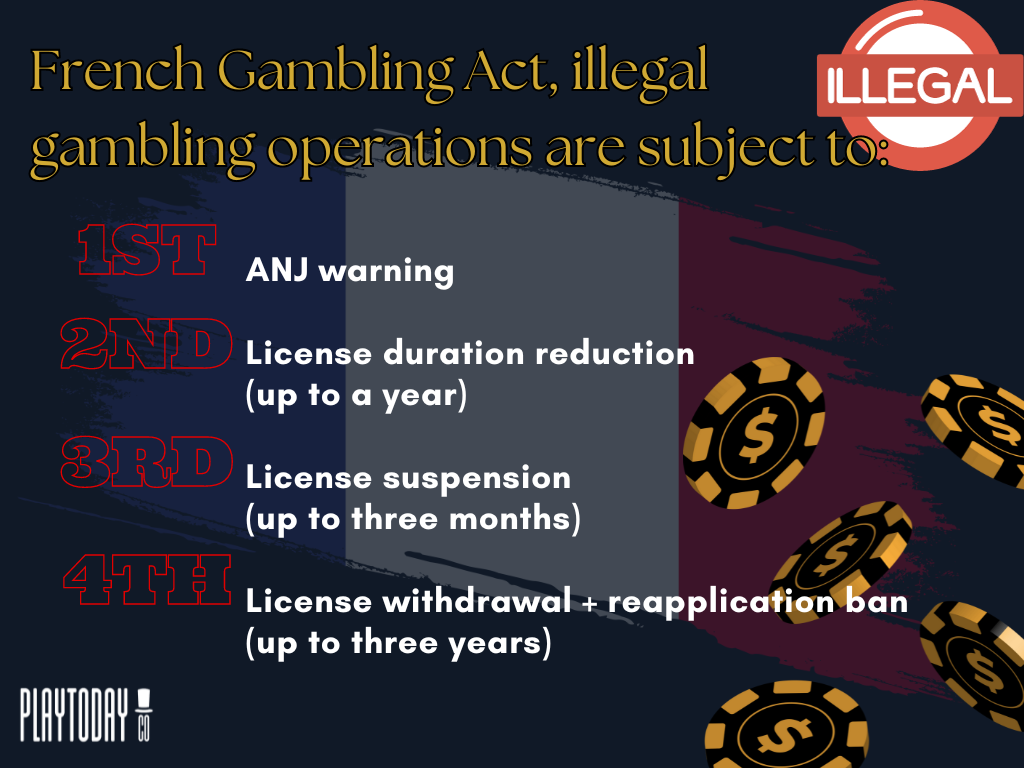
🚩 1st Degree: ANJ warning
🚩 2nd Degree: License duration reduction (up to a year)
🚩 3rd Degree: License suspension (up to three months)
🚩 4th Degree: License withdrawal + reapplication ban (up to three years)
In 2022, ANJ created the Sanctions Committee to oversee gambling disciplinary duties, issuing warnings, suspensions, penalties, and criminal charges against violators.
The Committee fined seven online sports betting operators in 2023 for exceeding the player return of 85%. The limit exists to fight money laundering, terrorist financing, and problem gambling.
Note
ANJ did not disclose the sanctioned operators, as the Sanctions Committee did not deem it necessary to publicize their names, as warnings and penalties were granted.
Gambling authorities do not penalize French gamblers for engaging with unlicensed sites. Instead, they only caution players about the fraud and risk that comes with it.
Final Thoughts
France has a unique legal gambling scene. Although it appears more limited and conservative than other markets, reluctance to some gambling trends is one way to protect players.
However, as the industry is highly competitive, the French gambling market has more work to do to keep up with the emerging trends.
Opening the online market is a start, and voilà—online casino games could be the next breakthrough in France.
FAQs
Are there casinos in France?
As of 2023, there are 200 licensed land-based casinos in France.
What is the latest law on gambling?
In June 2023, France became the first European country to regulate social media influencer marketing, passing Law No. 2023-451.
When was gambling legalized in France?
In May 1539, Francis I of France first authorized a “blanque” lottery to a contractor in exchange for a large fixed annual fee to go to the Treasury.
 Meet the Author
Once wrote serious life-saving stuff for the government, now unleashes his inner geek on the blog world. When not taking a deep dive into comics and video game lore or performing music, he dreams of chilling in a cold, cozy spot with a beer in his hand – probably somewhere the government won't find him. Sports and gaming enthusiast by day, cartoon and gastronomy detective by night.