
UK Gambling Laws Explained 2024


 Casinos
 BC.Game
  7Bit
7Bit  Ducky Luck
  Red Dog
Legal Disclaimer
This article is for informational purposes only and does not offer legal advice. Contact your attorney to secure advice on any issue or problem.
Using this article or any links doesn’t create an attorney-client relationship. The writer’s views do not reflect the opinions of the firm or any individual attorney.
The UK is among the most active gambling markets worldwide, as around 43% of Brits place bets monthly. The stats shed light on the country’s consistent regulations and love for gambling.
While regulations do exist, the topic of betting is still controversial and worth exploring due to its many risks, such as financial losses, addiction, syndicates, and unregulated betting activities.
The sections below will detail the UK Gambling Industry’s history, development, key facts and figures, and betting forms that drive the scene.
🏆 Top Gambling Sites in UK
Considering various factors, here are the best UK online casinos suitable for both beginners and pros:
DuckyLuck
->💰 500% Welcome Bonus up to $2,500
-> 🎰 150 Free Spins- SlotsandCasino
->💸 300% Match Bonus of up to $1,500
-> 🎰 100 Free Spins - Wild Casino
-> 🎁 $5,000 Welcome Bonus
-> 🎰 125 Free Spins

Highlights of the Article
- The April 2023 gambling law amendment focused on protecting vulnerable gamers in the smartphone era.
- 43% of Brits bet monthly, but 300,000 people have gambling addiction issues.
- New regulations will create a gambling ombudsperson, set stake limits, and fund addiction treatment.
- The UK’s gambling industry generates £14 billion annually.
- Online gambling participation increased to 26% in March 2023.
- Men are more likely to be problem gamblers than women.
- 39% of teenagers and 39% of individuals over 65 gambles.
- Online gambling has 14 million active players in various verticals.
- Remote casinos triple brick-and-mortar earnings, generating £3.2 billion.
- The legal betting age for Brits is 18, except for specific activities at 16.
- Violating gambling laws can result in severe penalties, including fines and imprisonment.
- The legality of betting syndicates depends on whether financial gain is involved.
The Legality of Gambling in the United Kingdom

Gambling is legal in the UK. The industry began with the UK Betting and Gaming Act 1960, which introduced the country’s first betting laws. The following year, the UK’s first legal casino opened.
In 2005, the country’s gambling scene expanded with the UK Gambling Act of 2005 legislation, opening the opportunity for various casino games, online casinos, and sportsbooks.

Fun Fact
With the UK Gambling Act’s support of online gambling, its Gambling Commission has given around 3,368 licenses to 2,439 online gambling companies.
As of 2023, over 175 online casinos in the UK are operating domestically.
With more recent amendments to the UK’s gambling laws during Q2 of 2023, it’s only fitting to discuss how the country’s betting scene came to be.
The UK Gambling Act of 2005
The Gambling Act of 2005 is the cornerstone regulator for all gambling operators, designating the UK Gambling Commission as the main body overseeing gaming, betting, and lottery participation.
UK’s 2005 Act created the UK Gambling Commission to manage online and land-based gambling licenses and aims to:
- Prevent gambling-related crime,
- Ensure fairness, and
- Protect vulnerable individuals, especially children.
The Act has a “point-of-supply” approach, meaning it does not apply to operators offering gambling services to British citizens from overseas.

Did You Know?
The 2005 UK Gambling Act was monumental to the country’s gambling industry.
Before the Act, unregulated gambling websites freely accepted bets from UK customers, resulting in no tax revenue and inadequate protection against crime and fraud.
The Act aimed to create a transparent industry, protecting vulnerable individuals. It regulated lotteries, including the National Lottery, to ensure funds went to good causes.
The UK’s Gambling Act required all bookmakers and betting sites to be licensed by the UKGC, providing a safe gambling experience.
1960 Betting and Gaming Act

While the 2005 Gambling Act is the definitive law for UK gambling, its precursor— the 1960 Betting and Gaming Act — marked a significant milestone in the country’s gambling history.
The BGA was introduced in response to unlawful gambling acts, most famously from one John Aspinall, whom authorities had received news of organizing illicit betting activities in the country.

Side Note
The UK’s sports betting scene is among the most scrutinized industries worldwide.
British citizens perceive Sports to be the second most corrupt industry in the country.
When the 1960 Betting and Gambling Act passed, it highlighted the massive public interest in unlicensed betting, bookmaking, and casinos, which the Act aimed to regulate.
Gaming Act of 1968
Another notable law passed by the British Parliament was the Gaming Act of 1968, which reduced the number of casinos, reduced betting profits, eliminated mug bets, and diminished organized crime.
The Act was legislated by PM Harold McMillian’s conservative government, reflecting the changing societal attitudes of the early 1960s.
The Influence of the Gambling Commission of Great Britain on the UK’s Betting
The Gambling Commission (UKGC) is the primary regulator for all forms of gambling in the UK, constituted by the Gambling Act of 2005.
The UKGC’s role is to update and align betting laws with the country’s evolving status of technological advancements, enforcing various rules, such as:
- Fraud prevention,
- Age verification,
- Customer identity checks,
- Anti-money laundering measures, and
- Advertising restrictions.
One notable requirement the UKGC caters to is Customer Identity Verification, a controversial commission feature due to the following factors:
 |  |
| The customer identity checks prevent underage and vulnerable individuals from partaking in bets. | The customer identity verification shortens the onboarding process, which frustrates players. |
| Operators may face higher costs. |
The Gambling Commission ensures a fair and secure gambling environment, balancing player protection and operational considerations.
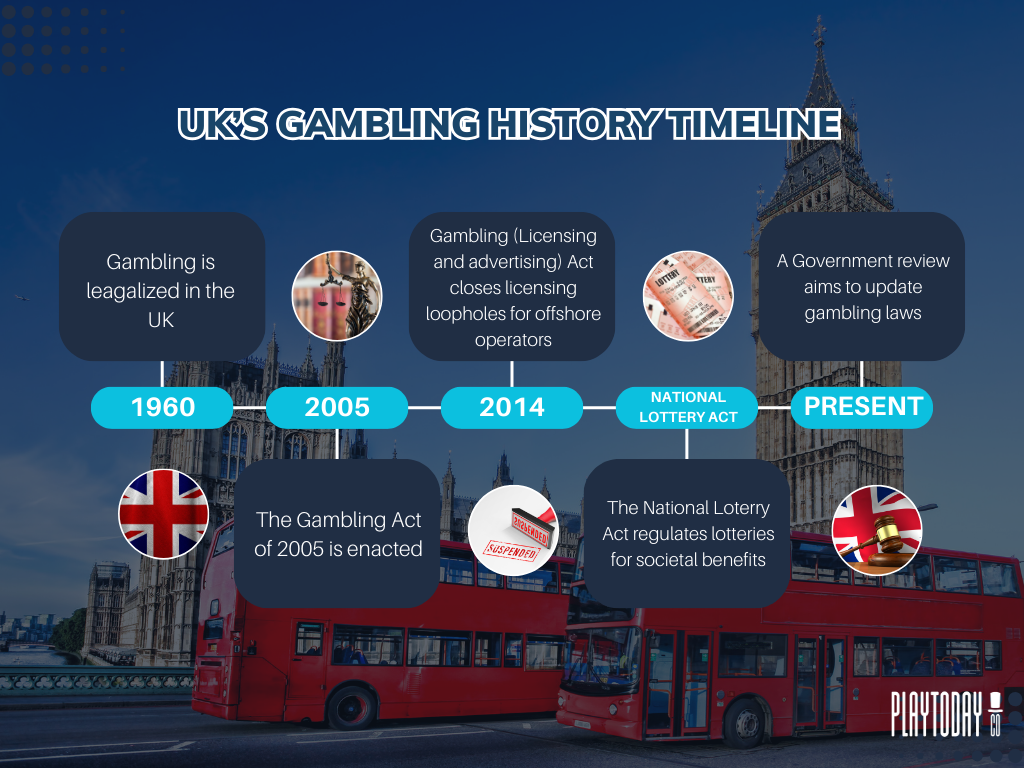
Here’s a quick overview of the UK Gambling History Timeline:
- 1960: Gambling becomes legal in the UK.
- 2005: The Gambling Act brings significant changes and addresses online gambling.
- 2014: The Gambling (Licensing and Advertising) Act closes licensing loopholes for offshore operators.
- The National Lottery Act regulates lotteries for societal benefit.
- 2020 to Present: A government review aims to update gambling laws.
Fun Fact
The UK’s gambling white paper, released in April 2023, suggests changes to the Gambling Act 2005 to accommodate smartphones and online gambling.
The government plans to work closely with the Gambling Commission to enforce these measures by the summer of 2024.
The UK’s Love for Wagers
The UK’s gambling industry is consistently thriving, amounting to around £14.08 billion in GGR last March 2022. Statistics from the UKGC reveal that many Brits regularly engage in gambling activities.
From lottery tickets to sports betting and horse racing, people in the UK actively partake in various forms of gambling.
Read on for an in-depth statistical exploration of the country’s gambling population, revenue generation, and significant events.
- The UK’s gross gambling yield for 2022 amounted to around £14.08 billion.
(Statista)
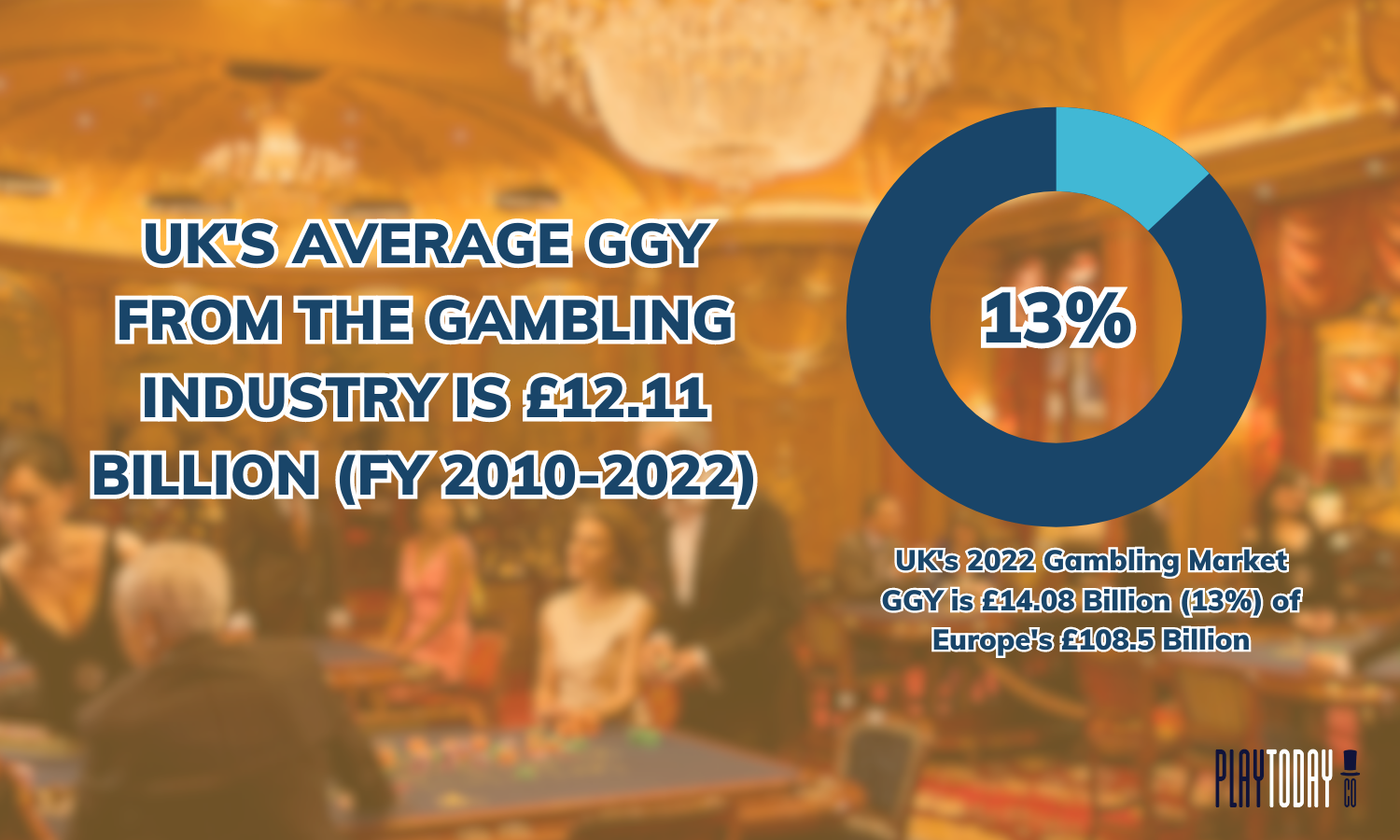
From April 2010 to March 2011, the UK generated £8.44 billion in GGY for its betting industry, which nearly doubled in 2022, amounting to £14.08 billion.
The UK’s GGY figures for 2022 held the most significant share in Europe’s gambling market, at around 13%. The average GGY for the UK’s betting industry from FY 2010-2022 is over £12 billion.
Gambling in the UK has a significant financial impact at a national level, with remarkable scale and varied individual involvement.
- The 35-55 age group is the most engaged in gambling activities.
(About Manchester)
The UK’s Millenial (29%) and Gen X (25%) generations form the most active segment of gamblers. This age group shows significant participation in various gambling activities.
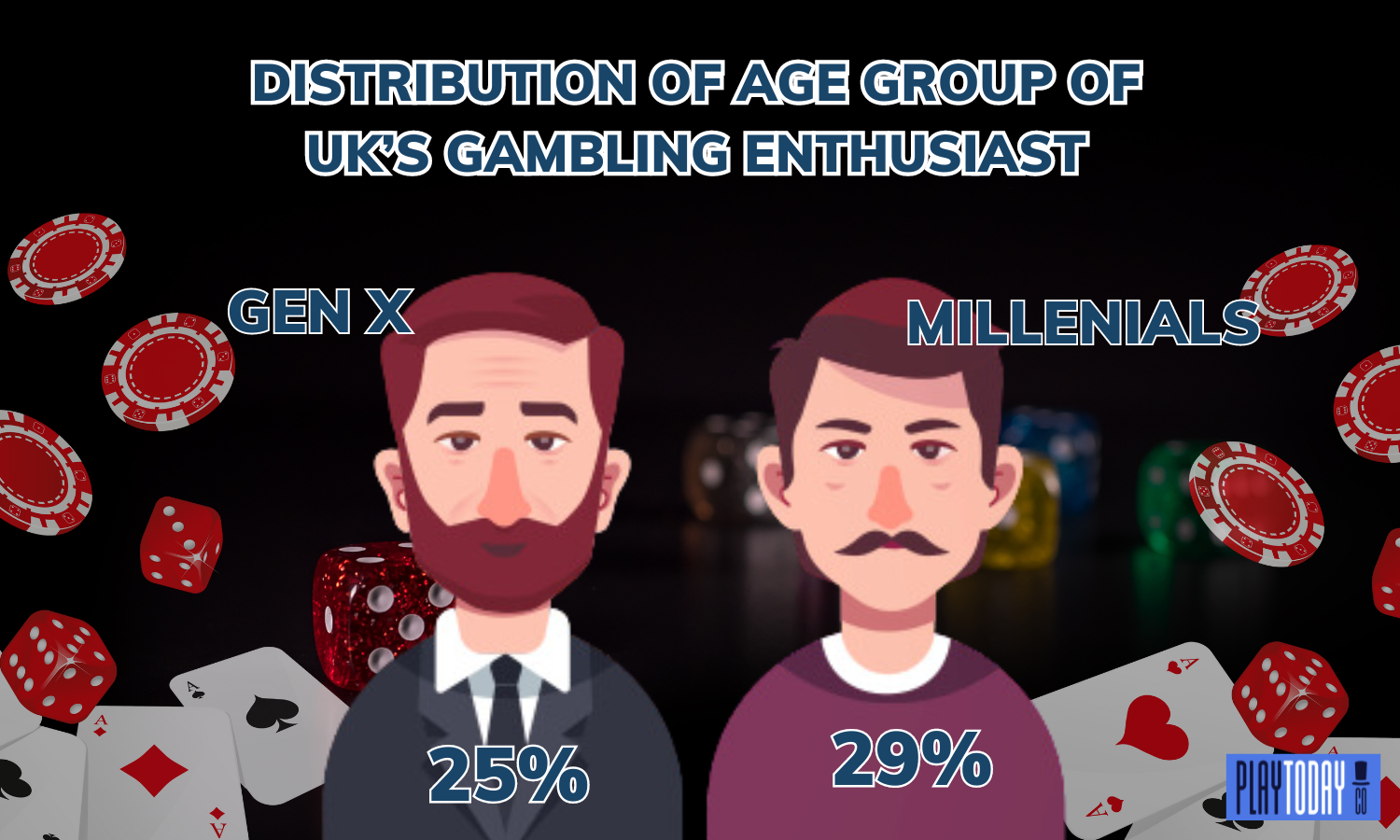
A factor for this age prevalence in betting is that individuals in that group are likelier to have more stable incomes and are more adept at common gambling activities than the younger generations.

Helpful Article
Explore more about gamers’ demographics to understand the factors behind the leanings and preferences of individuals concerning games with this article.
- In 2021, 15% of problem gamblers gambled while at work.
(The Edinburgh Reporter)
Even more concerning, 7% said they gamble to earn more money. These figures show how gambling habits can affect work productivity and financial well-being.
These alarming statistics highlight the need for player safety, betting limits, and gambling-related regulations.
In 2023, significant changes were made to UK gambling laws to tackle these concerns and promote a safer gambling environment.
Helpful Article
Harmful gambling affects every country, not just the UK. Studies suggest that problem betting affects between 0.1% and 5.8% of adult gamblers worldwide.
Explore the facts and figures behind problem gambling statistics to discover how prevalent the issue of betting addiction is worldwide.
Learn about the circumstances that lead to harmful behavior and how each country’s government deals with the issues.
- UK men dominate the online betting industry user base by 25% over 17% of women.
(UK Gambling Commission)
The use of online gambling platforms by the Brits has climbed from 15% in 2015 to 21% in 2019. 25% of the UK male population engaged in online bets compared to 17% of women.
Online gamblers are likelier to partake in gambling in the following places.
- 95% gamble online at home,
- 15% of online bettors play at work,
- 12% engage in wagering during commute,
- 7% gamble in a club or a pub,
- Only 4% place wagers onsite (betting areas and sports venues).
UK Available Betting Forms
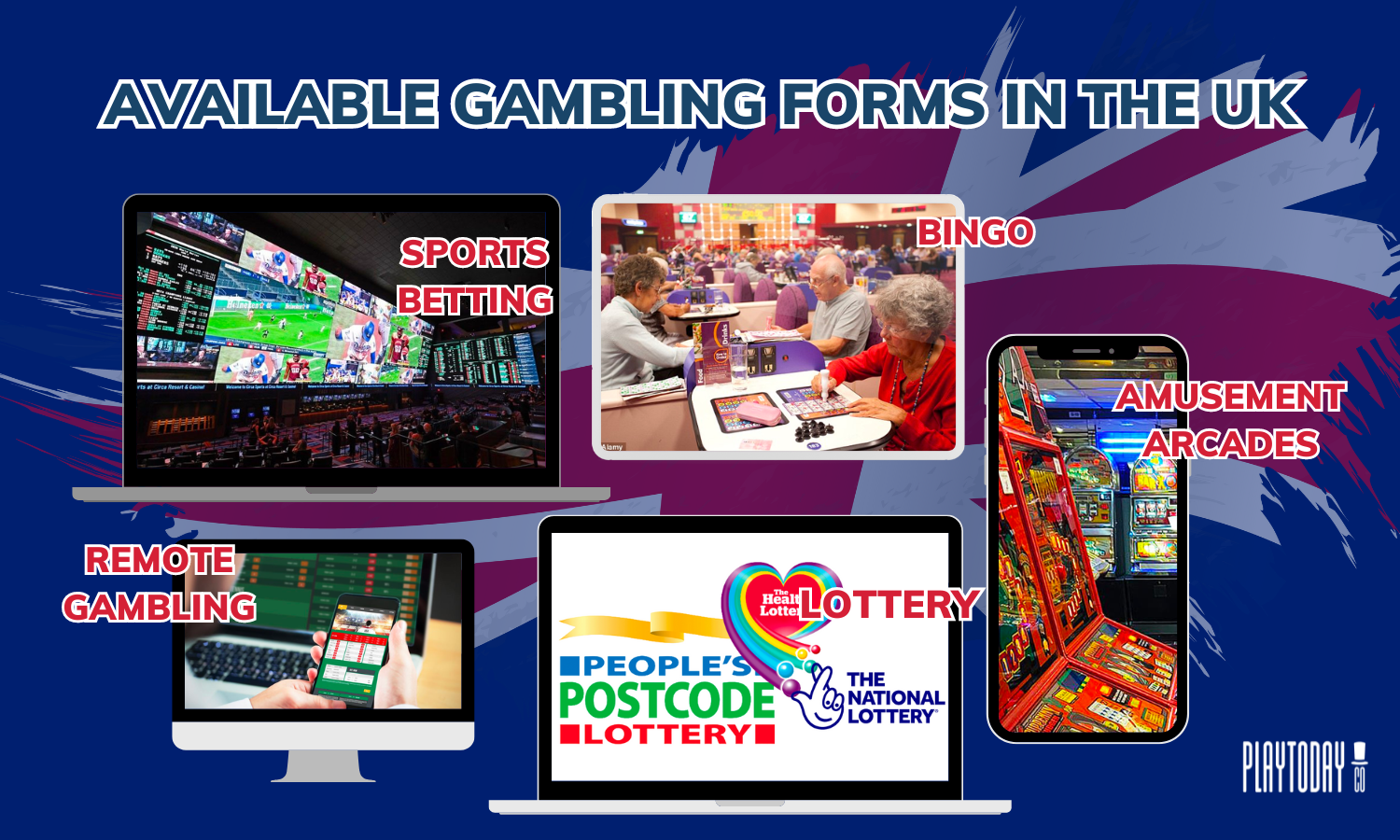
In the UK, various forms of gambling cater to different gamer preferences and lifestyles. Casinos, sports betting, bingo, and online gambling are among the Brits’ popular choices.
The section below explores the allowed gambling forms in the UK, discussing the state of the games to highlight how significant these betting forms are for British gamblers.
Lotteries
In gambling, a Lottery is a way to ensure fairness when there is limited availability and high demand for something. It involves a random draw to determine winners.
The UK’s Lotteries can fit into various contexts, such as allocating subsidized housing or selecting students for prestigious schools.
They are also commonly used in sports and for distributing significant cash prizes to participants.
Did You Know?
The Lottery has existed for centuries. In ancient times, lotteries aimed to distribute land among the people of Israel and even by Roman emperors to allocate property and slaves.
When British colonists arrived in the United States, they brought the concept of lotteries with them.
However, Christians and moral concerns negatively responded, resulting in ten US states banning lotteries from 1844 to 1859.
National Lottery
The National Lottery operates on a traditional lottery setup, where players choose six numbers and a bonus ball.
27.6% of Brits partake in the UK National Lottery, the most bet-on activity in the country, followed by Scratch Cards, which has 11%.
The goal is to match these selected numbers to the randomly drawn lottery balls. The lottery machines generate these numbers by releasing individual balls from a pool of 59.
Like the Health Lottery, money raised by the National Lottery goes towards funding and supporting charitable causes.
Side Note
The National Lottery has nine more balls than the Health Lottery, which reduces the chances of winning the jackpot. The cost of a National Lottery ticket is £2.
Who can play the UK National Lottery?
The UK National Lottery is exclusively available to residents aged 16 and above.
Alongside the regular Lotto jackpot draws held twice a week, players also have the opportunity to participate in the weekly EuroMillions lottery.
EuroMillions provides the chance to win significantly larger jackpot prizes in collaboration with other European lotteries.
Fun Fact
The first National Lottery in the UK was held in 1567 by Queen Elizabeth I to raise funds for a shipbuilding and port construction program.
Tickets cost 10 shillings, the top prize was £5000, and ticket purchasers were promised freedom from most crimes except murder, felonies, piracy, or treason.
The modern National Lottery, known as the Lotto, had its first draw in 1994 with a £7 million jackpot and odds of 1 in 14 million.
Health Lottery

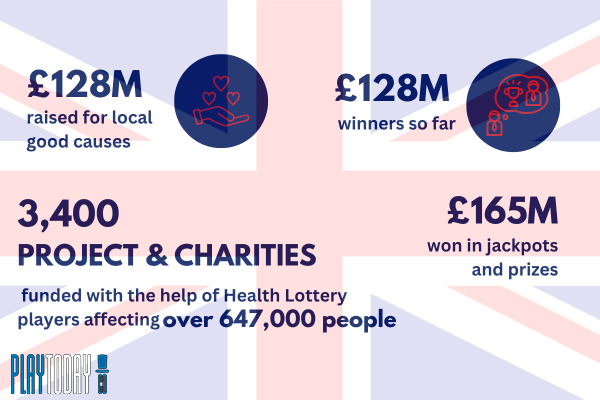
The Health Lottery, launched in 2011, is a charitable initiative to provide targeted support to local communities and charity groups.
With over £128 million raised in the past decade, the lottery has directly impacted the lives of more than 647,000 individuals throughout Great Britain.
Each ticket funds health causes in specific regions nationwide. Operated by 6 local companies in 12 areas, it addresses deprivation and health inequality.
Grants from the People’s Health Trust have supported over 3,300 local health projects and charities, including well-known organizations and grassroots initiatives.
Postcode Lottery
The People’s Postcode Lottery is a unique subscription-based lottery that offers players cash prizes and crucial charity support.
Players automatically enter into every draw by signing up with their postcode and paying £12 monthly.
With prizes announced daily throughout the month, participants can win while knowing that 33% of their ticket price goes directly to incredible causes.
Scratchcards
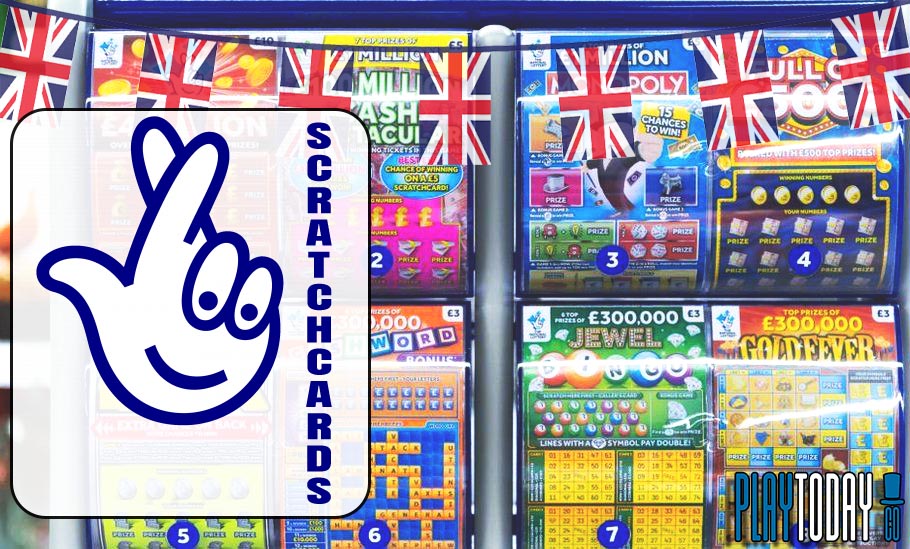
The concept of Scratchcards arrived in the UK in the mid-1990s, gaining immense popularity with attractive jackpots, which further thrived by the convenience of online gambling.
To play, scratch off the foil to reveal matching numbers/symbols or unique icons for cash prizes. Online versions offer comfort and realistic experiences without visiting physical stores.
Enjoy scratch cards responsibly with trusted platforms like The Health Lottery, focusing on fun rather than profit.
Raffles
In the UK, raffles offer the chance to win physical prizes, a type of Lottery. While the Lottery typically awards cash prizes, a raffle offers physical rewards, though exceptions exist.
Different types of raffles require registration or licenses to operate, including:
- Small society raffles, often run for charitable purposes, have specific rules, like giving at least 20% to the cause and capping prizes at £25,000.
- Incidental lotteries are held at events without registration requirements, while private society lotteries serve community groups or clubs.
- Online raffles may require registration or be disguised as prize competitions to avoid licensing.
UK Betting
Gaming and betting are prevalent and provide a safe form of entertainment in the UK, with a rich historical presence and positive perception, with 68% approval from its citizens.
Around 22.5 million UK adults wager monthly, enjoying activities like Lottery, Bingo, Casinos, and Sports Betting.
Real money betting services like fixed-odds and pool betting need a UK Gambling Commission license for fairness and safety. They oversee and protect consumers.
Sports Betting

Sports Betting in the UK has a rich history, emerging in 1961 with developed laws and the first sports betting exchange. Bettors can enjoy higher odds and trade bets, making a profit.
The United Kingdom’s sports betting laws are among the most comprehensive worldwide, taxing its bettors around 15%-21% depending on if it is remote or general betting duty.
The UK leads Europe in sports betting, offering sports like football, basketball, and eSports. Sportsbooks can freely advertise and partner with venues for legal wagers.
Side Note
Among the many aspects bettors should learn about Sports Betting is called a “Wagering Requirement.”
In most online casinos, when gamers register to the site, the casino offers incentives in the form of welcome bonuses and valuable perks.
The Wagering Requirement feature works as a condition set by the site that specifies how much a gambler needs to bet to withdraw any winnings earned using the bonus money.
Here’s a summary showing the evolution of sports betting laws in the UK.
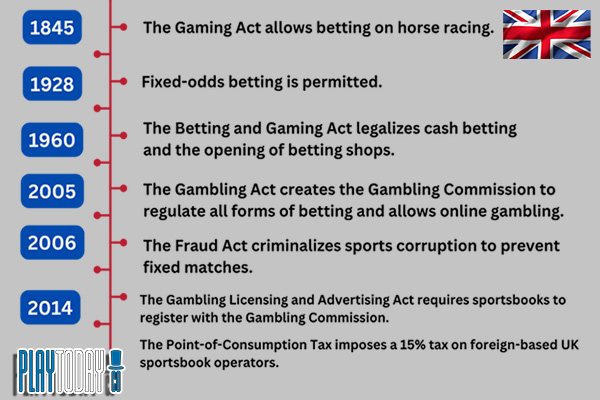
Football leads the rankings as the UK’s most loved sport to bet on, at 45%, followed by Horse Racing at 37%.
Fun Fact
The British love Horse Racing. The sport has a rich history in the UK, treasured as a tradition, pastime, and class status symbol. This aspect is among many reasons why Horse Racing is big in the UK.
Bingo
The Brits call Bingo “Housie” or “Housie-Housie.” The country plays the game using the 90-Ball version, held in legal Bingo halls.
Bingo falls under “equal chance” gaming, and though there’s no official definition, the game is mostly similar across the UK.
The UK Gambling Commission provides guidance, developed with input from bingo industry stakeholders, to differentiate bingo from other gambling forms.
Side Note
While the UK considers the game of Bingo as an “equal chance,” the actual odds of winning depend on two key factors:
- How many cards are in play
- Number of balls drawn
Amusement Arcades

In the world of amusement arcades, there are three types:
- Adult Gaming Centres (AGCs)
- Licensed Family Entertainment Centres (FECs)
- Unlicensed Family Entertainment Centres (UFECs).
Unlicensed FECs can offer Category D machines if they obtain a gaming machine permit from their local licensing authority.
They can have multiple Category D machines with the permit (subject to non-gambling considerations like fire regulations and health and safety).
UK Casinos

Both online and land-based UK casinos offer a variety of games for players’ preferences.
According to the Gaming Act 2005, land-based casinos require operational and premises licenses, with set standards for different casino sizes.
Adherence to these standards is essential for obtaining a license. Now, the focus shifts to exploring the differences between these two casino formats.
Helpful Article
Over 1,000 land-based and online casinos exist in the UK. With that many choices to play at, gamblers need to learn the basic tips and strategies to avoid being overwhelmed.
This article serves as a guide to enhance a casino goer’s gambling experience, exploring 18 necessary pointers to remember to win at casinos.
Online Casino
Remote casinos thrive in the UK, tripling brick-and-mortar’s revenue. 2023 saw over 1,000 online casinos licensed and regulated by the UK Gambling Commission.
In FY 2018, UK online casinos earned nearly £3.26 billion in revenue, which grew to around £5.7 billion in 2022.

Every remote gambling provider in the UK must obtain approved licensing and pay the required duties, as non-regulated online gambling locations are not eligible for tax benefits.
The UK Gambling Commission is the key regulator for all gambling types, including online gambling, under the Gambling Act 2005.
In remote gambling, players participate using wireless communication methods like the internet, phone, or TV.
Examples include:
- Betting apps,
- Self-service betting terminals, and
- Online in-play betting.
In March 2023, online gambling saw 14 million participants across various segments. The most popular type of bet in the UK was real-event betting, with over 6.5 million players, while poker had the fewest, with 230,685.
Online slots experienced a significant increase, surpassing 4 million players. The landscape of online gambling continues to progress with shifting player preferences.
Side Note
17% of UK gamblers will consider betting with cryptos in 2021-2022.
Brick-and-Mortar Casino
Casinos throughout the UK boast rows of slot machines alongside tables and electronic games on the gambling floor.
Approximately 150 casinos exist, with 75% operated under Grosvenor or Genting Group brands. While some Super Casinos proposals emerged and faded, most gambling venues are smaller in scale.
Though they offer Vegas-style gaming, these UK casinos differ significantly from the colossal resorts found in Sin City.
Helpful Article
Interested in owning a brick-and-mortar casino in the UK? Find out all the essential details, including costs, regulations, and potential profits, in the comprehensive article “How Much Does It Cost to Own a Land-Based Casino?”
Gaming Machines
Gambling machines are prevalent in UK pubs, with over 51,000 permits for various types of machine-based games to cater to the different gaming needs of Brits.
Liquor-licensed establishments are eligible for two machines with Gambling Commission notification, but they can apply for more.
Beyond pubs, casinos, clubs, betting shops, bingo halls, and adult gaming centers have also offered casino-type machines since their approval in the 60s.
Helpful Article
If you want to learn more about the math behind slot machines and how they work, don’t miss this article, “How Do Slot Machines Work: The Math Behind it All.“
Gambling Penalties in the UK
The Gambling Act of 2005 lists numerous offenses covering a wide range. Violations shall result in fines and jail time. Here are some examples of potential consequences:
| Offense | Penalty |
| Gambling by a young person where not permitted | £1,000 fine |
| Employing an underage person to provide gambling facilities | 51 weeks imprisonment and/or £5,000 fine |
| Cheat, attempt to cheat, or assisting another person to cheat in gambling | 51 weeks imprisonment and/or £5,000 fine |
| Providing gambling facilities without license/permit | 51 weeks imprisonment and/or £5,000 fine |
| Contravention of regulations relating to advertising | 51 weeks imprisonment and/or £5,000 fine |
| Making a machine available for use without a license/permit | 51 weeks imprisonment and/or £5,000 fine |
UK Betting Syndicate: Legal or Not
The legality of syndicates falls into a gray area. They have a long history, with bettors favoring syndicate betting for the heightened thrill compared to individual bets.
This section delves into the nature of syndicates and explores their legal status, investigating instances where some may have faced legal challenges.
Definition
Are They Legal?
Regarding syndicates, the National Lottery syndicates are generally acceptable, but sports betting ones are riskier. The official website contains a handy guide on setting up a lottery syndicate.
Online bookmakers forbid betting on behalf of others, and UK betting operators must know their customers individually.
Placing bets for a syndicate violates the rule against betting for others, but as long as there is no financial gain, it does not break the law.
The UK’s Gambling Age Restriction
Numerous studies warn against underage gambling. This section emphasizes the UK’s legal gambling age and the harsh penalties for violators.
Gaming establishments must verify customers’ ages with ID and supporting documents. However, some exceptions, like lotteries, scratch cards, and football pools, allow participation from age 16.
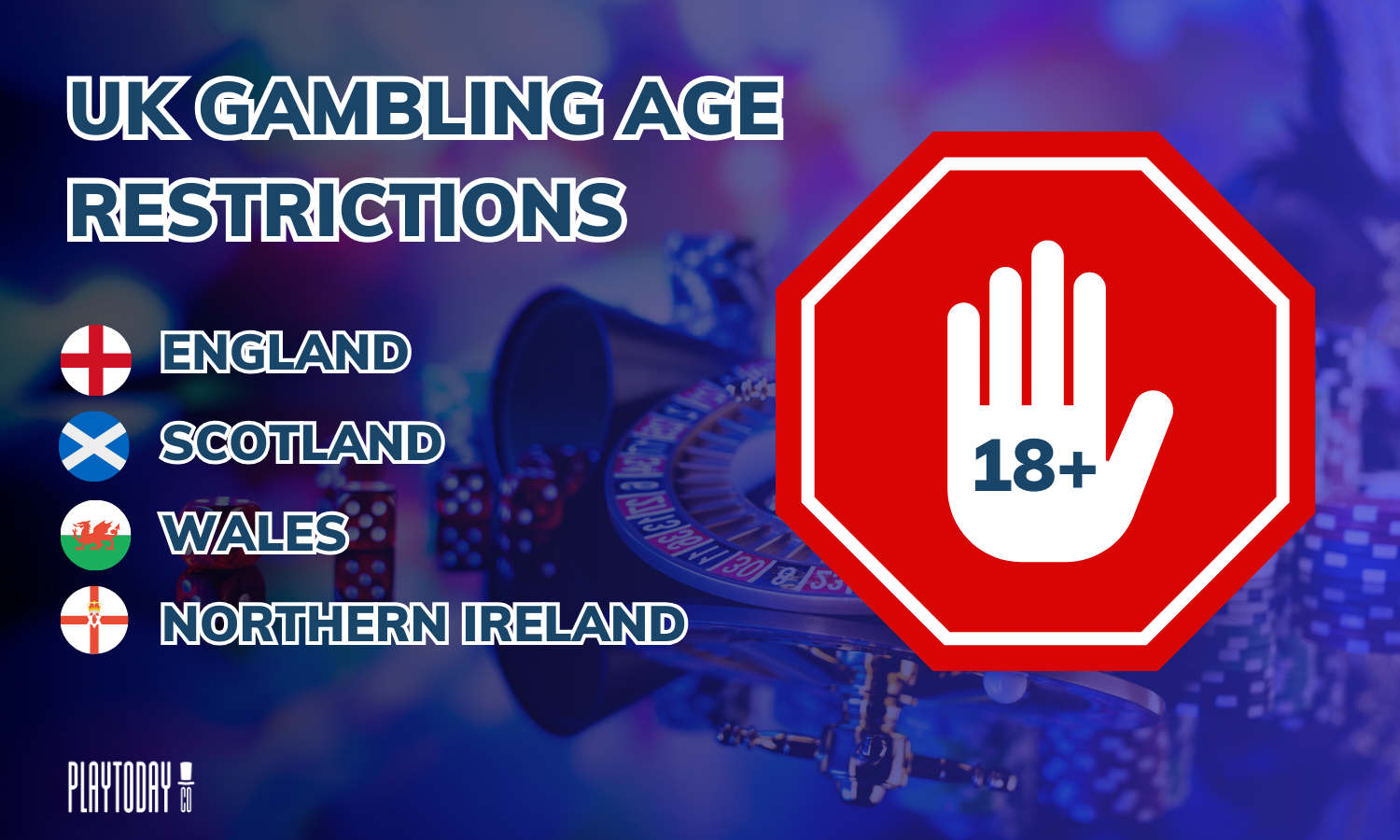
| Country | Online casino age limit | Land-based casino age limit |
| England | 18 | 18 |
| Scotland | 18 | 18 |
| Wales | 18 | 18 |
| Northern Ireland | 18 | 18 |
Any Brit who tries to break the law, whether a player or casino operator, will receive severe sanctions.
Warning
Gambling activities require players to be at least 18, a universal rule across the United Kingdom countries.
Bottomline
Millions of people in the UK enjoy gambling as a hobby – but it’s essential to know your rights when doing so. The country’s betting scene is vast, with a rich history and complexities.
With legislation as definitive as the Gambling Act 2005, anyone planning to gamble in the UK should learn the do’s and don’ts.
Avoid illegal activities, such as unlicensed gaming machines, and explore legal options like lottery tickets and scratch cards for exciting wins.
List of sources
 Meet the Author
Once wrote serious life-saving stuff for the government, now unleashes his inner geek on the blog world. When not taking a deep dive into comics and video game lore or performing music, he dreams of chilling in a cold, cozy spot with a beer in his hand – probably somewhere the government won't find him. Sports and gaming enthusiast by day, cartoon and gastronomy detective by night.